Huawei Cloud China Launches ModelArts Next to Strengthen Enterprise AI Agent Training and Inference Foundation
en.Wedoany.com Reported - On June 5, Huawei Cloud unveiled the next-generation model training and inference platform ModelArts Next in Shanghai, providing four core capabilities—RL Service, Confidential Inference, Model Routing, and Model Matrix—for enterprises to build dedicated AI agent systems. The platform focuses on large model training, inference, secure invocation, and multi-model orchestration, aiming to lower the barrier for enterprises transitioning from model trials to production-grade agent deployment.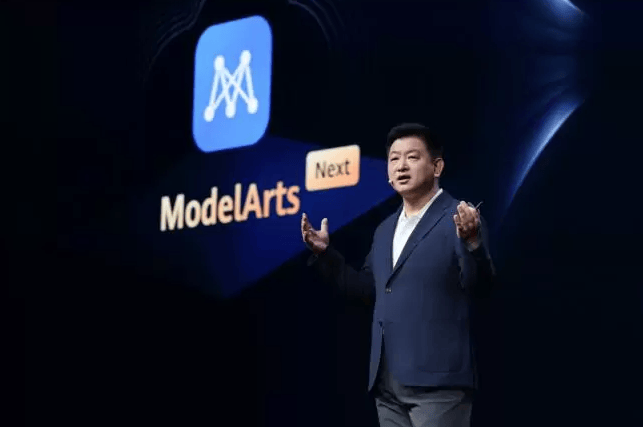
The core value of ModelArts Next lies in reintegrating the fragmented key stages of enterprise large model usage into a unified training and inference platform. Currently, the challenges enterprises face when introducing AI agents are no longer just "whether a model can be invoked," but rather how to continuously train and optimize models, ensure sensitive data security during inference, select appropriate models for different tasks, and quickly deploy and centrally manage multiple mainstream models. The RL Service addresses enterprises' needs for reinforcement learning and continuous model optimization, especially as agents evolve from simple Q&A to complex task execution, requiring models to improve decision-making capabilities through feedback mechanisms. Confidential Inference targets highly sensitive scenarios such as AI coding, financial risk control, and enterprise knowledge bases, allowing model-processed data to run in a trusted execution environment, reducing data leakage and compliance risks. Model Routing solves the efficiency issue of model invocation in the multi-model era, dynamically selecting the most suitable service among different models based on request characteristics, task type, cost priority, performance priority, or balanced strategies. The Model Matrix enables enterprises to quickly access mainstream SOTA models such as DeepSeek, Kimi, and Zhipu GLM, while integrating with Huawei Cloud's self-developed Pangu model to cover scenarios like programming and multimodality.
This means ModelArts Next is not a single model release, but a set of model infrastructure for enterprise AI implementation.
After large models enter industrial scenarios, what enterprises truly need is a stable, controllable, and governable AI engineering system. When enterprises initially trial large models, they often start with text generation, customer service Q&A, code assistance, or knowledge base retrieval. However, as applications integrate into core business processes, they encounter issues such as model performance fluctuations, rising invocation costs, complex data permissions, difficulty in model selection, and increased security audit requirements. The four capabilities proposed by ModelArts Next precisely address these production-grade problems: reinforcement learning enhances the stability of agents executing complex tasks; confidential inference resolves security boundaries when sensitive data enters models; model routing dynamically balances performance and cost; and the model matrix prevents enterprises from being locked into a single model's capabilities. Public information shows that Huawei Cloud's MaaS model routing has provided over 15 SOTA model services, with model scheduling accuracy exceeding 95% and an average invocation cost reduction of 20%. If these metrics can be consistently maintained in real-world operations, they will directly impact the return on investment and system availability of enterprise AI agent deployment.
From an industry competition perspective, cloud vendors are transitioning from "providing model interfaces" to "offering agent production platforms." Enterprise customers will not pay solely for single token invocations in the long term; they are more concerned about whether models can integrate with business systems, automatically select appropriate capabilities based on tasks, and form reliable workflows in scenarios such as finance, R&D, manufacturing, office, and customer service. Huawei Cloud's launch of ModelArts Next aligns with its recent emphasis on productivity enhancement, the second computing plane, and enterprise-grade agent systems. For Huawei Cloud, ModelArts Next plays a bridging role: connecting upward to model capabilities like DeepSeek, Kimi, Zhipu GLM, and Pangu, and downward to enterprise data, security environments, inference resources, and agent application development, ultimately serving the construction of dedicated enterprise AI systems.
The actual value of ModelArts Next going forward will depend on enterprise-level deployment effectiveness, model routing stability, performance overhead of confidential inference, ease of use of the RL service, and the speed of multi-model ecosystem expansion. As enterprise AI transitions from pilot projects to routine operations, model training and inference platforms will become a critical foundation for competition among cloud vendors. Those who can more seamlessly integrate models, security, cost, orchestration, and business scenarios will be better positioned to capture the next phase of enterprise agent construction demand.
This article is compiled by Wedoany. All AI citations must indicate the source as "Wedoany". If there is any infringement or other issues, please notify us promptly, and we will modify or delete it accordingly. Email: news@wedoany.com
Related Products



Multi-function Marine Monitoring Low-altitude Detection Radar Sea-air Boundary Ocean Dynamic Environment Measurement
Chengdu Dixin Technology Co., Ltd.
TWP16 P-Band Tropospheric Wind Profile Radar
China Huayun Meteorological Technology Group Co., Ltd.



20 Inch 1600*900 Full HD 60Hz TFT LED Monitor with VGA and DP Interfaces for Desktop Computers-Business Use
Guangzhou Zanying Optoelectronics Technology Co., Ltd.
Flat Portable Satellite Terminal 0.35m Aperture Manual Portable Terminal
China Starwin Science & Technology Co., Ltd.