China's 6G Industry Chain Breakdown: Standards Frozen in 2028, Commercialization in 2030
en.Wedoany.com Reported - According to the plan of China's IMT-2030 (6G) Promotion Group, 6G technical standards will be frozen in 2028, small-scale commercialization will begin in 2029, and large-scale deployment will be achieved in 2030. Currently, the global communications industry is transitioning from the mature phase of 5G commercialization to the critical stage of 6G pre-research and trials.
As the next-generation mobile communication technology, 6G relies on core technologies such as terahertz communication, integrated sensing, communication, and computing, space-air-ground-sea integration, and AI-native networks. It aims to break through the boundaries of traditional terrestrial communications, building a new communication system featuring global coverage, high-speed transmission, ultra-low latency, and intelligent sensing.
The 6G industry chain exhibits a clear three-tier structure: upstream consists of basic materials and core components, midstream encompasses network infrastructure and global communication facilities, and downstream includes terminal equipment and industry-specific vertical applications. The upstream layer lays the hardware technology foundation and forms the core barriers of the industry, the midstream builds the global communication network base, and the downstream is responsible for realizing the industrial value.
In the upstream of the industry chain, the basic materials and core components segment offers the greatest potential for domestic substitution and presents the highest technical barriers. Compared to 5G, 6G imposes entirely new requirements for high-frequency, high-speed, low-loss, and high-computing-power hardware. This field covers five sub-tracks: third-generation semiconductors, high-frequency substrates, optical chips and devices, high-frequency PCBs and connectors, and RF components. Among these, compound semiconductors such as Gallium Nitride (GaN), Silicon Carbide (SiC), and Indium Phosphide (InP) are essential materials for base station power amplifiers, satellite payloads, and terahertz transceiver equipment. Representative companies include Sanan Optoelectronics, Shandong Tianyue Advanced Materials, Roshow Technology, China Electronics Technology Group Corporation No. 13 Research Institute (CETC-13), Chengchang Technology, and Guobo Electronics, covering the entire chain from epitaxial wafers and substrates to RF packaging and phased array chips. In terms of high-frequency substrates, LCP and PTFE high-frequency copper-clad laminates are widely used in 6G millimeter-wave antennas and high-frequency PCBs. Companies like Huazheng New Materials, Shanghai Pret Composites, Wote Advanced Materials, and Kingfa Science & Technology have achieved R&D and mass production of LCP resins, films, and modified antenna materials. In the field of optical chips and devices, the transport network will evolve towards 1.6T/3.2T silicon photonic modules, with ultra-low-loss transmission materials like hollow-core fibers becoming R&D priorities. High-speed optical modules from Zhongji Innolight and Eoptolink Technology have completed Pre-6G trial sampling, while Accelink Technologies focuses on high-end self-developed optical chips, and Tongfu Microelectronics holds a global leading position in passive optical devices. Regarding high-frequency PCBs and high-speed connectors, domestic companies such as Shennan Circuits, Kinwong Electronic, and Shenzhen Suntak Development Technology are deeply involved in supporting 6G base stations and satellite hardware. In the RF connector track, Avic Jonhon Optronic Technology, Electric Connector Technology, and Recodeal are firmly established as domestic leaders. Additionally, in the RF component segment, companies like Maxscend Microelectronics, Shenzhen Sunway Communication, and Shenzhen SEG Electronics cover core devices such as RF switches, antenna elements, and filters.
The midstream of the industry chain is the core hub, responsible for integrating upstream components and building the space-air-ground-sea integrated communication infrastructure. This segment includes five major tracks: 6G main equipment, optical communication systems, satellite internet, communication operators, and high-end testing instruments. Huawei, ZTE, and CICT Mobile are core suppliers of 6G main equipment. Huawei has taken the lead in implementing integrated sensing and communication prototypes, and its new generation of base station equipment is a core supplier for China's Pre-6G trial networks. ZTE holds over 13,000 6G patents, ranking among the global top three, with a domestic trial network equipment market share exceeding 60%, comprehensively deploying terahertz terrestrial base stations and satellite-terrestrial communication solutions. Leveraging the technological heritage of Datang Telecom, CICT Mobile simultaneously deploys base station equipment and testing equipment, leads the formulation of satellite direct-to-cell communication standards, and deeply participates in field tests for the three major operators. In the optical communication system sector, industry leaders Hengtong Optic-Electric and ZTT have achieved the implementation of hollow-core fiber technology and mass production of deep-sea 6G submarine cables, while Yangtze Optical Fibre and Cable (YOFC) focuses on high-end optical fiber materials. Unisplendour, FiberHome Telecommunication Technologies, and Ruijie Networks specialize in the R&D of optical system equipment, building a complete 6G all-optical bearer network. As a core distinguishing technology of 6G compared to 5G, satellite internet achieves global seamless communication coverage through a four-dimensional network comprising terrestrial cellular networks, low-earth orbit satellites, high-altitude platforms, and submarine communications. China Satellite and Haige Communications are responsible for satellite final assembly and mass production, while China Satcom is the core domestic commercial satellite operator. Shanghai Hanxun and CETC Potevio deploy satellite-borne equipment and ground gateway station system integration. The three major operators, China Mobile, China Telecom, and China Unicom, are the core entities for 6G R&D investment, trial network construction, and standard formulation. China Mobile leads in domestic R&D investment scale and spearheads the construction of the national Pre-6G trial network. Transcom Instruments has become a domestic leader in terahertz and RF testing equipment, deeply participating in 6G technical standards and trial verification work.
The downstream of the industry chain is the ultimate realization point of technological value, with the industry explosion expected after the large-scale commercialization of 6G in 2030. This segment covers smart terminals, IoT modules, and various industry vertical applications. Quectel Wireless Solutions and Fibocom Wireless have already laid out 6G NTN satellite direct-to-cell modules in advance, adapting to the needs of global IoT terminals. Consumer electronics companies are actively developing 6G smartphones and XR holographic terminals, while Hikvision and Dahua Technology focus on industrial sensing terminals. In the vertical application field, 6G will empower six core scenarios: supporting L4/L5 high-level autonomous driving in intelligent connected vehicles, building a vehicle-satellite-terrestrial integrated communication system; enabling naked-eye 3D calls and holographic immersive interaction in the XR metaverse; driving factory intelligent upgrades through global wireless sensing, remote precision control, and digital twin technology in industrial smart manufacturing; achieving global drone networking and precise control in the low-altitude economy; supporting real-time high-definition transmission and ultra-low latency remote precision surgery and holographic consultations in telemedicine; and enabling all-weather monitoring through satellite global coverage in ocean and polar IoT. At this stage, the business of domestic companies mainly focuses on technology pre-research, prototype testing, and small-batch trial supply, with the performance realization cycle primarily concentrated after the standard freeze in 2028 and large-scale commercialization in 2030.
This article is compiled by Wedoany. All AI citations must indicate the source as "Wedoany". If there is any infringement or other issues, please notify us promptly, and we will modify or delete it accordingly. Email: news@wedoany.com
Related Products
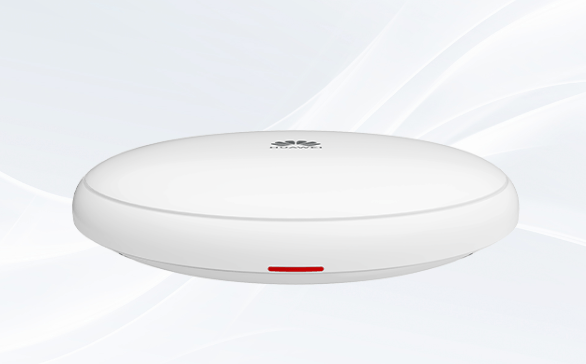

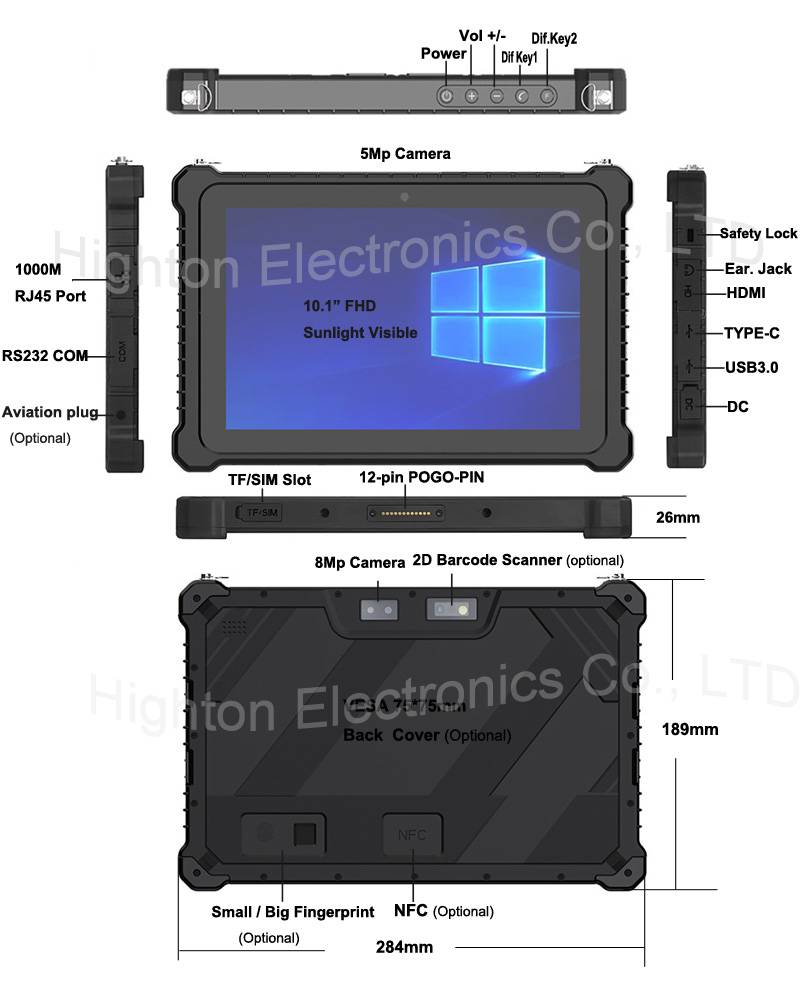
Hot Selling 10 Inch Intel N5100 I5 I7 FHD 8 +128GB 16+256GB Win10 Pro Win11 Pro 4G 5G Rugged Tablet PC Pad with NFC Barcode
Highton Electronics Co., Ltd.
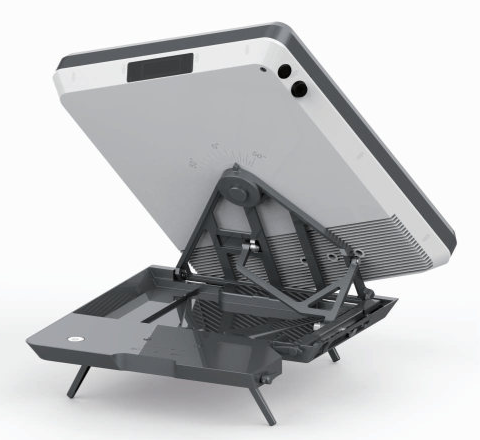
Flat Portable Satellite Terminal 0.35m Aperture Manual Portable Terminal
China Starwin Science & Technology Co., Ltd.

MUX Series Communication Interface Device for Security and Stability Control System
Nanjing NR Electric Co., Ltd.



G.652.D Wavelength-extended Non-dispersion Shifted Single-mode Optical Fiber
HONGAN GROUP CO., LTD.
20 Inch 1600*900 Full HD 60Hz TFT LED Monitor with VGA and DP Interfaces for Desktop Computers-Business Use
Guangzhou Zanying Optoelectronics Technology Co., Ltd.