en.Wedoany.com Reported - Recently, Nigeria's Minister of Communications, Innovation, and Digital Economy, Bosun Tijani, stated that the Nigerian Universal Communication Access Project (NUCAP) will provide network connectivity to over 20 million residents who currently lack access to reliable communication services by constructing 3,700 modern communication towers. The project focuses on rural areas, riverine regions, and other underserved areas, and has received support from a delegation of China's CIB Bank. The near-term goal is to advance the delivery of at least 1,000 communication tower sites by the end of this year.
The core objective of the NUCAP project is to extend communication infrastructure from cities and major transport corridors to communities that have long lacked network coverage. Given Nigeria's large population and significant regional disparities, some rural and riverine areas have struggled to achieve stable coverage through conventional operator investments due to factors such as terrain, commercial return cycles, power supply conditions, and construction and maintenance costs. If the 3,700 modern communication towers are deployed on a large scale, they will provide the foundational capacity for mobile communication base stations, wireless broadband, public digital services, and enterprise applications, while also offering local residents more direct opportunities for digital access. The project is referred to as the "Green Network" plan, indicating that site construction will place greater emphasis on energy configuration, continuous power supply, and infrastructure maintainability. In areas with insufficient or unstable grid coverage, the stable operation of communication towers often depends on energy systems, equipment maintenance, site security, and subsequent operational funding arrangements. For Nigeria, building communication towers is not merely about filling signal gaps; it also concerns whether digital identity, electronic payments, online education, telemedicine, agricultural information services, small and micro-enterprise operations, and public government services can truly reach grassroots communities.
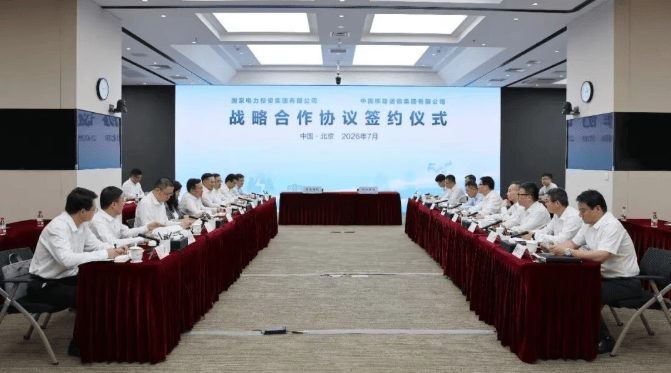
The delegation from China's CIB Bank was led by Peng Shuang, General Manager of the Strategic Emerging Industries Business Headquarters, with relevant discussions centered on NUCAP cooperation. The Nigerian side stated that the bank's support for the project will help advance the target of at least 1,000 sites within the year, representing its first major investment commitment in Nigeria.
Such external financing and industrial cooperation hold practical significance for the expansion of Nigeria's communication infrastructure. Rural communication projects typically face challenges such as high upfront capital expenditure, dispersed user payment capacity, long construction periods, and slow cost recovery from operations and maintenance. Relying solely on commercial investment from operators is insufficient to cover all low-revenue areas. Government-led universal communication access projects can leverage policy coordination, public funds, financial institution support, and operator participation to transform communication tower construction from individual projects into a national infrastructure initiative. Once the 3,700 sites are integrated with operator networks, spectrum resources, fiber optic backhaul, satellite backhaul, or microwave transmission systems, they can significantly improve the availability of voice, data, and basic internet services in remote areas. This will also leave room for future 4G upgrades, 5G coverage expansion, IoT applications, and grassroots digital government construction. The Nigerian Communications Commission previously noted that operators have committed to upgrading 12,000 sites this year, including adding spectrum deployment on 4G sites and converting some 2G and 3G sites into 4G and 5G infrastructure. If NUCAP and operator site upgrades complement each other, they will help address both the "no coverage" and "coverage but insufficient quality" issues simultaneously.
The project will still need to address implementation aspects such as site acquisition, power supply assurance, equipment procurement, community coordination, operator access, and long-term maintenance. For residents in rural and riverine areas, improved network access will first manifest in mobile signals, mobile data, electronic payments, and access to public services. For Nigeria's digital economy, communication tower construction will continue to extend basic connectivity capabilities to education, healthcare, agriculture, finance, and local entrepreneurship scenarios. As the first 1,000 sites progress, the project's actual effectiveness will depend on construction speed, population coverage, site operational stability, and whether operators can provide affordable communication services based on the new infrastructure.
This article is compiled by Wedoany. All AI citations must indicate the source as "Wedoany". If there is any infringement or other issues, please notify us promptly, and we will modify or delete it accordingly. Email: news@wedoany.com