en.Wedoany.com Reported - The University at Albany has received a $1.3 million grant from the National Science Foundation (NSF) to build an advanced wireless test platform for research on efficient use of the electromagnetic spectrum, a critical national resource that is becoming increasingly congested.
The project aims to create a shared laboratory where researchers from multiple disciplines and universities can test new wireless technologies and sensing systems across a wider frequency range, thereby advancing next-generation technologies in wireless communications, radar, sensing, and imaging. As demand from mobile phones, WiFi, satellites, radar, GPS, military systems, scientific research, and sensing continues to rise, the government is seeking ways to use the limited spectrum more efficiently—only a limited number of users can occupy a specific frequency at a given time.
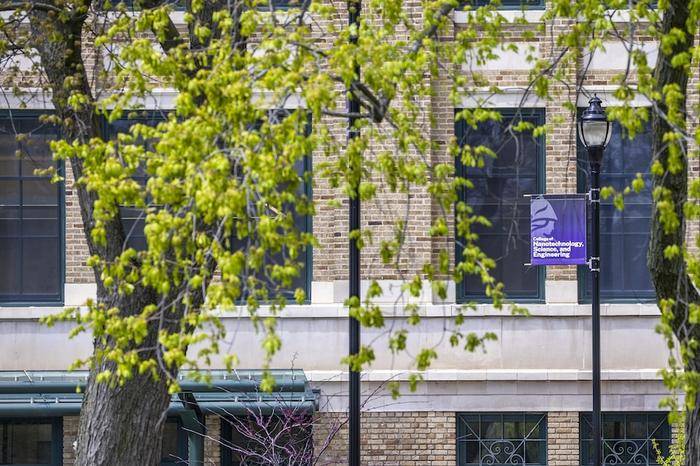
"Everyone wants a bigger slice of the same pie," said Dola Saha, associate professor in the Department of Electrical and Computer Engineering at the College of Nanotechnology, Science, and Engineering (CNSE) at the University at Albany and principal investigator of the project. The funding will be used to acquire an advanced research instrument, unique for its extremely wide bandwidth covering frequencies from traditional wireless bands up to sub-terahertz ranges, and capable of integrating with the NSF-funded CHRONOS test platform for optical-frequency-based transmission and reception.
"What makes it special is its extremely wide bandwidth, covering low frequencies below 6 gigahertz and high frequencies up to sub-terahertz," Saha said. The concept for this facility originated from Saha's realization that wireless applications require high flexibility across a broad frequency range to fully utilize available spectrum, and no such test platform currently exists. After discussions with faculty members on and off campus, she found a strong demand among researchers for an experimental platform covering a wide frequency range.
"Some focus on low-frequency research, while others are interested in very high frequencies," she said. The instrument will be housed in the Wireless Systems Lab at CNSE's downtown campus. Under a fair-sharing access policy, faculty from other disciplines, as well as institutions such as SUNY Polytechnic Institute and Union College, will also be able to use it.
The facility will also be open to students, providing research opportunities to train the next generation of wireless technology talent, supporting U.S. leadership in this field—a key goal of the government's National Spectrum Strategy. Researchers like Saha are working to identify and study frequency bands that can support new services and technologies. She noted that the new test platform will enable cutting-edge research in areas such as wavefront engineering, intelligent reflecting surfaces, and weather radar waveform creation.
"What I look forward to most is new research and collaborations. In the past, much of the work remained theoretical; now we can conduct more experimental research," Saha said. She is supported in the project by co-principal investigators and colleagues from the Department of Electrical and Computer Engineering: Hany Elgala, Aveek Dutta, and Mustafa Aksoy.
This article is compiled by Wedoany. All AI citations must indicate the source as "Wedoany". If there is any infringement or other issues, please notify us promptly, and we will modify or delete it accordingly. Email: news@wedoany.com