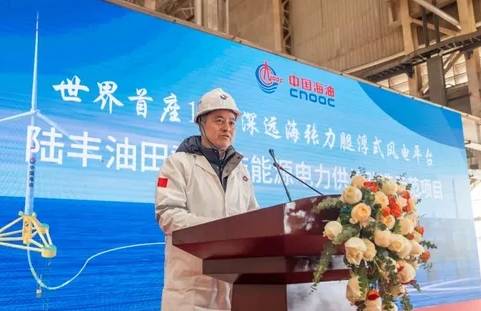
COOEC announces the construction start of the wind TLP.
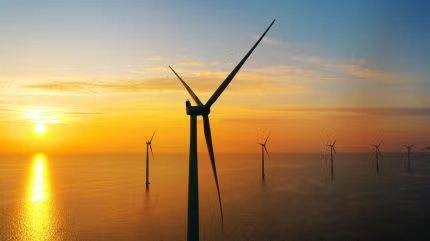
Wedoany.com Report-Feb 26, China’s Offshore Oil Engineering Company (COOEC) has started building a deepwater tension-leg platform (TLP) for a floating wind project in the South China Sea, managed by CNOOC Ltd. This structure is described as the first of its kind globally for such a purpose.
The construction is taking place at COOEC’s facility in Qingdao. The project features a 16-megawatt floating wind turbine, noted as the largest single-unit capacity worldwide, according to COOEC.
A vertical tension-leg mooring system is being used for the first time. This setup includes dynamic and static submarine cables and energy storage units. The design focuses on improving stability and efficiency for offshore electricity production.
COOEC highlighted that TLP technology provides benefits compared to other floating wind turbine models, especially in making better use of ocean space. The platform’s motion is similar to that of fixed wind turbines, enhancing operational consistency and reliability while increasing energy output.
The design also features a simplified structure, lowering the amount of steel needed per kilowatt. This makes it more practical for large-scale manufacturing.
Upon completion, the floating wind system is projected to deliver 54 million kilowatt hours of renewable energy each year to the Lufeng oilfield cluster. This will replace approximately 15,000 cubic metres of fuel oil annually, reducing carbon dioxide emissions by 35,000 tonnes.
The project’s environmental assessment was recently approved by China’s Ministry of Natural Resources. This approval allows deployment at the LF14-4FOWT site, situated 136 kilometres offshore in waters 136 metres deep.
The TLP foundation, developed by the CNOOC Research Institute, has gained preliminary approval from Bureau Veritas, a classification society. The platform will link to the offshore grid through a 3.8-kilometre subsea cable.
COOEC stated: “TLP technology offers distinct advantages over other floating wind turbine designs, particularly in optimising sea space.” This reflects the project’s aim to advance offshore renewable energy solutions efficiently.
The initiative aligns with efforts to integrate sustainable energy into offshore operations, supporting cleaner power generation in the region. Construction progress at Qingdao continues, with the platform set to play a key role in the South China Sea’s energy landscape once operational.