en.Wedoany.com Reported - Walter Muñoz, Vice President of the Chilean Mining Chamber (Cámara Minera de Chile), analyzed the new challenges facing mine safety in a commentary article, pointing out that risks are no longer limited to direct interaction with rock masses or heavy objects, but have expanded to systemic and technological threats brought about by operational modernization, such as the issues revealed by the geomechanical accident currently under investigation at the El Teniente mine.
Muñoz believes that the connection of operational control systems to IP networks makes industrial cybersecurity a key risk. A cyberattack on underground ventilation systems, concentrator plants, or autonomous truck dispatch systems could directly threaten lives. The cyberattack suffered by SERNAGEOMIN, which resulted in the loss of valuable data, confirms this vulnerability. Large-scale electric mobility introduces new chemical risks, particularly lithium battery fires that are difficult to extinguish in underground environments. According to Muñoz, fires involving lithium battery production equipment can take up to 7 hours to extinguish, creating potential disasters. There is currently a lack of clear regulations for the certification and firefighting of such combustible materials, a critical gap in mine safety.
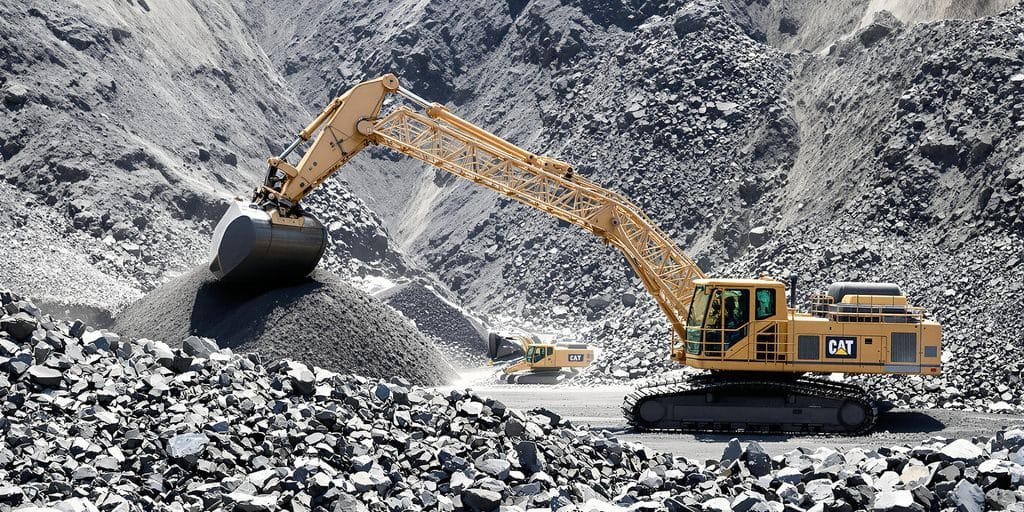
As ore grades decline and mining depths increase, the risk of induced seismicity and rockbursts rises significantly. This requires redefining dynamic support standards and developing specialized procedures for poor-quality rock at new depths. The industry is shifting from "behavior-based safety" to fault-tolerant design and automation of high-potential hazard processes such as blasting and mechanical scaling. Automation and remote operation from urban centers, such as Codelco El Teniente's Integrated Operations Center in Rancagua or Antamina's center in Santiago, bring a shift in risks, demanding a fundamental evolution in prevention culture. Muñoz emphasizes that the absence of operators in open-pit mines does not mean zero risk; the transition zones where autonomous equipment coexists with human-supervised vehicles are the most critical risk points.
The LOTO (Lockout/Tagout) standard also reflects this change, shifting from physical locking to logical and multidimensional locking. Safety supervisors need to understand remote energy flows and wireless protocols, a capability still under development in Chilean and international mining. Predictive analytics through wearable sensors enable real-time monitoring of slopes, boxes, fatigue, and hazardous substance exposure before accidents occur. Muñoz states that the prevention culture is "moving from a passive reaction to supervisor reports to analyzing data deviations in the control room."
Muñoz believes the main challenge is to break the self-deception of "zero statistics," where an operation may accumulate millions of hours without lost-time incidents while maintaining fatal precursors. The pressure for production efficiency cannot suppress high-potential events. A key obstacle is the protection gap between in-house employees and service providers, with historically higher rates of complex injuries concentrated among contractor and subcontractor companies. Muñoz questions this disparity, arguing that the real challenge is to unify safety standards for everyone, without distinction in training or protection. In Latin America, safety has not yet become ingrained in workers; obligation outweighs conviction. Attracting new talent requires demonstrating that mining cares about workers' physical and mental health, managing fatigue through predictive technologies, and using data for improvement rather than punishment.
Climate change has also become a direct occupational factor. Prolonged heatwaves in desert and high-altitude regions directly affect the fatigue rates of operators and mechanics, with heatstroke leading to accelerated dehydration, loss of concentration, and increased critical behavioral errors. Rainfall of abnormal intensity alters slope stability and ore behavior in stockpiles, increasing the risk of severe collapses. The scarcity of inland freshwater forces the use of desalination plants and extreme water recycling operations, putting pressure on dust management under PM10 parameters. Reduced visibility due to suspended dust is a root cause of heavy equipment collisions and chronic silica exposure. These topics will be discussed at the World Mine Safety and Rescue Congress (Congreso Mundial de Seguridad y Rescate Minero) to be held in Santiago in 2026, organized by the Chilean Mining Chamber, MIRE, and CONEMIN, with speakers from global mine safety experts.
This article is compiled by Wedoany. All AI citations must indicate the source as "Wedoany". If there is any infringement or other issues, please notify us promptly, and we will modify or delete it accordingly. Email: news@wedoany.com