Philippines' Western Visayas activates 2,020 free Wi-Fi sites
en.Wedoany.com Reported - Recently, the Philippine Department of Information and Communications Technology activated 2,020 free public Wi-Fi sites in the Western Visayas region, while continuing to expand the government network GovNet. These sites cover government hospitals, health centers, public schools, state universities, local government offices, and other public service areas, providing residents with basic connectivity to access online services, educational resources, and digital governance.
This deployment is part of the Philippines' National ICT Month initiatives and aligns with the country's push for inclusive connectivity and digital government services. Western Visayas consists of multiple islands and local administrative units, with public service points scattered across the region. Schools, medical facilities, and grassroots service windows increasingly rely on stable networks. With the activation of free Wi-Fi sites, residents can access the internet in more public areas, students can utilize online learning resources, and grassroots institutions can more smoothly connect to government systems and public service platforms. For residents who need to process documents, search for information, submit applications, or use digital payments online, public network access lowers the barrier to using digital services.
The GovNet expansion focuses on the government office network itself, aiming to enhance data connectivity among public institutions. Unlike the free Wi-Fi for ordinary residents, GovNet emphasizes connecting local government agencies, service windows, and public service units to a unified government network, making internal communications, document transfers, and service processing more stable.
Such projects have direct significance for local digital development in the Philippines. Public Wi-Fi addresses the issue of whether residents can "access" the network, while GovNet tackles whether government departments can "efficiently connect." When combined, digital governance becomes easier to implement at the grassroots level. If public areas have networks but government backend systems are unstable, online services will still stall at the processing stage; if the government network is built but residents cannot easily access it, the coverage of digital services will also be limited. By advancing both types of networks simultaneously in Western Visayas, it helps build public connectivity and government service entry points within the same digital infrastructure network.
For the ICT industry chain, the expansion of public Wi-Fi and GovNet in the Philippines will drive demand for access equipment, routing and switching, fiber backhaul, network security, identity authentication, cloud platforms, operation and maintenance monitoring, and upgrades to local government information systems. Subsequent focus areas include the sustained operational quality of the 2,020 sites, usage by schools and medical institutions, the scope of local government business system integration, and whether GovNet can continue to expand to more cities and municipalities. If the project operates stably, Western Visayas will become an important regional model for promoting public internet access and grassroots digital governance collaboration in the Philippines.
This article is compiled by Wedoany. All AI citations must indicate the source as "Wedoany". If there is any infringement or other issues, please notify us promptly, and we will modify or delete it accordingly. Email: news@wedoany.com
Related Products


GYTA Type Non-Self-Supporting Aerial/Duct Optical Cable
TONGDING INTERCONNECTION INFORMATION CO., LTD.
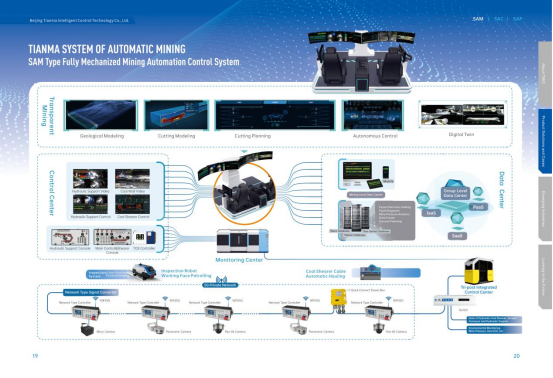
Comprehensive Mining Automation Control System
Beijing Tianma Intelligent Control Technology Co., Ltd.



G.652.D Wavelength-extended Non-dispersion Shifted Single-mode Optical Fiber
HONGAN GROUP CO., LTD.
Automatic Aiming Laser Remote Obstacle Removal Robot
Pinggao Group Weihai High-Voltage Apparatus Co., Ltd.
Flat Portable Satellite Terminal 0.35m Aperture Manual Portable Terminal
China Starwin Science & Technology Co., Ltd.
Hot Selling 10 Inch Intel N5100 I5 I7 FHD 8 +128GB 16+256GB Win10 Pro Win11 Pro 4G 5G Rugged Tablet PC Pad with NFC Barcode
Highton Electronics Co., Ltd.