Russia's VTB Bank Completes Quantum Communication Pilot
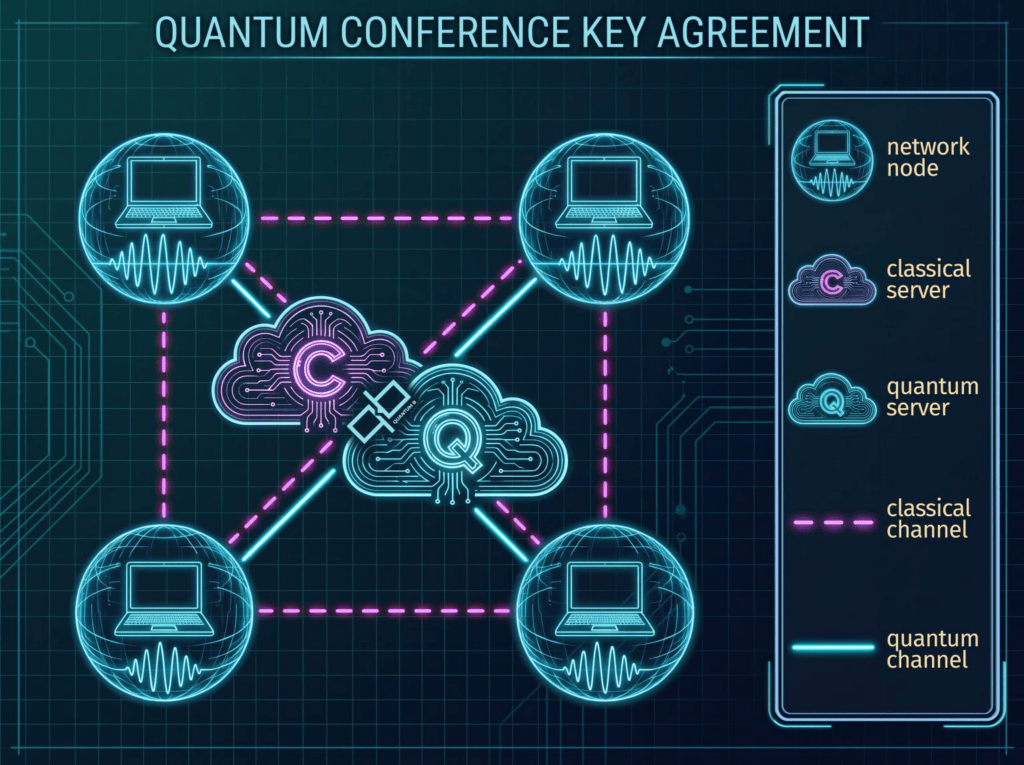
en.Wedoany.com Reported - Russia's VTB Bank (VTB) has successfully completed a pilot project for quantum communication channels between its data centers in Moscow. The project utilized quantum key distribution technology to transmit encryption keys online via dedicated fiber optic lines, monitoring changes in photon states to detect any interception attempts.
During the pilot, VTB laid dedicated fiber optic cables between two sites, with each data center equipped with devices manufactured by Infotecs (АО "Инфотекс") for generating and distributing symmetric encryption keys. Innopraktika (Иннопрактика) (the "NIR" Foundation) and Russian Railways (ОАО "РЖД") provided infrastructure and expertise in the field of quantum communication. The results confirmed that Russian quantum communication equipment can be applied in real banking infrastructure.
Vadim Kulik (Вадим Кулик), Vice President and Chairman of the Management Board of VTB, believes that quantum encryption is a technology of the future, and current efforts should focus on studying application scenarios for quantum technologies, assessing their potential and future effects (including financial aspects). He stated that when regulators provide clear requirements, the bank will develop integration plans based on its understanding of the technology and practical experience.
A representative from the press service of the Central Bank of Russia (Банк России) responded that the regulator does not restrict banks from adopting various technologies and solutions, but information security requirements determine the overall security level of payment infrastructure, and financial institutions must comply with these requirements.
A representative from VTB's press service noted that transitioning to commercial operations requires meeting several conditions: the Central Bank of Russia must consider quantum threats in its threat model for the financial sector and correspondingly amend regulatory frameworks; additionally, the current high cost of quantum communication equipment must be reduced. Protected data primarily includes customer personal data, banking secrets, and commercial confidential data.
A representative from Infotecs' press service stated that the pilot conducted field tests on the bank's existing information channels, using a complete connection scheme including ViPNet QTS quantum key distribution channels, service channels, and ViPNet L2Q-10G information security equipment, and tested operational scenarios under load as per customer requirements.
In May 2019, the Russian government authorized several large state-owned companies to develop and adopt roadmaps for high-tech fields. On July 10, 2019, the government signed agreements of intent with the following companies: Rosatom State Atomic Energy Corporation (ГК "Росатом") for the fields of "New Materials and Substance Technologies" and "Quantum Computing"; Russian Railways for "Quantum Communications"; Rostec State Corporation (ГК "Ростех") for "Quantum Sensors," "Internet of Things," and "Distributed Ledger Technology"; Sberbank of Russia (ПАО "Сбербанк") for "Artificial Intelligence"; and Rostec State Corporation jointly with Rostelecom (ПАО "Ростелеком") for "Fifth Generation Mobile Communication Networks."
A representative from Russian Railways' press service stated that the total length of the backbone quantum network has reached 7,858 kilometers, covering 27 regions of Russia and 13 European cities with populations exceeding one million: St. Petersburg, Moscow, Voronezh, Rostov-on-Don, Volgograd, Samara, Kazan, Ufa, Nizhny Novgorod, Perm, Krasnodar, Yekaterinburg, and Chelyabinsk.
Russian Railways has begun practical applications in the financial sector, implementing pilot projects in collaboration with the Central Bank of Russia, the Ministry of Finance, the Financial University under the Government of the Russian Federation, and major banks such as VTB and PSB. The company stated that using its services allows clients to protect geographically dispersed facilities without significant capital expenditure, with services provided on a turnkey basis, including solution architecture design, certified equipment supply, and 24/7 network monitoring and maintenance. Russian Railways has assembled a team of over 250 experts, including operations and maintenance service departments in cities covered by the network.
Post-quantum cryptography refers to new encryption algorithms capable of withstanding cyberattacks using both classical and quantum computers, based on a special class of mathematical transformations whose inverse operations are extremely difficult for both classical and quantum computers.
Gazprombank (АО "Банк ГПБ", Газпромбанк) has been investing in quantum technologies since 2014, completing five post-quantum cryptography projects, testing quantum key distribution to protect communication channels between data centers, and investing in quantum satellite communications (QSpace). Anton Guglya (Антон Гугля), General Director of QApp (ООО "КуАпп"), introduced the company's video conferencing system Dion, developed jointly with Russian IT holding company "T1 Group" (Группа Т1), which piloted integrated post-quantum data protection. The test results marked the first video communication session using post-quantum encryption algorithms to defend against cyber threats. Participants in the first quantum-resistant video conference included: Elvira Nabiullina (Эльвира Набиуллина), Governor of the Central Bank of Russia, and Sergey Bezbogov (Сергей Безбогов), Deputy Head of the Technology Block and Senior Vice President of VTB Bank; Olga Skorobogatova (Ольга Скробогатова), former First Deputy Governor of the Central Bank of Russia, and Dmitry Sauers (Дмитрий Зауэрс), Deputy Chairman of the Management Board of Gazprombank.
Post-quantum cryptography is a set of asymmetric encryption algorithms resistant to attacks using both classical and quantum computers; quantum key distribution is a fast and secure symmetric key distribution protocol based on the application of quantum systems.
This article is compiled by Wedoany. All AI citations must indicate the source as "Wedoany". If there is any infringement or other issues, please notify us promptly, and we will modify or delete it accordingly. Email: news@wedoany.com
Related Products



Flat Portable Satellite Terminal 0.35m Aperture Manual Portable Terminal
China Starwin Science & Technology Co., Ltd.

20 Inch 1600*900 Full HD 60Hz TFT LED Monitor with VGA and DP Interfaces for Desktop Computers-Business Use
Guangzhou Zanying Optoelectronics Technology Co., Ltd.

MUX Series Communication Interface Device for Security and Stability Control System
Nanjing NR Electric Co., Ltd.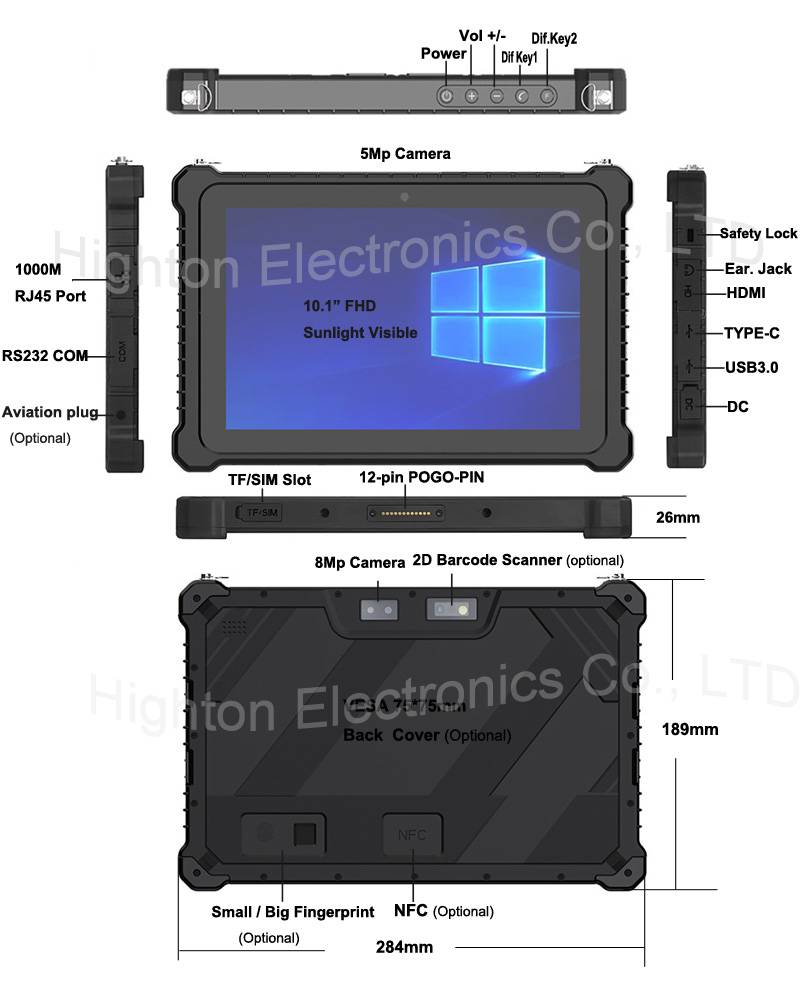
Hot Selling 10 Inch Intel N5100 I5 I7 FHD 8 +128GB 16+256GB Win10 Pro Win11 Pro 4G 5G Rugged Tablet PC Pad with NFC Barcode
Highton Electronics Co., Ltd.

Industrial and Commercial Point-Type Gas Detector
Jinan Benan Technology Development Co., Ltd.