en.Wedoany.com Reported - The Boeing 777-9 is set to become the largest commercial aircraft currently in production. When Boeing launched the 777 series in the 1990s, the model was not designed to be the largest aircraft, nor even the largest in Boeing's lineup. Boeing upgraded the 747 to the 747-8, with the freighter version gaining some market recognition, but the passenger version received a lukewarm response. With the 747 ceasing production in 2023 and the Airbus A380 in 2021, the 777 series has become the largest model still in production. It is the widest single-deck aircraft currently available, with an interior cabin width wider than the A380's upper deck and exceeding that of the 747's upper deck.
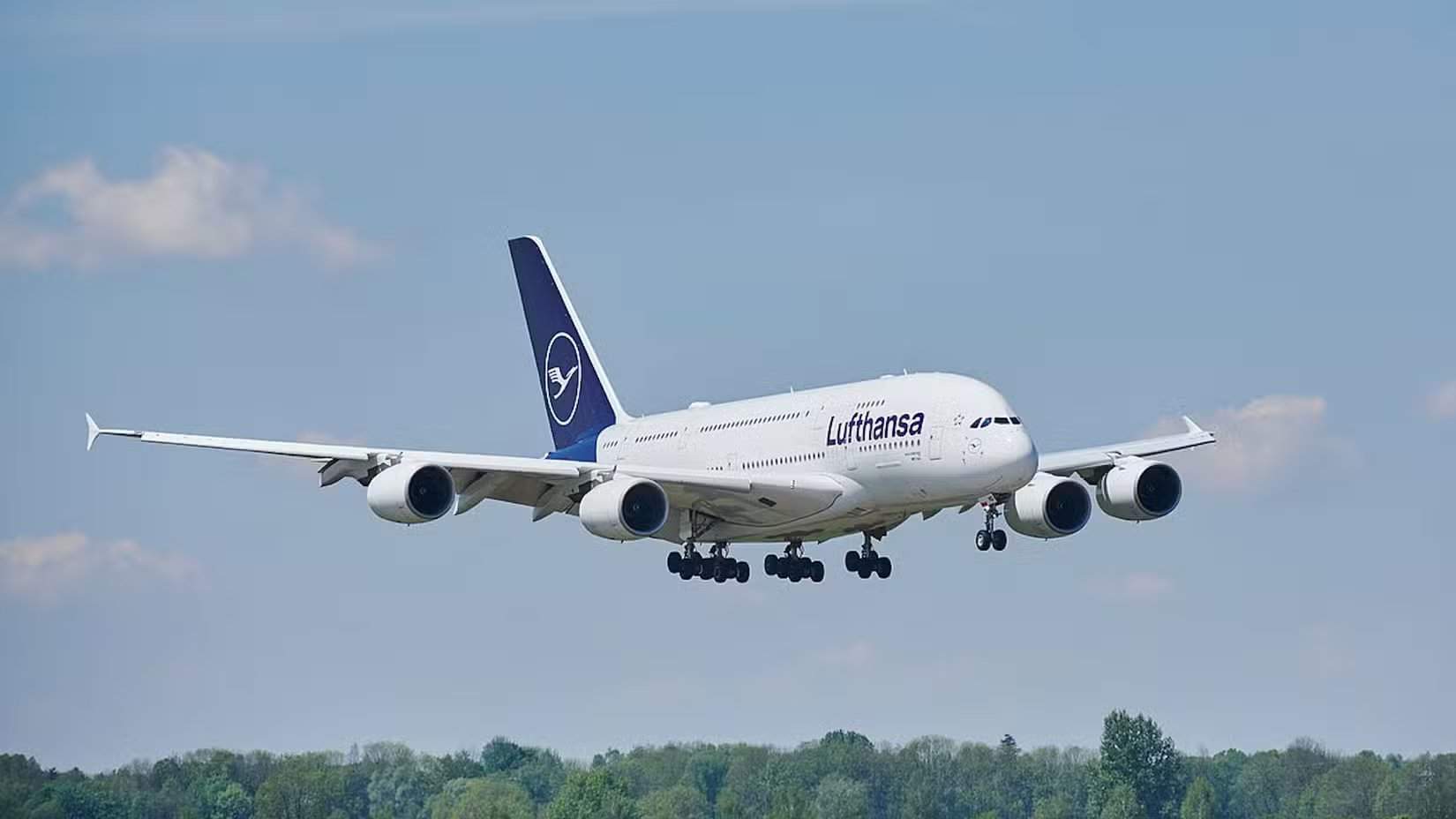
When comparing aircraft widths, it is necessary to distinguish between external width and internal width. The external fuselage diameter of the Airbus A380 is approximately 23 feet 5 inches (7.1 meters). With the A350 adopting new production standards, the cabin walls have been thinned by 2 inches, adding 4 inches of interior cabin width. The A380 features a double-deck cabin, with a usable width of 21 feet 4 inches (6.5 meters) on the main deck, while the upper deck is smaller, with a usable width of 19 feet (5.8 meters). As a double-deck aircraft, the A380 uses heavy beams and support structures between the two decks, making the cabin walls and frames very sturdy. Airbus was the first to use advanced composite materials and insulation on the A380, allowing for thinner cabin walls with an average thickness of 8 to 10 inches on each side.
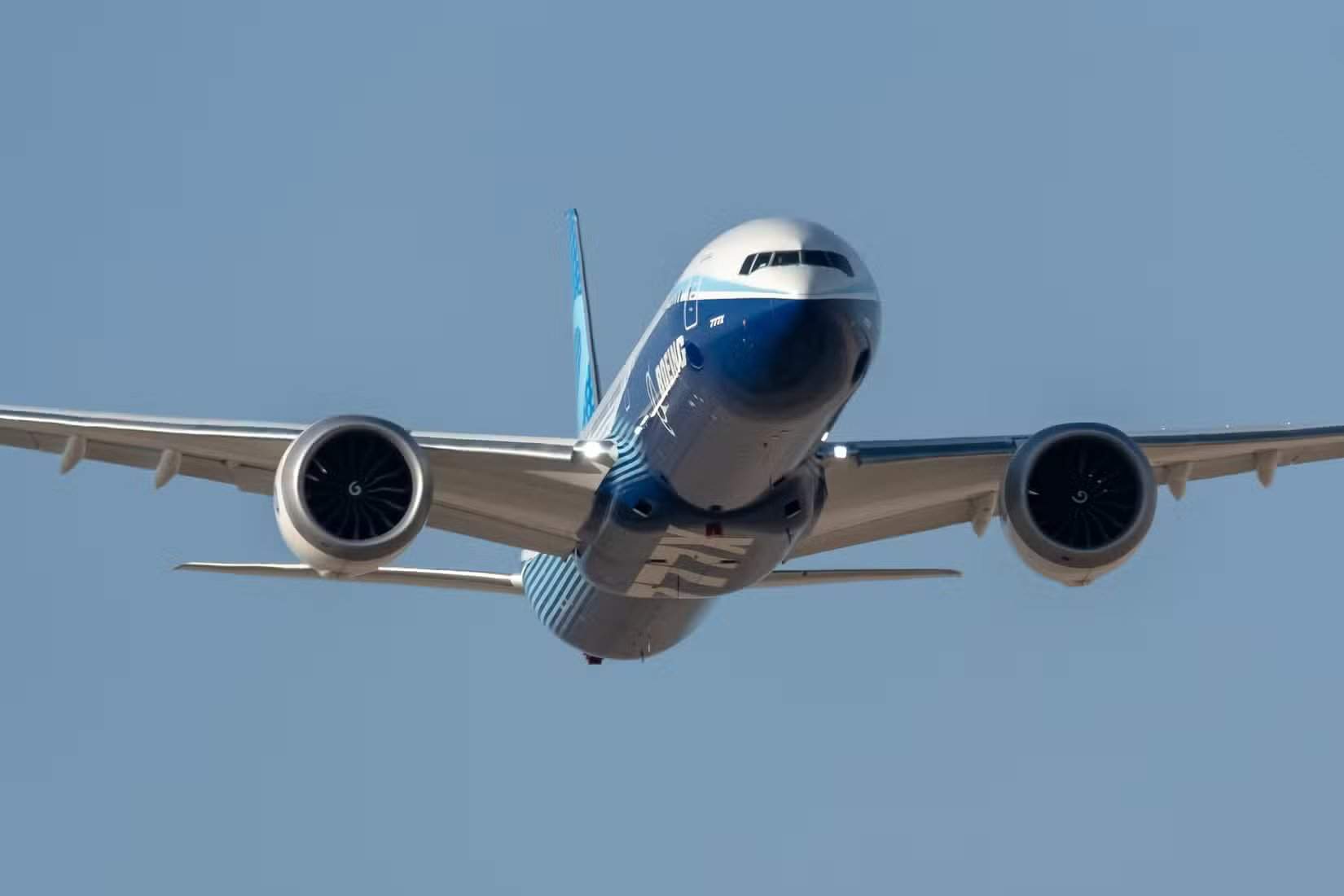
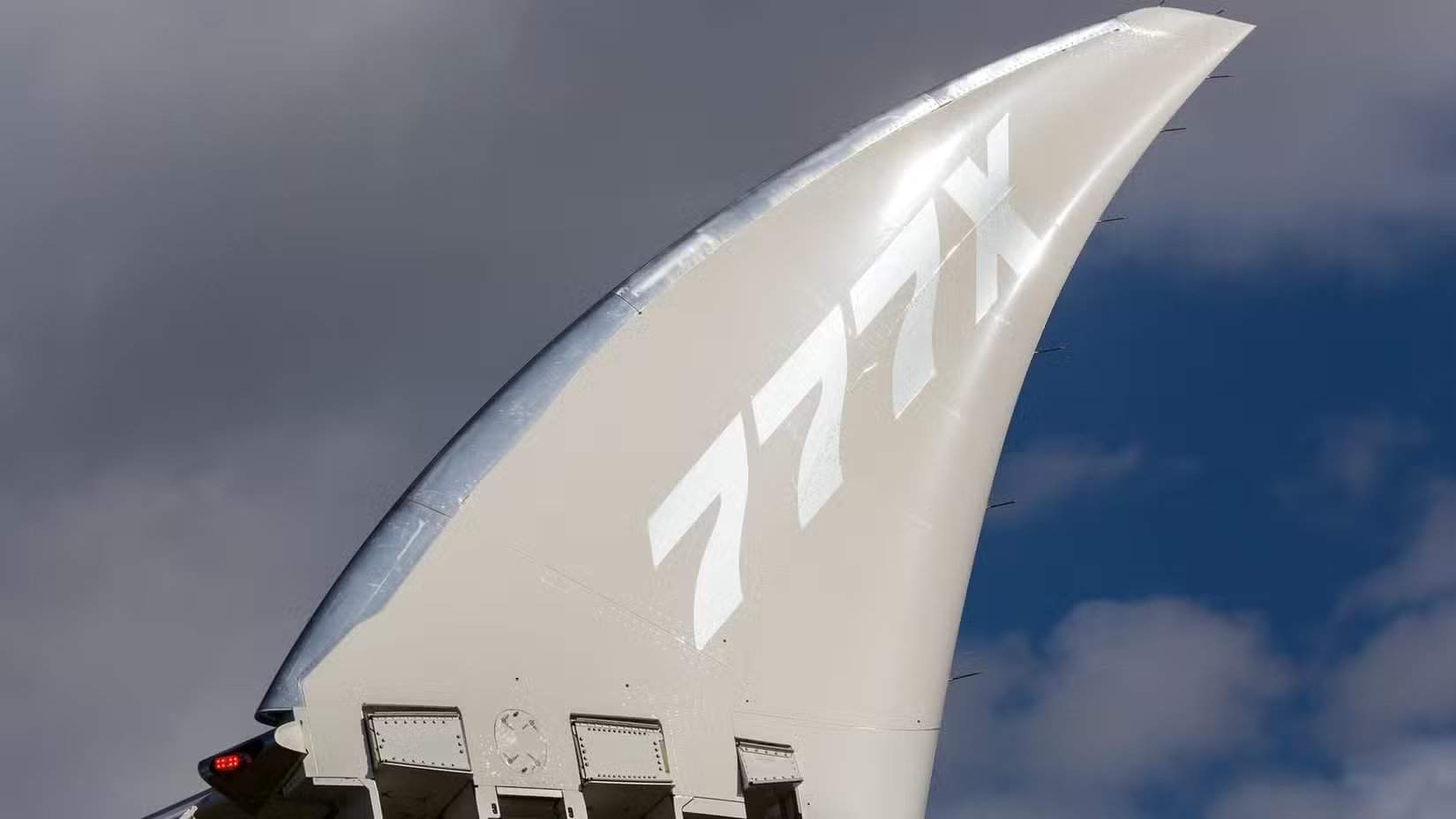
The Boeing 777 series has evolved to its third generation, with some physical dimensions adjusted over time. For the average observer, the most noticeable changes in the upcoming 777X are the longer wingspan and new folding wingtips. The interior cabin width of the older -200 and -300 series aircraft is approximately 19 feet 3 inches (5.87 meters). Through design improvements that allow for thinner cabin walls, the upcoming 777X will add 4 inches of usable interior cabin width, with thinner sidewalls and optimized insulation increasing the interior width to 19 feet 7 inches (5.97 meters). The 777X is not competing with the discontinued A380 but rather with the A350, and Boeing states that the model will be "up to 40 centimeters (16 inches) wider than the A350."
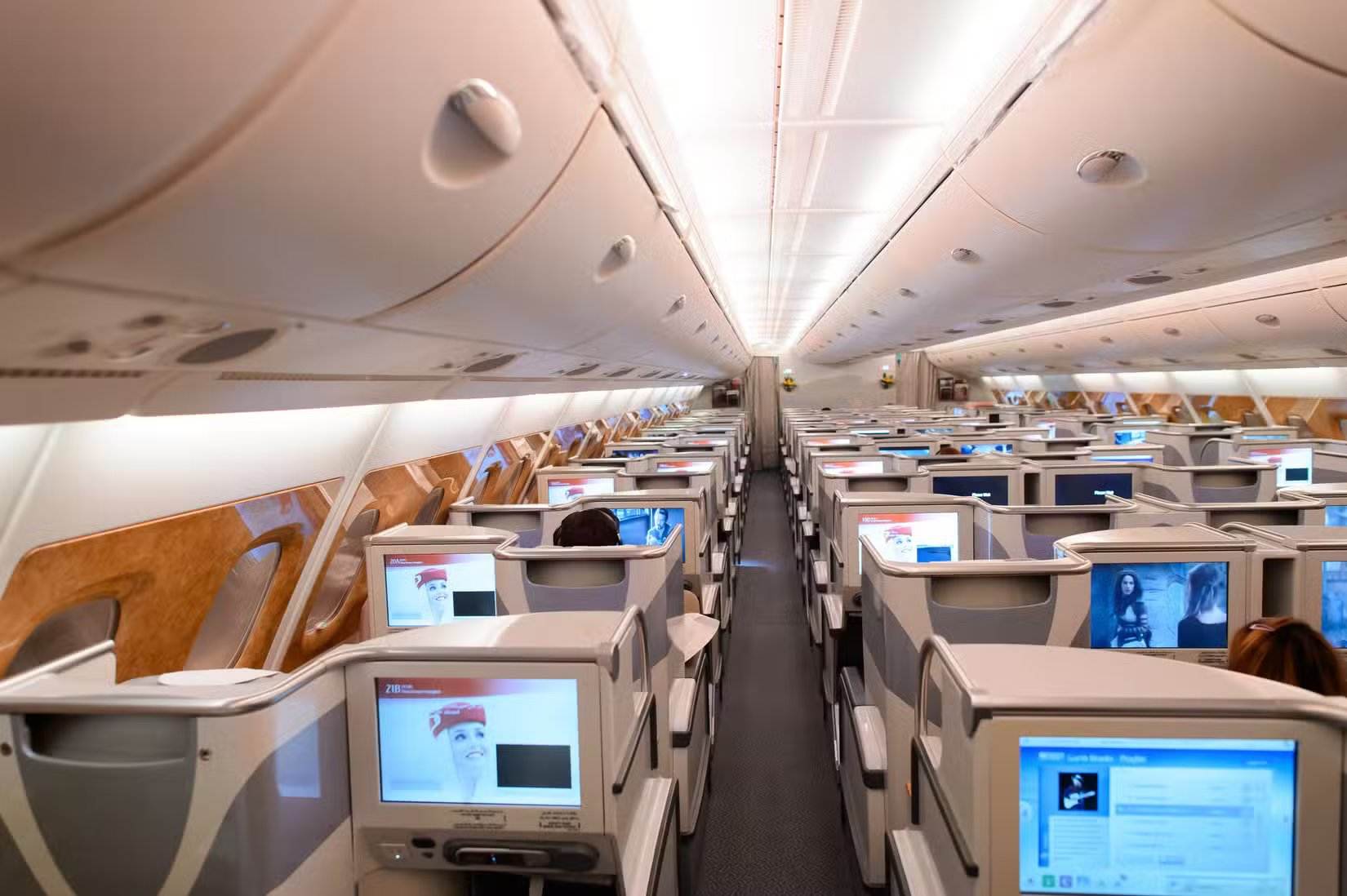
The interior cabin widths of the older 777 and the upcoming 777X are 3 inches and 7 inches wider than the A380's upper deck, respectively. The A380's upper deck is 1 foot 9 inches wider than the 777X, making a 10-abreast seating layout more comfortable. For reference, the A350's initial interior cabin width was 18 feet 5 inches (5.61 meters), later increased to 18 feet 9 inches (5.71 meters).
In terms of cabin length, the A380 does not hold an advantage. The cabin length of the older 777-200/-300 is approximately 143 feet (43.6 meters). For the larger 777-300ER (the most popular 777 model), this length increases to about 180 feet (54.9 meters). The upcoming 777-8 model, which will replace the smaller 777-200 series, has a cabin length of approximately 159 feet (48.4 meters), about 16 feet longer than its predecessor. The more popular stretched 777-9 model, replacing the 777-300ER, has a cabin length of approximately 189 feet 6 inches, about 9 feet longer than the 777-300ER. This allows it to accommodate 34 more passengers than the 777-300ER. Due to redesigned exit door regulations, the theoretical maximum capacity of the 777-9 is only 475 passengers, lower than the 777-300ER's 550-seat limit. The A380's main deck length is approximately 164 feet (50 meters), and the upper deck length is approximately 147 feet (44.8 meters). Although the A380 is a larger aircraft with two full decks, each deck is shorter than the single deck of the 777-300ER and 777-9, but longer than the 777-200's deck. The 777-8's deck length will fall between the two decks of the A380, while the 777-9's deck will be about 25 feet longer than the A380's main deck and about 42 feet longer than its upper deck.
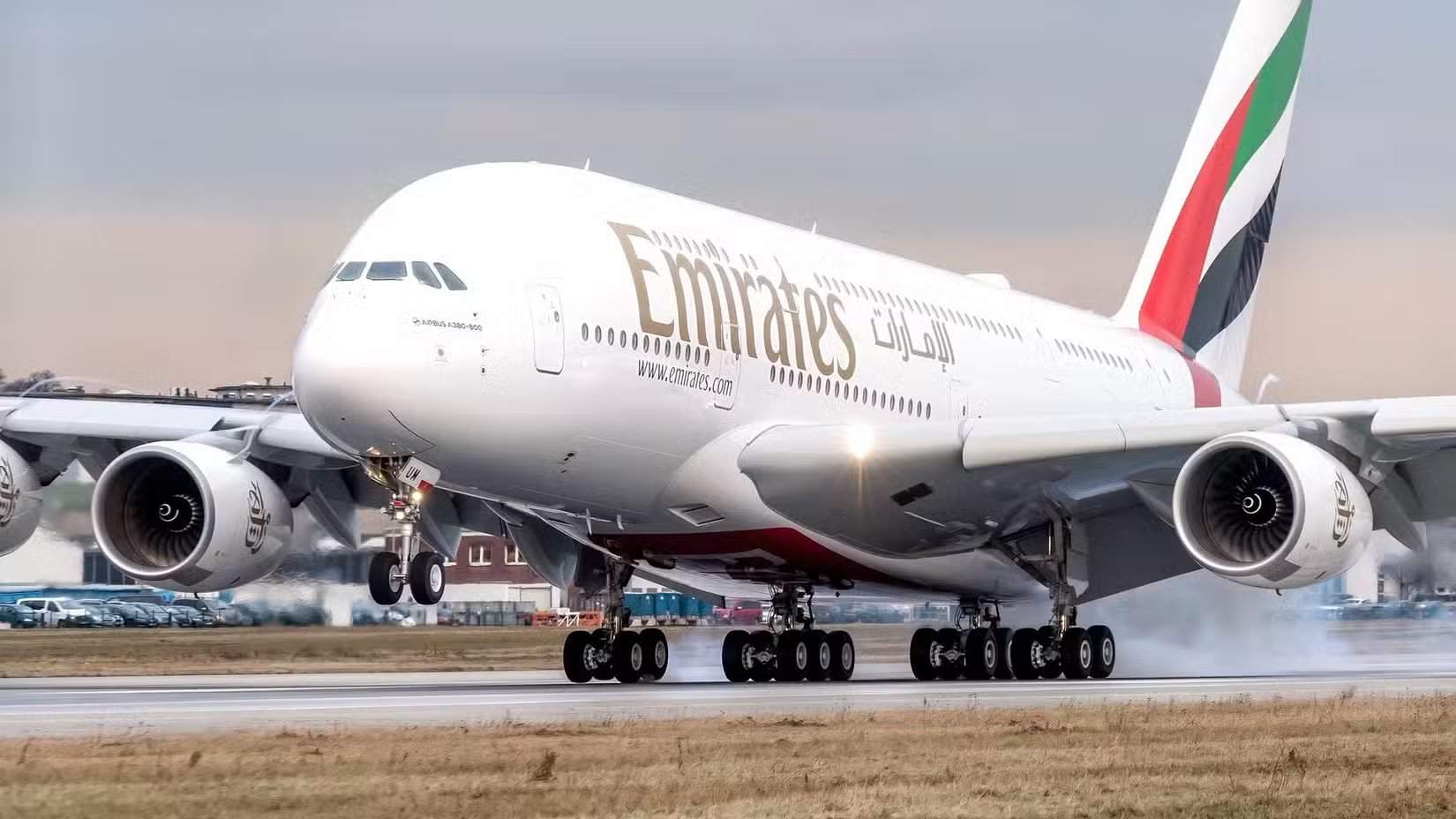
The A380, A350, and the 777 and 777X are all wide enough to accommodate a 10-abreast seating layout in economy class. However, the interior cabin width results in varying levels of comfort. As an ultra-wide aircraft, no A380 has ever been configured with a 9-abreast economy class (3-3-3); all use a 3-4-3 layout. For the narrower 777, most early operators used a 9-abreast layout (3-3-3) in economy class, when the industry standard seat width was relatively generous at around 18.5 inches. Over time, most airlines switched to a 10-abreast layout (3-4-3). The 4 inches added to the 777X will make 10-abreast seating more comfortable. The A350 can theoretically accommodate 10-abreast seating, but because it is narrower than the 777, almost all airlines choose a 3-3-3 layout for economy class. Only Caribbean Airlines, Philippine Airlines, and French Bee have configured these aircraft with 10-abreast seating, creating high-density A350s.
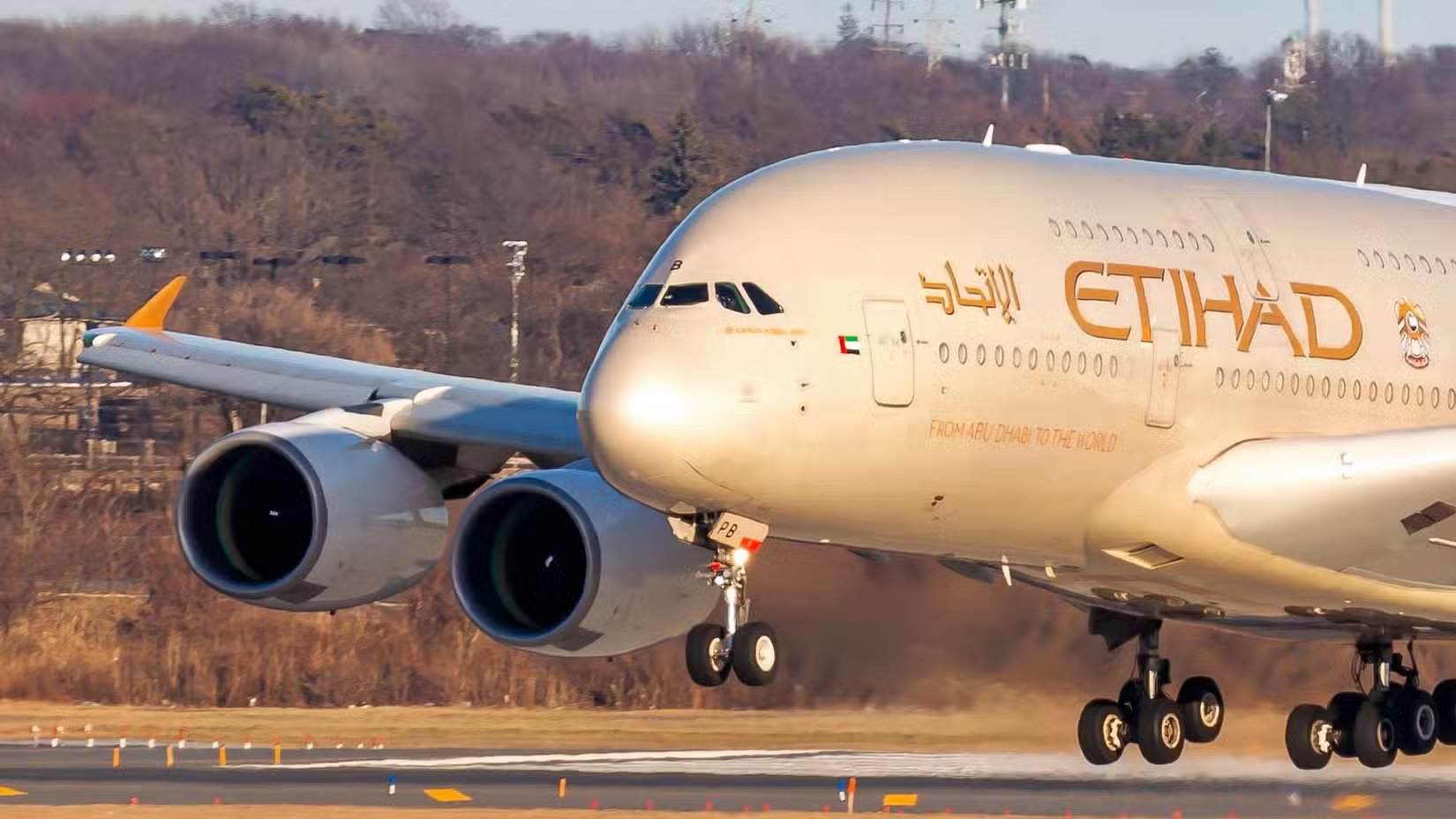
In terms of wingspan, the older Boeing 777 and A350 are designed to comply with International Civil Aviation Organization (ICAO) Code E regulations. The massive A380 has a wingspan of 261 feet 8 inches (79.75 meters), falling under Code F, requiring airports to have special infrastructure to operate. The A380's wingtip devices are winglets, which are relatively rare on wide-body aircraft, partly to limit the wingspan. The 777X meets Code E regulations by using folding wingtips. The 777X's wing length is 235 feet 7 inches (71.8 meters), reportedly 5% more aerodynamically efficient than the A350.
In terms of economy class layout, the difference in cabin width between the 777 series and the A380 is not significant. The aviation industry has accepted thinner economy class seats, allowing the 777 to also accommodate 10-abreast seating. The additional 4 inches of cabin space will make this more comfortable and superior to the cramped 10-abreast A350. Theoretical maximum density layouts are rarely used in practice; the 777-300ER can theoretically carry 550 people, but actual seat configurations are far lower than that number. Boeing has increased the number of passengers the 777-9 can comfortably accommodate by 34 and reduced its certified seat limit to 475 (the A350-1000 has a certified seat count of 480). Overall, the Airbus A380 is the aircraft with the widest cabin ever built, with a main deck interior width of 21 feet 4 inches (6.5 meters), wider than the 747's main deck at 20 feet (6.1 meters), and exceeding the 777X and A350. The 777X is wider than the A380's upper deck, while the A380's upper deck remains wider than the A350. The 747's upper deck is significantly narrower, at just 16 feet 1 inch (4.9 meters).
This article is compiled by Wedoany. All AI citations must indicate the source as "Wedoany". If there is any infringement or other issues, please notify us promptly, and we will modify or delete it accordingly. Email: news@wedoany.com