Why VOCs Control Has Become a Key Focus in Industrial Environmental Upgrading
VOCs, or volatile organic compounds, are widely found in industrial scenarios such as chemicals, coating, printing, packaging, pharmaceuticals, electronics, furniture manufacturing, auto parts, petrochemicals, storage tanks, and loading operations. These substances can easily evaporate into the air. They may affect the plant environment and employee health, and they can also participate in atmospheric photochemical reactions, contributing to ozone and fine particulate pollution.
For this reason, VOCs control has become an important part of industrial environmental retrofits, green factory construction, and compliant operation. It is no longer only a pollution-control issue, but also a factor related to production safety, environmental responsibility, and long-term industrial competitiveness.
In the past, many enterprises focused mainly on end-of-pipe treatment for VOCs, such as installing activated carbon adsorption units, catalytic oxidation systems, regenerative thermal oxidizers, or scrubbing systems. These devices can reduce emission concentrations. However, if front-end collection efficiency is insufficient, process sealing is poor, or exhaust gas composition fluctuates significantly, the final treatment performance may be difficult to maintain consistently.
In other words, VOCs control cannot rely on a single device alone. It requires systematic design covering source reduction, process control, exhaust gas collection, and final purification. Each link affects the final emission result.
From the source-control perspective, replacing raw and auxiliary materials with low-VOCs alternatives is becoming an important direction. In coating, printing, and adhesive industries, water-based coatings, powder coatings, low-volatility solvents, and environmentally friendly adhesives are gradually replacing high-volatility materials. For chemical and pharmaceutical enterprises, closed feeding, closed reaction systems, solvent recovery, and storage tank breathing gas control can also effectively reduce fugitive emissions.
From the process-control perspective, the design of the exhaust gas collection system is critical. In many projects, the problem is not the limited capacity of the final treatment equipment, but the unreasonable design of hoods, pipeline airflow, negative pressure control, and workshop enclosure. If the exhaust gas is not effectively collected, even highly efficient treatment equipment cannot achieve the expected performance.
Therefore, when building a VOCs control system, enterprises should evaluate process layout, emission points, exhaust gas concentration, airflow fluctuation, temperature, humidity, and safety risks at the same time. A well-designed collection system is often the foundation of stable emissions compliance.
In terms of final treatment technologies, different operating conditions require different technical routes. Low-concentration and high-airflow exhaust gas is often suitable for adsorption concentration followed by combustion treatment. Medium- and high-concentration exhaust gas may be suitable for catalytic oxidation, regenerative thermal oxidation, or solvent recovery. Exhaust gas containing halogens, sulfur, nitrogen, or high humidity requires special attention to corrosion resistance, pretreatment, and by-product control.
For enterprises, selecting VOCs treatment equipment should not be based only on the initial purchase price. Long-term energy consumption, consumable replacement, maintenance difficulty, safety protection, and stable compliance performance should also be considered.
In the future, VOCs control will rely more heavily on online monitoring, digital management, and refined operation and maintenance. Through continuous monitoring systems, airflow and concentration data analysis, equipment status tracking, and abnormality alerts, enterprises can identify problems such as declining treatment efficiency, saturated adsorption materials, abnormal combustion temperature, or pipeline leakage in a more timely manner.
For industrial parks and key emission enterprises with stricter environmental requirements, digital VOCs management will become an important tool for improving compliance capability and reducing operational risk.
Overall, VOCs control is shifting from simply installing environmental equipment to building a stable, controllable, and verifiable waste gas treatment system. For industrial enterprises, effective VOCs control is not only about meeting emission standards. It is also about reducing environmental risk, improving production safety, and strengthening long-term competitiveness in green manufacturing and international supply chains.
Related Products


Electromagnetic Fluid Seawater Floating Oil Separation and Recover Equipment
Huate Magnet Group Co., Ltd.
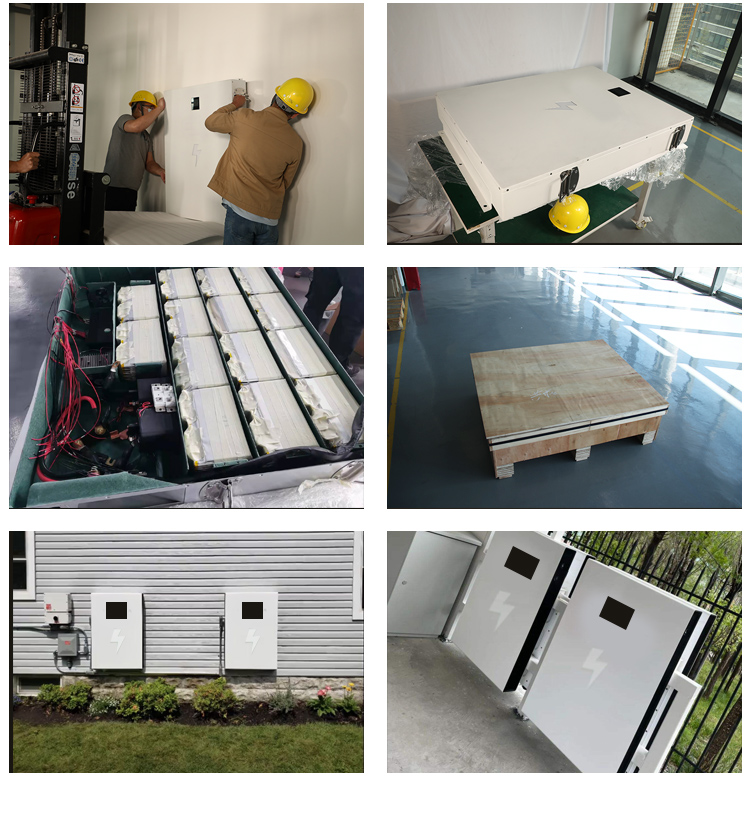
Safe, efficient, intelligent energy storage, creating smart homes and making life more convenient# Home Energy Storage # Supercapacitors # Energy Storage # Wall Mounted # Safe Electricity Use
Gonghe Power Co.,LTD
714CD Series C-Band Weather Radar
Chengdu Zhongdian Jinjiang Information Industry Co., Ltd.
Forest and Grassland Heat Source Infrared Monitor
China Huayun Meteorological Technology Group Co., Ltd.