SMM expects global retired battery scale to grow 54% annually from 2026 to 2030
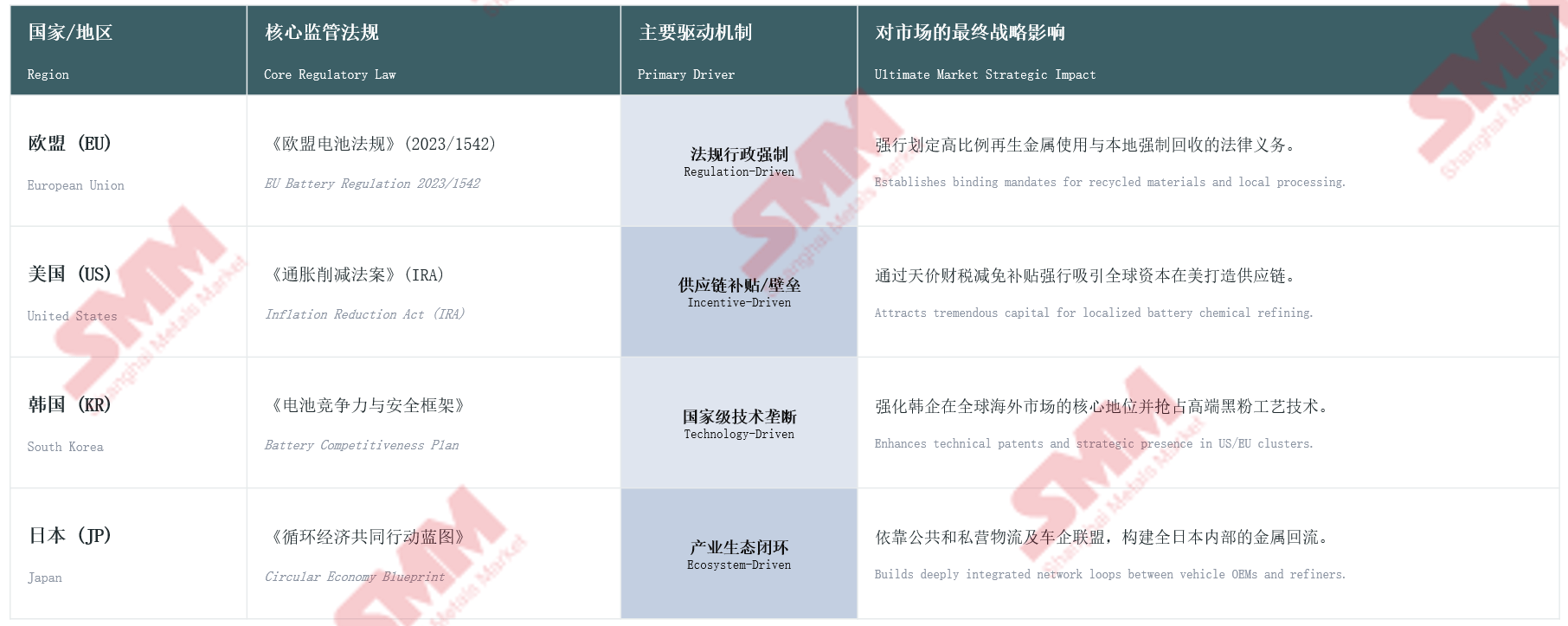
en.Wedoany.com Reported - Feng Disheng, Research Director at SMM, shared his insights on the policy drivers and industrial landscape evolution of the global lithium battery recycling market over the next decade at the GBRC 2026 SMM Battery Recycling and Circular Economy Conference - Power Battery Recycling Forum.
Feng noted that early electric vehicle sales and single-vehicle battery capacities were relatively low, resulting in limited current power battery scrap volumes. With the increase in new car sales and improvements in battery performance, the scale of power battery scrappage is expected to grow significantly after 2028, with China continuing to dominate the global retired battery market. SMM forecasts that from 2026 to 2030, the global scale of retired power batteries will grow at a compound annual growth rate (CAGR) of 54%. The boom in the energy storage market will also trigger a wave of lithium battery retirements, but due to the longer lifespan of energy storage batteries and the lagging development of the industry, the retirement peak will occur later than that for vehicle batteries. Energy storage markets in Europe and the United States started earlier, and current retirement volumes there are higher than in China. SMM expects that from 2026 to 2030, the global scale of retired energy storage batteries will also grow at a CAGR of 54%.
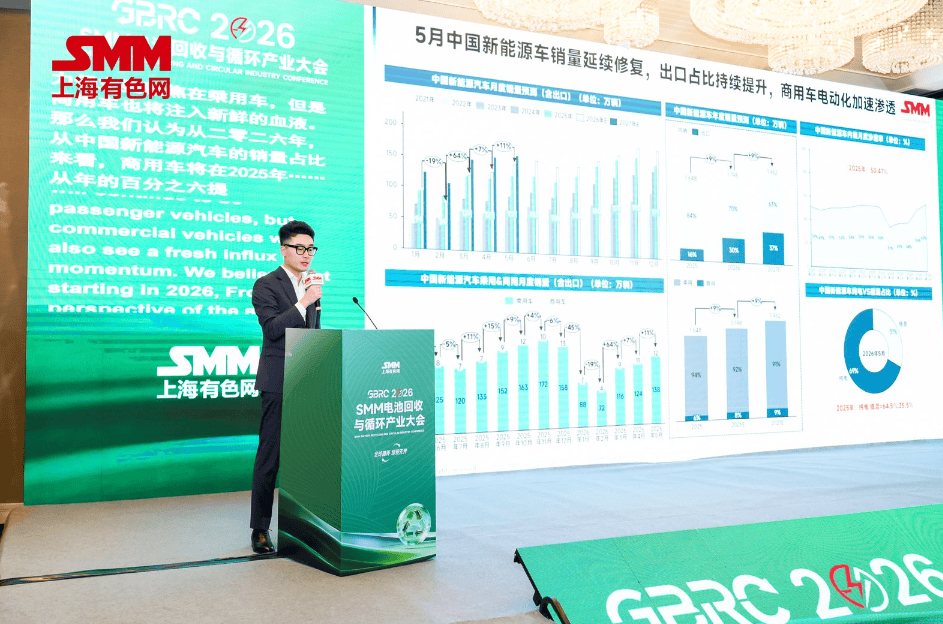
In the new energy vehicle sector, SMM data shows that from March to May 2026, China's new energy vehicle sales showed a recovery trend, with the export share continuing to rise. It is estimated that the export volume of new energy vehicles in 2026 will account for about 30% of annual sales, and this proportion will continue to increase in 2027. SMM also expects that the electrification of commercial vehicles will accelerate, with the electrification penetration rate for commercial vehicles reaching around 9% in 2027. For the energy storage market, SMM predicts that global energy storage cell shipments will reach 939 GWh in 2026, a year-on-year increase of 56%, and is expected to reach 2,194 GWh by 2030, representing a CAGR of 24%.
In the domestic market, following the release of "Document No. 136," the industry is accelerating its transition from policy-driven to market-driven growth, with the economic returns of energy storage projects becoming the core driver. Policies such as the electricity spot market, ancillary services market, and "Document No. 114" on subsidy standardization are jointly promoting this process. The Mengxi market has taken the lead due to high capacity subsidies, stable spot price spreads, and clear installation targets. Provinces such as Gansu, Ningxia, and Liaoning have also successively introduced capacity subsidy policies to provide basic revenue guarantees for independent energy storage projects. In the commercial and industrial energy storage sector, green electricity direct connection and zero-carbon park policies are stimulating market potential. Many regions require parks to allocate energy storage at a ratio of 15% to 30%, with a single park capable of contributing projects at the hundred megawatt-hour level. The mandatory energy storage allocation plan for large-scale Gobi Desert bases forms the foundation for growth. Notably, energy storage demand from intelligent computing centers has entered the early stages of explosive growth. In 2026, "computing-electricity synergy" was included in the government work report for the first time, requiring new intelligent computing centers to have an energy storage supporting ratio of 15% to 20% and a green electricity proportion of no less than 80%. It is estimated that the AIDC sector will contribute approximately 3 GWh of incremental domestic energy storage installations in 2026, and this scenario will continue to provide significant increments over the next five years.
In overseas markets, European demand is driven by clear policy targets and continuously improving economics. Italy plans to achieve approximately 72 GWh of energy storage installations by 2030, while the UK has set a target of connecting 23 to 27 GW of grid-scale battery storage by 2030. The revenue from European energy storage projects is expected to follow a path of initial expansion followed by narrowing: in the short term, the high proportion of renewable energy integration widens the time-of-use price spreads in the electricity spot market, expanding arbitrage opportunities; in the medium to long term, ancillary services market revenues will naturally narrow as a large number of energy storage systems are connected. Demand in the U.S. market primarily stems from the need to upgrade aging grids, the rigid demand for flexible regulation resources due to renewable energy grid integration, and backup demand caused by instability in some regional electricity markets. Energy storage demand driven by AIDC is growing rapidly, but it is not currently the main source of absolute incremental volume; its contribution will gradually increase in subsequent years. The U.S. "Big and Beautiful Bill" and the European Industrial Acceleration Bill are setting up barriers on the supply chain side through requirements for localization rates, tariff adjustments, and technical standards, gradually impacting the competitive advantages of China's energy storage industry chain in overseas markets.
In emerging markets, some regions that previously received less attention are entering a development trajectory due to clear policy planning. Oman is preparing to build its first baseload clean energy project integrating solar, wind, and battery energy storage, marking the beginning of traditional oil and gas countries adopting energy storage portfolios to replace thermal power. India has introduced a mandatory energy storage allocation policy requiring large-scale photovoltaic projects to be equipped with energy storage systems equivalent to 10% of the plant's capacity and with a duration of at least 2 hours. Australia's large-scale energy storage market is entering an acceleration phase, with the core driver being the grid stability and capacity gaps caused by the retirement of a large amount of coal-fired power. Its mature electricity market provides a mechanism guarantee for the realization of multiple values of energy storage. Overall, the global energy storage industry is undergoing a structural transformation from policy-driven to market-driven growth. The key lies in whether the electricity market design can effectively realize the value of energy storage in energy arbitrage, ancillary services, and capacity support.
Currently, retired batteries mainly come from production scrap; after 2028, the proportion of theoretically recoverable metal volumes from retired channels in scrapped batteries will gradually increase. SMM estimates that from 2026 to 2030, the global theoretical lithium-ion battery recycling volume from social retirement channels will grow at a CAGR of 46%, while that from production scrap will grow at a CAGR of 18%. In terms of global theoretical recoverable metal volumes, the CAGR from social retirement channels is expected to be 43%.
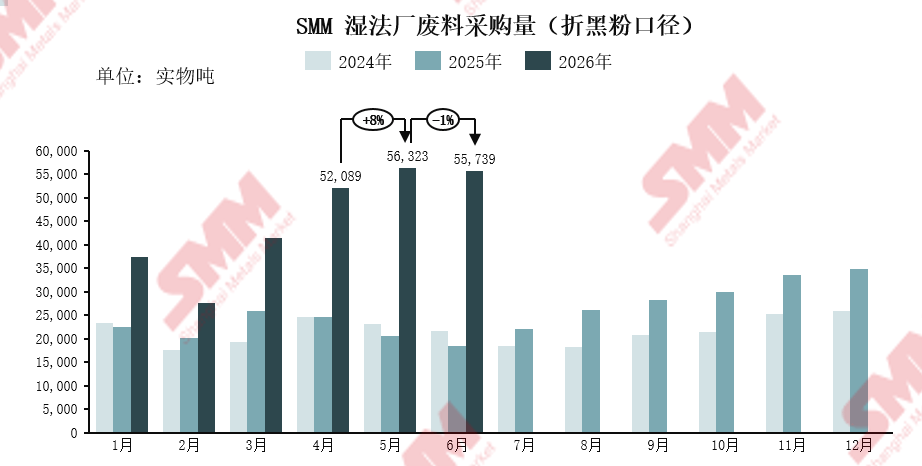
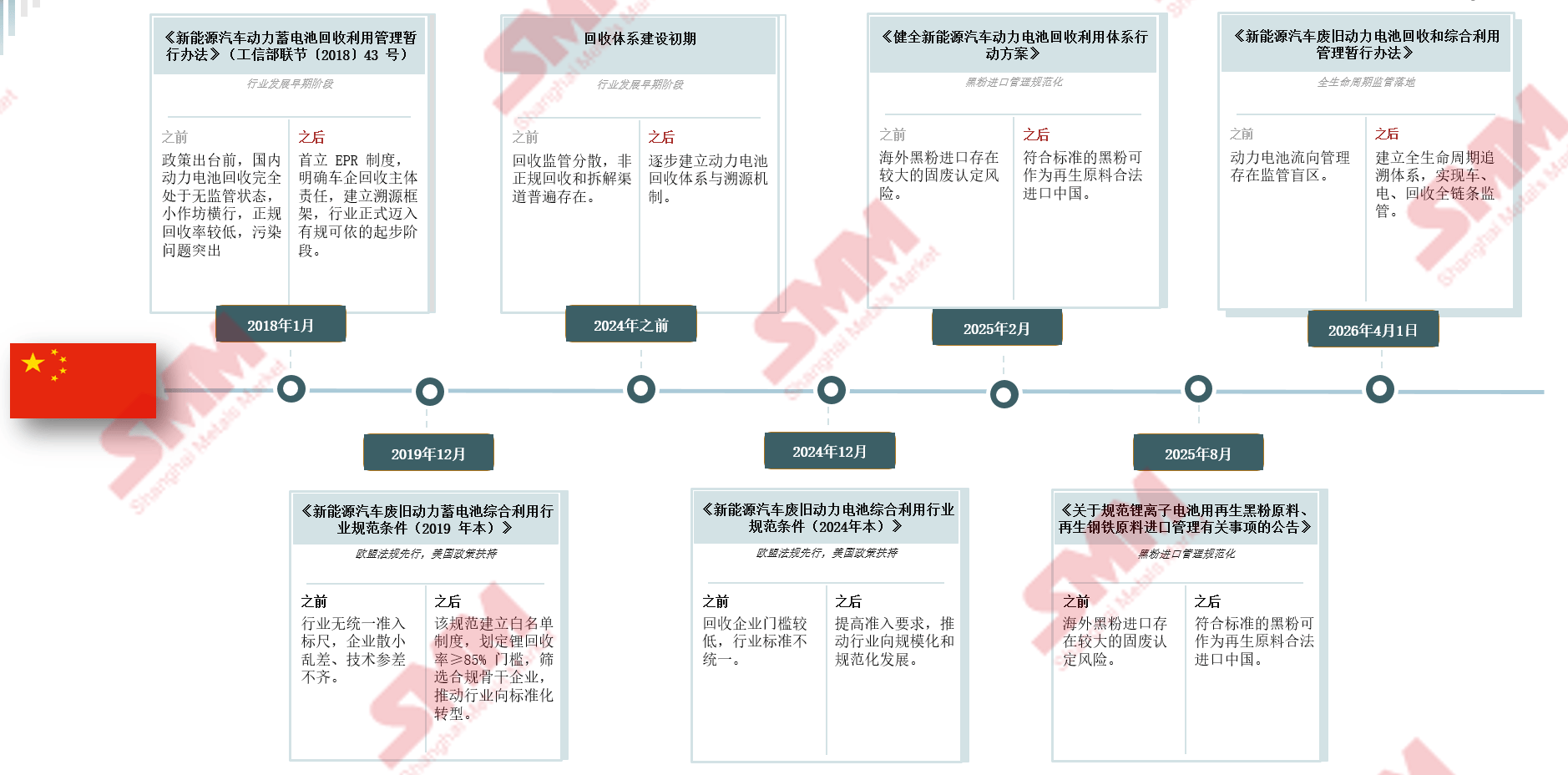
Overall, in the first half of 2026, the procurement volume of scrap materials by hydrometallurgical plants increased both quarter-on-quarter and year-on-year. First, because cobalt and lithium prices recovered somewhat last year, many powder processing and hydrometallurgical companies began concentrated production and capacity release. Second, although the peak retirement period is concentrated in 2028-2029, production scrap has continued to increase year-on-year. Meanwhile, after the import and export of black mass were made public in August 2025, a total of 28,000 tons of black mass were imported last year, leading to a significant year-on-year increase in black mass procurement by hydrometallurgical companies this year. On the production side of hydrometallurgical plants, since the production lines capable of processing scrap materials for nickel sulfate and cobalt sulfate companies are mostly full-extraction lines, companies adjust their raw material usage based on the monthly profit margins of different feedstocks. Therefore, relevant capacity refers to full-extraction line capacity.
Related Products

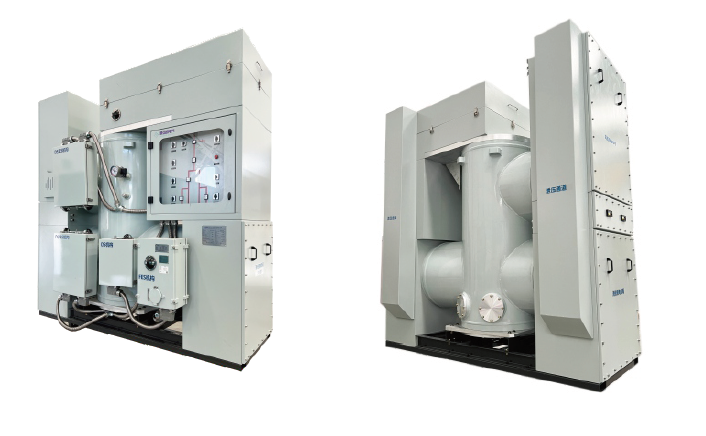
72.5kV 1250A 31.5kA SF6 free Gas-insulated Metal-enclosed Switchgear
Zhejiang Juhonkia Intelligent Electric Co., Ltd.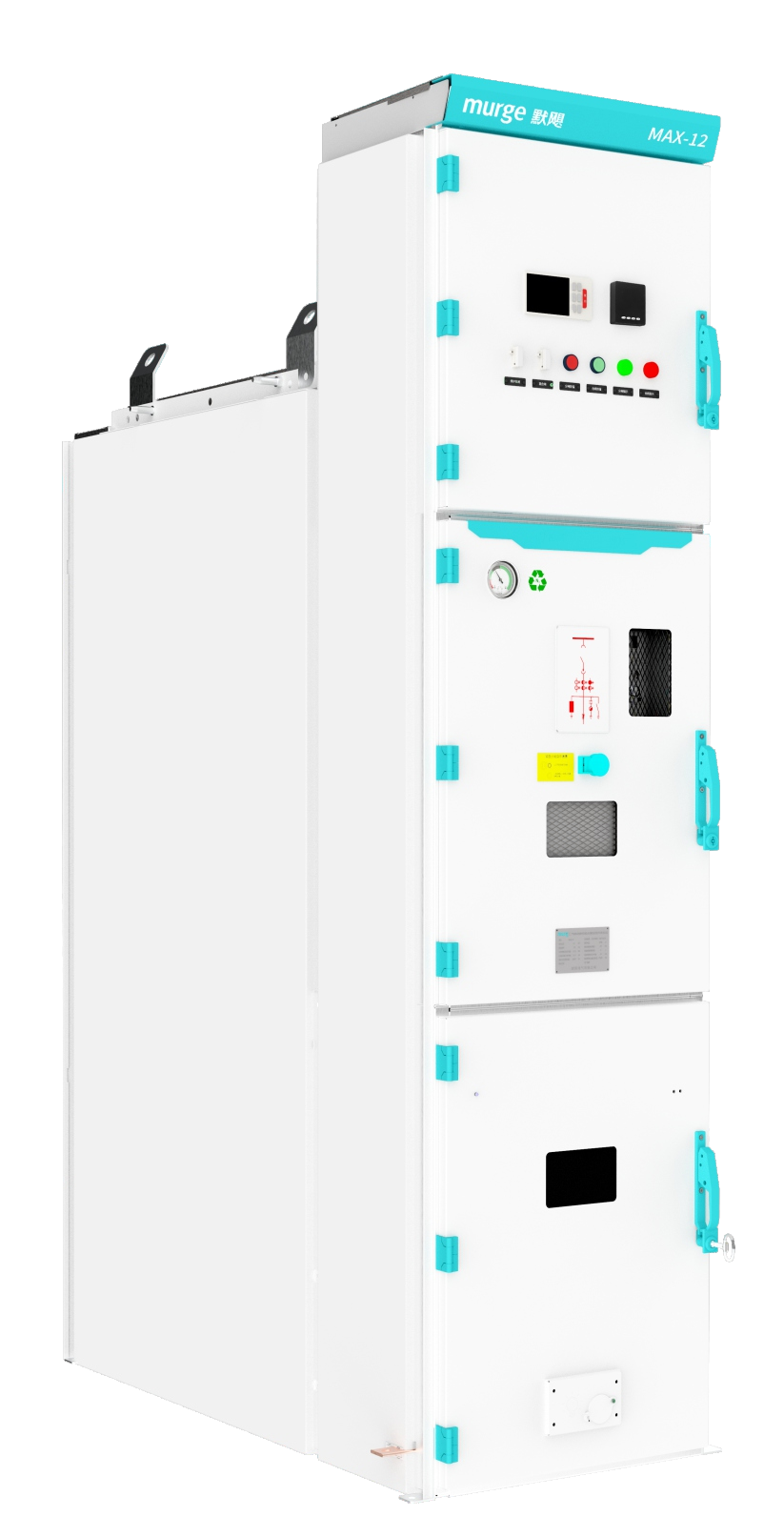
MAX-12 series Environmental Protection/SF6 gas insulated switchgear (C-GIS)
Murge Electric Co.,Ltd.
Bidirectional Metal Hard Sealed Seawater Butterfly Valve
Henan Quanshun Flow Control Science & Technology Co., Ltd.
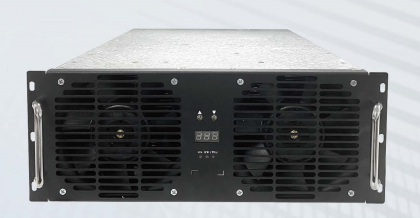
80kW Megawatt Supercharging Module TH80F10030C9
Shijiazhuang Tonhe Electronics Technologies Co., Ltd.
Forest and Grassland Heat Source Infrared Monitor
China Huayun Meteorological Technology Group Co., Ltd.