Focusing on Aerosol Observation, Qianhai Technology Attends the 12th International Aerosol Conference (IAC2026) with Multiple Detection Instruments
en.Wedoany.com Reported - One Breath, One Destiny | Exploring a New Future for Atmospheric Science Together
From August 30 to September 5, the 12th International Aerosol Conference (IAC2026) was grandly held in Xi'an. The conference was co-hosted by the International Aerosol Research Assembly (IARA) and the Chinese Society of Particuology (CSP), and organized by the Institute of Earth Environment, Chinese Academy of Sciences, the Institute of Atmospheric Physics, Chinese Academy of Sciences, Xi'an Jiaotong University, and the Shaanxi Key Laboratory of Atmospheric Pollution and Haze, among others. Nearly a thousand representatives from top experts, scholars, research institutions, and industry enterprises in the fields of atmospheric environment, aerosol research, and ecological monitoring worldwide attended the conference, making it the highest-level and most influential top academic event in the global aerosol field. The opening ceremony of this conference was presided over by Cao Junji, a researcher at the Institute of Atmospheric Physics, Chinese Academy of Sciences, unveiling the curtain on global aerosol frontier technology exchange, academic achievement collision, and industrial collaborative innovation.
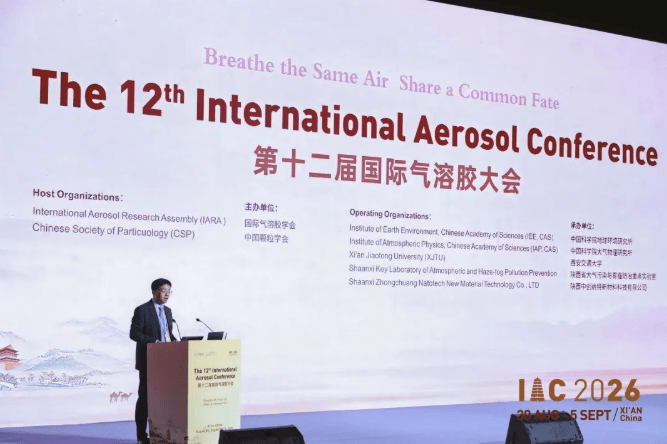
The International Aerosol Conference (IAC) is held every four years, delving into core research areas such as aerosol physics, chemistry, climate effects, environmental governance, and health impacts, serving as the top academic exchange platform in the global aerosol research field. With the core theme of "Breathe the Same Air, Share a Common Fate," this conference featured exchanges on topics including aerosol formation and evolution, aerosols and climate change, air quality and human health, advanced observation and instrument technology, artificial intelligence and atmospheric simulation, aerosol nanotechnology, and pollution control, showcasing the latest research advances in international aerosol science and technology.
Empowered by Multi-Dimensional Monitoring, Focusing on Aerosol Technology Innovation
Hangzhou Qianhai Technology attended the equipment achievement exhibition held alongside the conference with five core aerosol detection instruments, engaging in discussions with global research peers on aerosol detection technology innovation, atmospheric environment governance, and frontier trends in climate research through high-precision, multi-dimensional aerosol monitoring solutions, demonstrating the formidable strength of precision detection instruments.
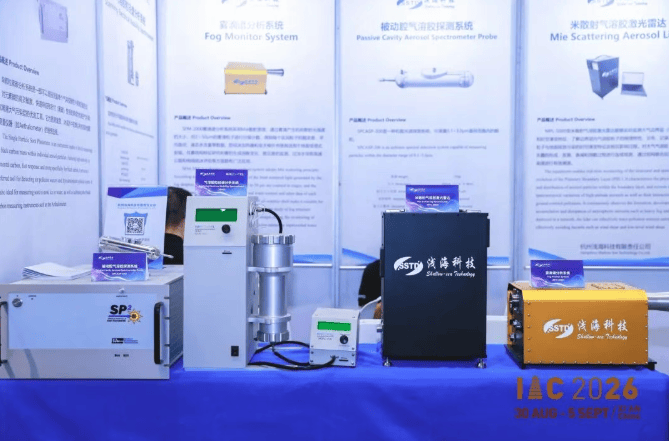
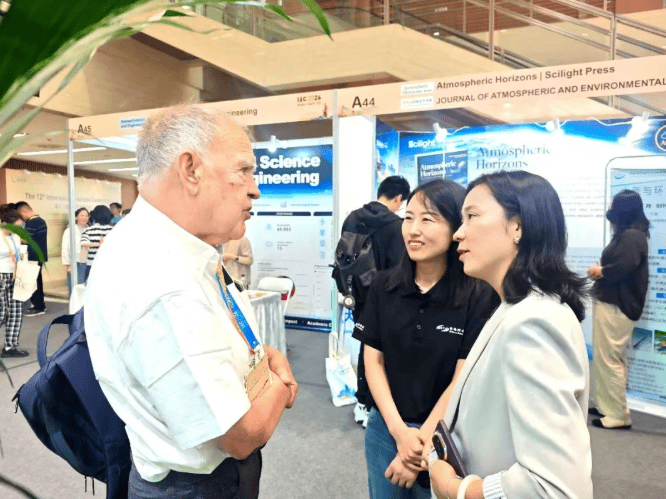
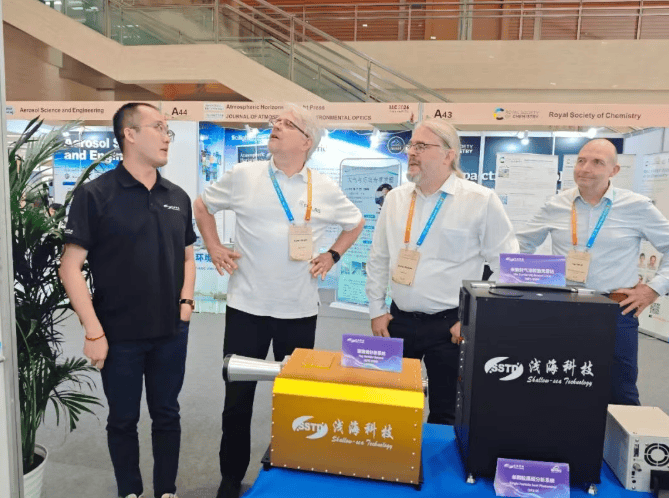
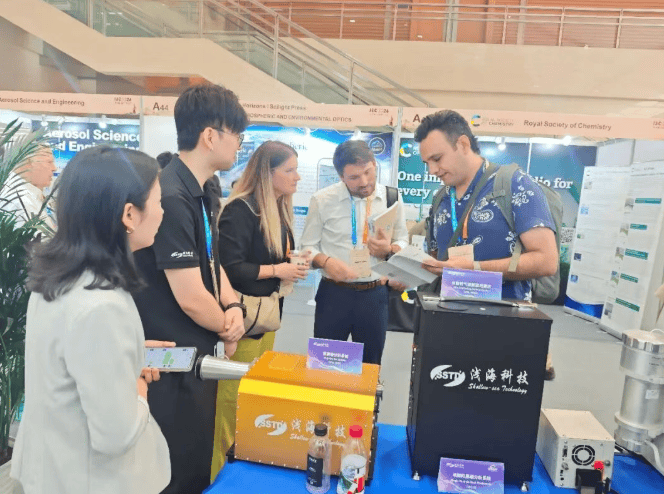
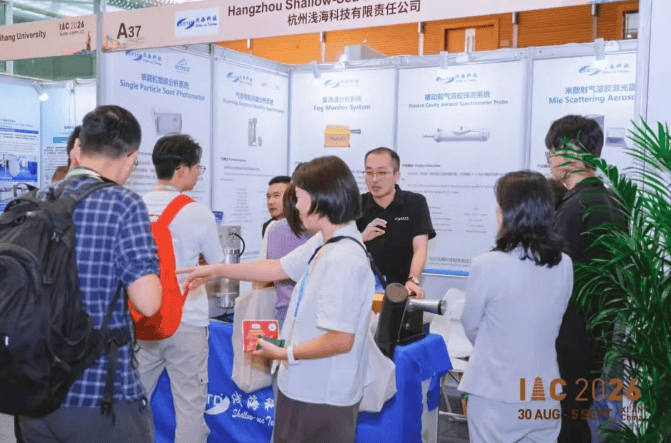
Qianhai Technology has been deeply engaged in the field of atmospheric environment monitoring for many years, focusing on the R&D, production, and technological innovation of aerosol, meteorological, and hydrological detection instruments, with a strong commitment to the research-grade precision monitoring instrument sector. At this IAC2026 international event, the company selected five core aerosol detection instruments covering the full spectrum of aerosol lidar detection, fog droplet spectrum analysis, passive cavity detection, black carbon analysis, and particle size spectrum monitoring, suitable for diverse application scenarios including university research, environmental monitoring, meteorological observation, and atmospheric mechanism research:
-
Mie Scattering Aerosol Lidar (MPL-5000): As a core instrument for three-dimensional atmospheric aerosol monitoring, it enables all-weather, automated, high-precision vertical profile detection of aerosols, accurately capturing aerosol distribution, boundary layer height, and the spatiotemporal evolution characteristics of haze. It is widely used in regional air quality monitoring, pollution source tracing, and three-dimensional atmospheric environment observation research.
-
Fog droplet spectrum analysis system (SFM-2000): Focused on precise measurement of microscopic physical parameters of fog droplets, it efficiently collects core data such as fog droplet size, number concentration, and liquid water content, providing accurate data support for cloud and fog physics research, weather modification, near-surface fog disaster monitoring, and atmospheric microcirculation mechanism research.
-
Passive Cavity Aerosol Detection System (SPCASP-200): Employing high-precision passive cavity detection technology, it offers advantages such as strong stability, ultra-low noise, and high sensitivity, enabling precise monitoring of particles in the 0.10–3.0 μm diameter range. It is suitable for high-precision research scenarios including long-term continuous scientific observation, atmospheric environment monitoring, and aerosol physicochemical property analysis.
-
Single-Particle Black Carbon Analysis System (SP2-D): Focused on precise detection of atmospheric black carbon aerosols, it enables refined analysis of the mass, particle size, and mixing state of individual black carbon particles, accurately resolving the emission characteristics, transport patterns, and climate effects of black carbon aerosols. It is a research-grade essential instrument for atmospheric carbon cycle, pollution source tracing, and climate impact research.
-
Aerosol Particle Size Spectrum Analysis System (SEMS): Covering precise monitoring of aerosol particles across multiple size ranges, it rapidly and continuously acquires key data such as atmospheric particle size spectrum distribution and number concentration, providing comprehensive, accurate, and continuous observational data for aerosol physicochemical property research, regional pollution characteristic analysis, and atmospheric environment mechanism research.
Deepening Research Innovation, Safeguarding the Blue Sky
Aerosols are key factors affecting the atmospheric environment, climate change, air quality, and human health. Precise, efficient, and refined aerosol detection technology is the core foundation of atmospheric science research and ecological environment governance.
Participating in the 12th International Aerosol Conference (IAC2026) represents an important opportunity for Qianhai Technology to establish itself in research and align with international standards. In the future, Qianhai Technology will continue to deepen its focus on the core fields of atmospheric aerosol precision detection and three-dimensional environmental monitoring, uphold independent technological innovation, continuously refine domestically produced high-end detection instruments, optimize full-scenario monitoring solutions, empower atmospheric science research, ecological environment protection, and the implementation of the dual-carbon strategy with cutting-edge technology, and steadily promote domestically produced environmental detection instruments onto the international stage.