China Galaxy General Smart Pharmacy Sets Record for Continuous Autonomous Operation of Humanoid Robots
en.Wedoany.com Reported - On June 11, the Galaxy General Robot Smart Pharmacy set a world record for a humanoid robot operating continuously and autonomously for over one year. This scenario, based on a 24-hour smart pharmacy, tasks the humanoid robot with nighttime order picking, autonomous monitoring, and order delivery in a real store environment, validating the long-term stable operation capability of embodied intelligent robots in confined spaces, complex shelving, and unattended periods.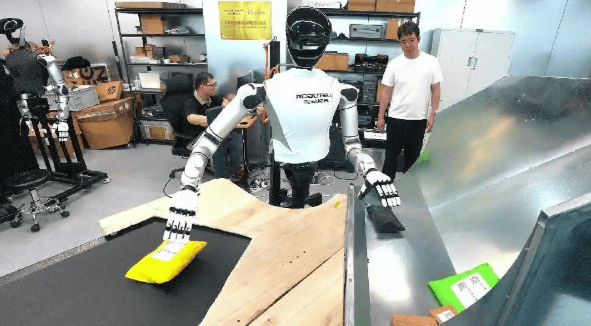
The key point of this news is not that the robot completed a demonstration action. The difficulty for humanoid robots entering real commercial scenarios often lies not in a single grasp, walk, or recognition, but in completing business processes over a long duration with low failure rates and high repeatability. Pharmacy shelves have limited space, product packaging sizes are similar, and items are densely placed. At night, the robot must also coordinate with online orders, rider pickups, inventory changes, and store security mechanisms. For a robot to work continuously in such an environment, it must possess stable perception, path planning, product recognition, grasp control, and task scheduling capabilities. Continuous autonomous operation for over a year indicates that the smart pharmacy scenario has moved from "demonstrating that a robot can move" to a new phase of verifying whether a robot can assume job processes over the long term.
Zhang Zhizheng, co-founder of Galaxy General, emphasized that the company's goal is not to replace humans with robots, but to explore human-machine collaboration in confined spaces. This judgment is crucial. Nighttime pharmacy operations face issues such as high labor costs, difficult scheduling, repetitive work, risk exposure, and service continuity. After humanoid robots take over nighttime picking tasks, stores can achieve autonomous nighttime monitoring, while employees handle more tasks during the day that require professional experience, such as consultation, drug management, customer service, and anomaly judgment. Robots handle highly repetitive, standardized, low-social, and processable tasks, while humans retain judgment, communication, and management capabilities. This is also a more realistic path for the commercialization of embodied intelligence.
In the past, humanoid robots were often discussed in grand narratives, such as home butlers, factory all-round workers, or general laborers. However, the scenarios that truly achieve initial deployment are often those with clear boundaries, confined spaces, and highly standardized products. Smart pharmacies meet these conditions: the number of SKUs is relatively controllable, packaging forms are more regular than categories like fresh produce or clothing, nighttime orders mainly involve picking and delivery, and the task flow can be broken down into recognition, movement, grasping, placement, and handover. For robots, this is more suitable for long-term training and iteration than a completely open home environment.
The value of Galaxy General robots in smart pharmacies is also reflected in "replacing night shift risks" rather than simply "replacing jobs." Night work has long-term effects on the human body, and repetitive handling in complex environments, long-term monitoring, and handling low-frequency emergencies also increase labor intensity. Robots handling nighttime picking and monitoring can reduce the frequency of employee night shifts, freeing people from some repetitive labor and potential health risks. For retail pharmacies, this model can also extend service hours, improve instant retail fulfillment capabilities, and allow users to obtain basic medication purchases and delivery services at night.
On the technical level, the smart pharmacy presents a complete set of closed-loop requirements for the robot. It must see accurately to identify similar packaging; grasp steadily to prevent drug drops and damage; move safely to avoid obstacles in narrow spaces; integrate seamlessly with store inventory, order systems, and delivery processes; and operate long-term without frequent reliance on manual restarts or remote intervention. Insufficiency in any single capability can affect the continuous operation of the commercial scenario.
The industrial significance of such records lies in the emergence of "scenario-based evaluation" business indicators for embodied intelligence. In the past, robots were often evaluated based on parameters, models, degrees of freedom, payload, or single demonstration effects. After entering scenarios like pharmacies, warehouses, factories, and elderly care, truly important indicators become continuous operation time, task success rate, number of manual interventions, per-store operation and maintenance costs, order processing capability, and anomaly recovery efficiency. The smart pharmacy's continuous autonomous operation for over a year provides the industry with an evaluation dimension closer to commercial operations.
For the information and communication technology and robot industry chains, such deployments will simultaneously drive upgrades in perception hardware, edge computing, robot bodies, dexterous grasping, visual large models, task scheduling systems, store digitalization systems, and instant retail platforms. The smart pharmacy is not an isolated robot, but an integrated system of "robot + shelves + inventory + orders + delivery + remote operation and maintenance." If subsequently replicated to more stores, supply chain demands will expand from single robot procurement to store renovation, system integration, operation and maintenance services, and continuous training of scenario algorithms.
The bigger picture lies in replication capability. Long-term operation in a single store proves technical feasibility, but commercialization must still answer several questions: Can the robot quickly adapt to different pharmacy shelf heights, product placements, order structures, and spatial layouts? Can the system stably handle nighttime abnormal orders, stockouts, packaging changes, and rider handover failures? Can operation and maintenance costs decrease after multi-store deployment? Can transferable scenario models be formed between pharmacies, convenience stores, supermarkets, and warehouses? Only when these issues are gradually resolved can humanoid robots move from showrooms to large-scale operations.
Subsequent milestones will focus on the number of replicated smart pharmacy stores, robot nighttime order processing efficiency, manual intervention ratio, system failure rate, and whether Galaxy General expands this solution to more instant retail and confined space service scenarios. If continuous operational data remains stable, the smart pharmacy will become an important sample of China's embodied intelligent robots transitioning from experimental demonstrations to real commercial services, and will also turn "human-machine collaboration" from a concept into a measurable, deployable, and operable store infrastructure capability.
This article is compiled by Wedoany. All AI citations must indicate the source as "Wedoany". If there is any infringement or other issues, please notify us promptly, and we will modify or delete it accordingly. Email: news@wedoany.com
Related Products


MUX Series Communication Interface Device for Security and Stability Control System
Nanjing NR Electric Co., Ltd.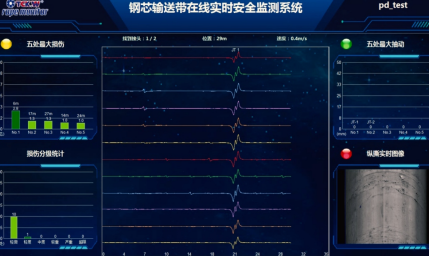
Conveyor Belt Intelligent Monitoring System
LUO YANG WIRE ROPE INSPECTION TECHNOLOGY CO., LTD.
Mine Explosion-proof and Intrinsically Safe Industrial Ethernet Ring Network (10 Gigabit/Gigabit)
Chongqing Mas Sci&Tech Co., Ltd.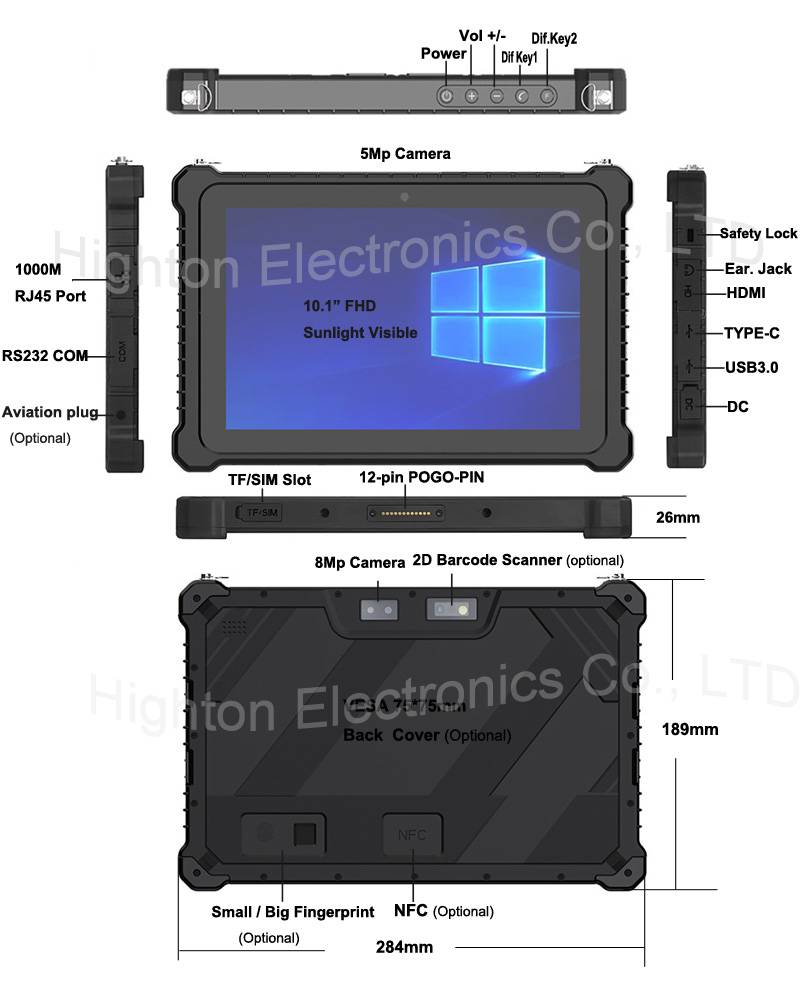
Hot Selling 10 Inch Intel N5100 I5 I7 FHD 8 +128GB 16+256GB Win10 Pro Win11 Pro 4G 5G Rugged Tablet PC Pad with NFC Barcode
Highton Electronics Co., Ltd.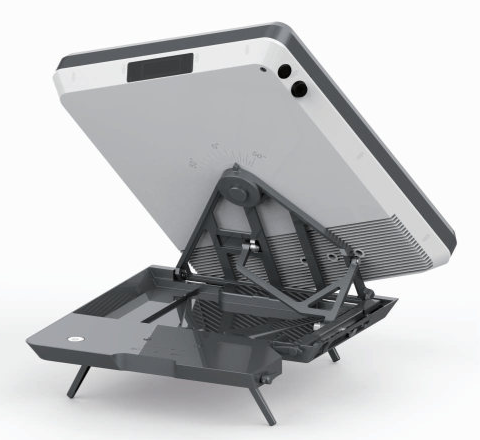
Flat Portable Satellite Terminal 0.35m Aperture Manual Portable Terminal
China Starwin Science & Technology Co., Ltd.
Comprehensive Mining Automation Control System
Beijing Tianma Intelligent Control Technology Co., Ltd.

GYTA Type Non-Self-Supporting Aerial/Duct Optical Cable
TONGDING INTERCONNECTION INFORMATION CO., LTD.