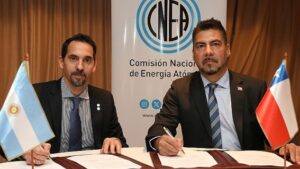
en.Wedoany.com Reported - Chile and Argentina have signed a new nuclear technology cooperation agreement, marking the first substantive collaborative project between the two countries since a related agreement was reached in 1976. The agreement was signed by representatives of the Argentine National Atomic Energy Commission (CNEA) and the Chilean Nuclear Energy Commission (CCHEN), with cooperation focusing on research reactors, radiopharmaceuticals, and the application of nuclear technology in fields such as health, agriculture, industry, and mining.
Martín Porro, President of Argentina's CNEA, stated that the signing of this agreement represents a significant milestone in bilateral and regional cooperation. He noted that the Chilean Nuclear Energy Commission has been a close partner of Argentina on a wide range of issues for many years, with collaboration including participation in the Latin American Research Reactor Network under the framework of International Atomic Energy Agency initiatives. Richard Gonzalez, Interim Executive Director of Chile's CCHEN, said that the consolidation and finalization of the agreement will promote scientific and technological development in Chile, and that cooperation with CNEA will help enhance Chile's technological development level.
Under the agreement, forms of cooperation include information exchange, technical visits, and joint research and technology development projects. The two institutions confirmed that the specific areas covered by the cooperation include: research reactors and their applications; radiopharmaceuticals; the application of nuclear technology in health, agriculture, industry, and mining; nuclear and radiation safety; human resources training; spent fuel management; nuclear reactor technical aging management and modernization; and scientific and technical assistance in the nuclear field.
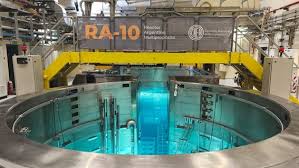
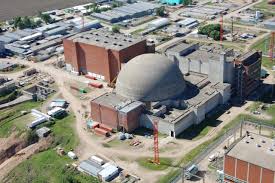
Argentina currently operates three nuclear reactors, which generate approximately 7% of the country's total electricity. The country's first commercial nuclear reactor began operation in 1974. Argentina had developed the small modular reactor CAREM25, but the project has been suspended by the current government. Since the mid-1950s, Argentina has conducted ongoing uranium exploration and some mining activities, but the last uranium mine was closed in 1997 for economic reasons. The country also has a long history in research reactors, including the RA-10 research reactor currently under construction.
The Chilean Nuclear Energy Commission has operated the RECH-1 research reactor since 1974. Located at the La Reina Nuclear Center in Santiago, this is a 5 MW pool-type reactor using low-enriched uranium as fuel, light water as moderator and coolant, and beryllium as reflector. The main application of the RECH-1 reactor is the production of radioisotopes primarily for medical purposes. Additionally, irradiated samples can be used for chemical and geological material analysis to determine sample age and prepare radiotracers. Chile currently has no nuclear power plants, although there have been some construction proposals in the past.
This article is compiled by Wedoany. All AI citations must indicate the source as "Wedoany". If there is any infringement or other issues, please notify us promptly, and we will modify or delete it accordingly. Email: news@wedoany.com