‘Crunch Time For Real’: UN Says Time For Climate Delays Has Run Out
Wedoany.com Report-Oct 25, The huge cuts in carbon emissions now needed to end the climate crisis mean it is “crunch time for real”, according to the UN’s environment chief.
An unprecedented global mobilisation of renewable energy, forest protection and other measures is needed to steer the world off the current path towards a catastrophic temperature rise of 3.1C, a report from the UN environment programme (Unep) has found. Extreme heatwaves, storms, droughts and floods are already ravaging communities with less than 1.5C of global heating to date.
Current carbon-cutting promises by countries for 2030 are not being met, according to the report, and even if they were met, the temperature rise would only be limited to a still-disastrous 2.6C to 2.8C. There is no more time for “hot air”, the report said, urging nations to act at the Cop29 summit in November.
Keeping the international goal of 1.5C within reach was technically possible, said the report, but it required emissions to fall by 7.5% annually until 2035. That means halting emissions equivalent to those of the EU every year for a decade. Delaying emissions cuts only means steeper reductions would be needed in future.
Unep said countries must collectively commit to cut 42% off annual greenhouse gas emissions by 2030 and 57% by 2035 in their next UN pledges, called nationally determined contributions and due in February. Without these pledges, and rapid action to back them up, the 1.5C goal would be gone, the UN said.
Stopping the destruction of forests could bring another 20% cut, the report said. Much of the rest could come from energy efficiency and the electrification of buildings, transport and industry, as well as cutting methane emissions from fossil fuel facilities, which Andersen described as “not hard”.
The estimated investment needed to cut emissions to net zero is $1-2tn a year, according to the report, about 1% of the value of the global economy and financial markets. “We’re talking a couple of percentage points that would be incremental in terms of renewal of ageing infrastructure” in developed countries, said Andersen. But developing countries would need finance from rich nations, a topic at the top of the Cop29 agenda.
The global geopolitical situation was difficult, acknowledged Andersen, with conflicts in the Middle East and Ukraine, and tensions between western nations and Russia and China. But she said: “If there is a space where the world has been able to meet, it is really the environment space.”
She cited a recent G20 meeting of environment and climate ministers. “These are not the best friends, all of them, and yet they managed to have a [good] communique.” She said there had been significant green policy shifts in the US, China, Germany, India and Brazil, but a a much greater effort was required.
“The sooner we strike out hard for a low-carbon, sustainable and prosperous future, the sooner we will get there – which will save lives, save money and protect the planetary systems upon which we all depend,” she said.
“World leaders continue to drag their feet, protecting the interests of the fossil fuel industry, while people are suffering right now. At Cop29, leaders must respond and act on their fair share of responsibility – especially wealthier nations who have fuelled this crisis for decades,” said Harjeet Singh, at the Fossil Fuel Non-Proliferation Treaty Initiative.
Related Products


Floating Boat Water Quality Automatic Monitoring System
Hebei Sailhero Environmental Protection High-tech Co., Ltd.
Yingping Mining Section Open-pit Tailings Backfill Treatment of Goaf Ecological Restoration EPC Project
China Bluestar Lehigh Engineering Corporation
714CD Series C-Band Weather Radar
Chengdu Zhongdian Jinjiang Information Industry Co., Ltd.

Forest and Grassland Heat Source Infrared Monitor
China Huayun Meteorological Technology Group Co., Ltd.

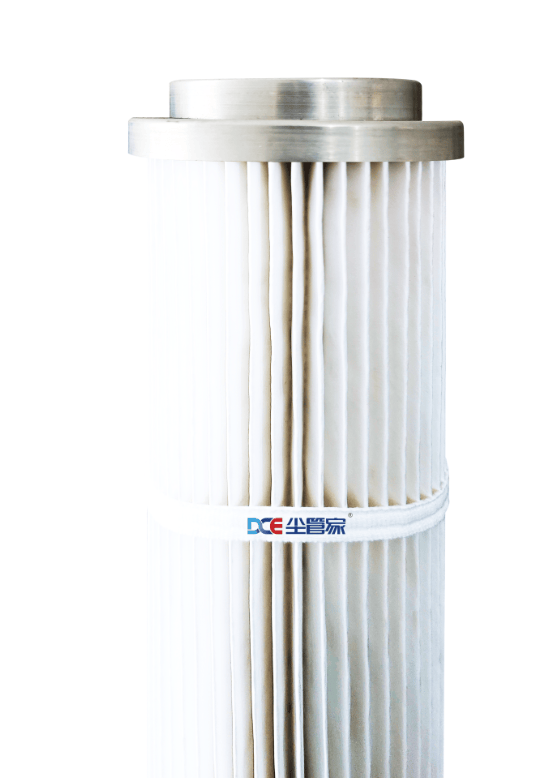
DCE High-Efficiency Energy-Saving Filter Cartridge
Zhejiang Hongsheng New Material Technology Group Co., Ltd.