en.Wedoany.com Reported - Australian startup Halocell Energy has received AUD 606,680 (approximately EUR 370,000) in government funding to expand its manufacturing capacity for perovskite photovoltaic modules. The grant, provided under the Australian Government's Industry Growth Program, will be used to upgrade equipment and scale up operations at the company's factory in Wagga Wagga, New South Wales.
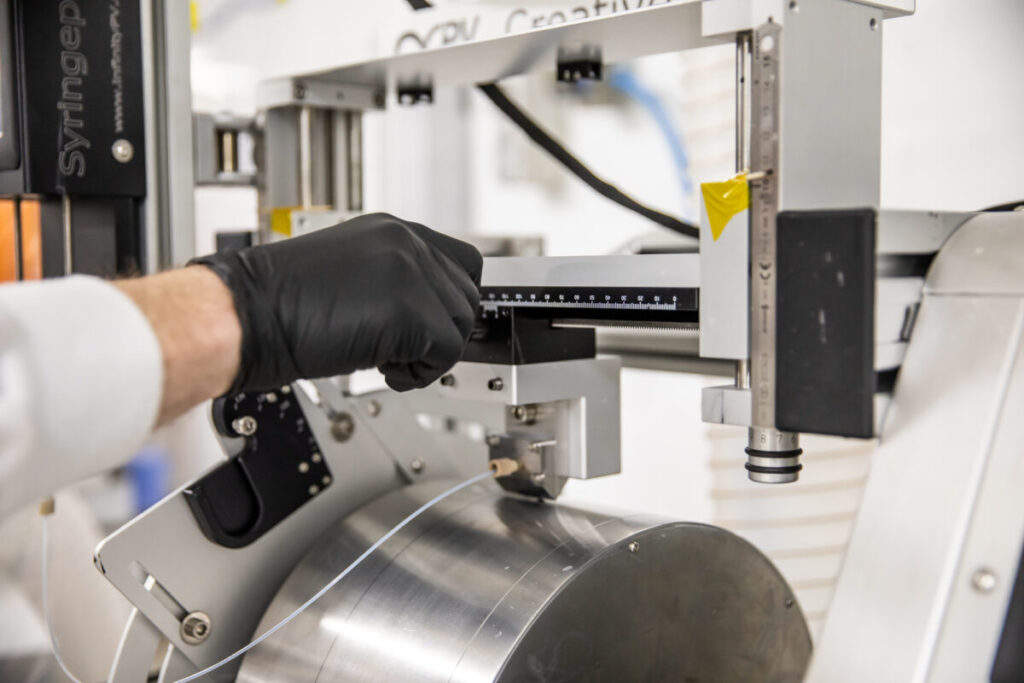
The project is expected to boost the company's annual production of indoor perovskite photovoltaic modules from 7,000 units to 100,000 units. Halocell primarily manufactures lightweight, flexible photovoltaic modules optimized for low-light conditions. The funding will be used to equip its Wagga Wagga factory with advanced roll-to-roll manufacturing equipment and optimize production processes, while also supporting the company in expanding its engineering and operations teams. Halocell states that the modules are designed for applications requiring high power density, good performance under low-light conditions, and radiation resistance. Its lightweight, flexible modules offer industry-leading power density, broad-spectrum performance—including excellent power generation in low-light and overcast conditions—and high radiation tolerance.
The company recently launched the Ambient series, based on perovskite photovoltaic cells produced at its Wagga Wagga factory. The Ambient module is a lightweight, flexible, and efficient energy harvesting solution capable of generating enough electricity indoors to replace disposable batteries. The series includes two models: one with nine perovskite cells and another with four cells. According to manufacturer specifications, the larger module provides 5.16 V and a maximum power point (MPP) of 0.60 mW at 500 lux, and 1.22 mW MPP at 1,000 lux; the smaller module achieves 2.55 V, with an MPP of 0.24 mW at 500 lux and 0.49 mW at 1,000 lux. The larger unit measures 116 mm x 57 mm x 0.6 mm and weighs 6.8 grams; the smaller version measures 59.5 mm x 41 mm x 0.6 mm and weighs 2.8 grams. Both modules have a minimum bending radius of 3 cm and an operating temperature range of -10 °C to +60 °C. Halocell claims the modules are fully recyclable, with 98% of functional materials (including the substrate) recoverable for reuse. The Ambient modules are now available for purchase through the company's official website.
Prior to the launch of the new modules, Halocell announced a partnership with U.S. company Sofab Inks to accelerate innovation in perovskite photovoltaic technology. Sofab, spun off from the Conn Centre for Renewable Energy Research at the University of Louisville in 2022, specializes in producing chemical inks designed specifically for perovskite solar cell manufacturing. Under the collaboration, Sofab will supply Halocell with jointly developed advanced nanoparticle inks for the charge transport layers of its devices. Halocell will continue to formulate and produce its own perovskite inks but believes the partnership will accelerate the time-to-market for new products.
Halocell stated that future products will target full-sun exposure applications, powering satellites and drones, with plans to later develop large-scale lightweight modules for warehouse rooftop installations. The company believes future development will focus on the satellite and drone sectors, laying the foundation for ultra-lightweight photovoltaic panels capable of harvesting light from any surface and any angle.
This article is compiled by Wedoany. All AI citations must indicate the source as "Wedoany". If there is any infringement or other issues, please notify us promptly, and we will modify or delete it accordingly. Email: news@wedoany.com