China's Longmaster Information's 39AI Doctor Used Over 800,000 Times in Guiyang
en.Wedoany.com Reported - The medical health artificial intelligence product "39AI Doctor," independently developed by Longmaster Information, has been deployed on a large scale across 447 medical institutions and 3,630 doctors in Guiyang City, with cumulative usage exceeding 800,000 times. This intelligent assisted diagnosis system, based on large model technology, aims to leverage AI to channel high-quality medical resources to grassroots levels, alleviating long-standing industry pain points such as uneven distribution of medical resources and varying levels of primary care diagnosis and treatment.
The "39AI Doctor" system adopts a three-layer closed-loop architecture of "cloud core layer, edge adaptation layer, and terminal access layer," supported by a full-chain technical security system. The cloud core layer relies on the 39AI large model engine, integrating chain-of-thought reasoning technology with a RAG knowledge graph retrieval enhancement module; the edge adaptation layer deploys lightweight inference nodes for the medical large model to address weak network issues at the grassroots level and support county-level hierarchical diagnosis and treatment coordination; the terminal access layer provides mini-programs, web pages, and embedded terminals for doctor workstations, supporting voice interaction in Guizhou dialect. The entire system chain is encrypted using the SM4 national cryptographic algorithm and multi-factor authentication, ensuring medical data is "usable but invisible."
In terms of application scenarios, the product is divided into the "39AI Doctor (Hospital Edition)" for medical institutions and the "39AI General Practitioner" WeChat mini-program for C-end users. The hospital edition can adapt to two core scenarios: tiered hospitals and primary care institutions. A total of 447 medical institutions and 3,630 doctors in Guiyang City have used 39AI Doctor over 800,000 times. Among them, 261 medical institutions (including hospitals, community health centers, and village clinics) and 637 doctors in Qingzhen City have used it 385,000 times. In the primary care field, the product provides diagnostic support for doctors through standardized diagnostic suggestions and normalized consultation guidance, achieving a clinical adoption rate of 92% for diagnostic results in pilot areas, with an overall doctor satisfaction rate exceeding 90%. In Qingzhen City, relying on the "1+8+N" county-level medical consortium, the product covers 3 county-level public hospitals, 15 primary care institutions, and 246 village clinics, serving a permanent resident population of 673,100, with a year-on-year increase of 4,000 village-level outpatient visits. The C-end mini-program has provided over one million free health consultation services to users nationwide.
According to the company, the project's technological innovation lies in its full-stack proprietary core technology system, including a Transformer architecture integrating chain-of-thought reasoning with a RAG knowledge graph retrieval enhancement module, cloud-native elastic architecture, full-process privacy computing, and clinically adaptive auxiliary technology. In terms of model innovation, the project has established a full-region pilot model of "government guidance + enterprise implementation + medical institution participation," along with a long-term optimization mechanism of "clinical feedback - model iteration." This model achieves full coverage of medical institutions at the city, county, township, and village levels, as well as private hospitals, aiming to create a replicable and scalable sample of deep AI+medical integration.
This article is compiled by Wedoany. All AI citations must indicate the source as "Wedoany". If there is any infringement or other issues, please notify us promptly, and we will modify or delete it accordingly. Email: news@wedoany.com
Related Products


Multi-function Marine Monitoring Low-altitude Detection Radar Sea-air Boundary Ocean Dynamic Environment Measurement
Chengdu Dixin Technology Co., Ltd.
MUX Series Communication Interface Device for Security and Stability Control System
Nanjing NR Electric Co., Ltd.


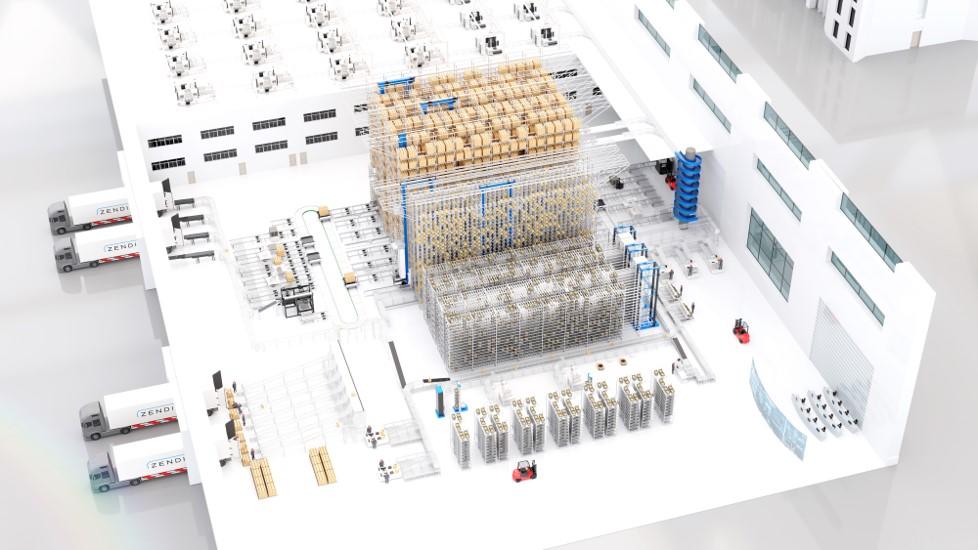
One-Stop Steward Service for the Entire Logistics System Integration Chain
Zhongding Intelligent (Wuxi) Technology Co., Ltd.