Singapore's STT GDC Launches Second Data Center in Jakarta, Indonesia
en.Wedoany.com Reported - Recently, Singapore-based data center operator ST Telemedia Global Data Centres launched STT Jakarta 2 in Indonesia, completed the topping-out of STT Jakarta 3, and commenced construction of STT Jakarta 5 and STT Jakarta 6. Located in the Cikarang data center campus, STT Jakarta 2 is now operational with 24MW of IT load capacity. STT Jakarta 3 is expected to go live later this year, adding another 24MW of IT capacity upon launch. The newly initiated STT Jakarta 5 and STT Jakarta 6 are each planned to support 40MW of IT capacity, marking a phase of continuous expansion for the company's data center cluster in Indonesia.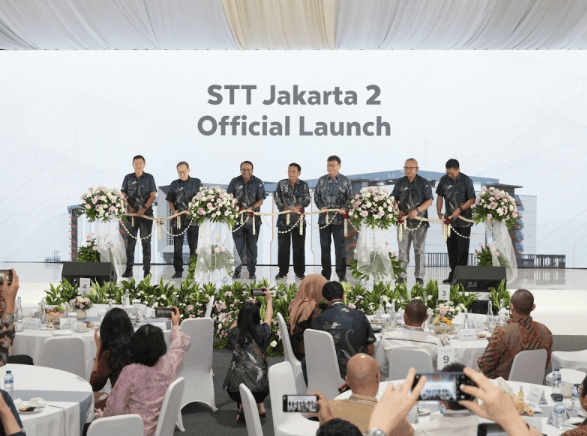
The key to this expansion lies not only in the addition of new data halls but also in the simultaneous upgrade of the campus-level power supply system. The on-site high-voltage substation supporting the STT Jakarta campus has been energized. STT GDC claims this is the first on-site high-voltage substation in Indonesia to power a data center campus. For high-density data centers, power access capability determines whether computing infrastructure can truly unlock capacity. An on-site high-voltage substation shortens the power supply path from generation to IT loads, enhances power reliability, and helps reduce transmission losses while improving power quality. For data center campuses serving cloud computing, AI, and enterprise clients, such power configurations better demonstrate long-term scalability compared to single-building capacity.
The overall planned capacity of the STT Jakarta campus reaches 360MW. STT Jakarta 1, which began operations in 2023, supports up to 19.5MW of IT capacity. With the launch of STT Jakarta 2, the campus has established a clearer multi-phase delivery cadence. STT GDC stated that the campus is being built for high-density, AI-ready workloads, with data halls designed to accommodate next-generation Nvidia Vera Rubin and Vera Rubin Ultra platforms. It will be liquid-cooling ready, offer flexible power configurations, and provide carrier-neutral connectivity. This indicates that the competitive focus in Indonesia's data center market is shifting from traditional colocation capacity expansion to the ability to support AI clusters, high-power racks, and next-generation accelerated computing platforms.
The growth of Indonesia's digital economy is also driving local data center demand. Cloud services, fintech, e-commerce, streaming media, enterprise digitalization, and AI applications all require lower latency, higher reliability, and localized data processing capabilities. In the past, much of Southeast Asia's high-end data center demand was concentrated in Singapore. However, constraints on land, power, and approvals are shifting some new capacity to markets such as Indonesia, Malaysia, and Thailand. Jakarta and its surrounding areas have a foundation in population, industry, and network connectivity, while Cikarang hosts industrial parks and manufacturing clients, making it well-positioned to accommodate the digital infrastructure needs of cloud service providers, AI platforms, and multinational enterprises.
The impact of such campus expansions on Indonesia's telecommunications and digital industry chain will continue to ripple outward. Large-scale data centers not only serve cloud and internet companies but also drive demand for power engineering, cooling systems, network interconnection, rack manufacturing, operations management, and digital talent training. STT GDC Indonesia also announced plans to collaborate with local vocational institution ATMI Cikarang in West Java to build a data center laboratory learning center, partner with EPI to offer Data Centre Fundamentals Certificate training, and establish internship positions for operations and engineering teams. For developing markets, data center construction that remains at the level of capital and physical facilities alone struggles to generate long-term industrial value. Only by simultaneously cultivating engineering talent, operational capabilities, and local supply chains can subsequent higher-density AI and cloud infrastructure operations be sustained.
STT GDC recently secured an additional 8.8 trillion Indonesian rupiah (approximately USD 500 million) in financing for the Jakarta campus, providing capital support for continuous expansion. Going forward, it will be worth monitoring whether STT Jakarta 3 can go live as planned, whether STT Jakarta 5 and STT Jakarta 6 can proceed smoothly, and whether the campus-level high-voltage power supply, liquid cooling readiness, and AI platform adaptability can translate into actual customer orders. As Indonesia's digital economy enters a phase of higher computing power demand, the expansion of the STT Jakarta campus will serve as a key benchmark for observing the shift of Southeast Asia's data center center of gravity to markets beyond Singapore.
This article is compiled by Wedoany. All AI citations must indicate the source as "Wedoany". If there is any infringement or other issues, please notify us promptly, and we will modify or delete it accordingly. Email: news@wedoany.com
Related Products




Automatic Aiming Laser Remote Obstacle Removal Robot
Pinggao Group Weihai High-Voltage Apparatus Co., Ltd.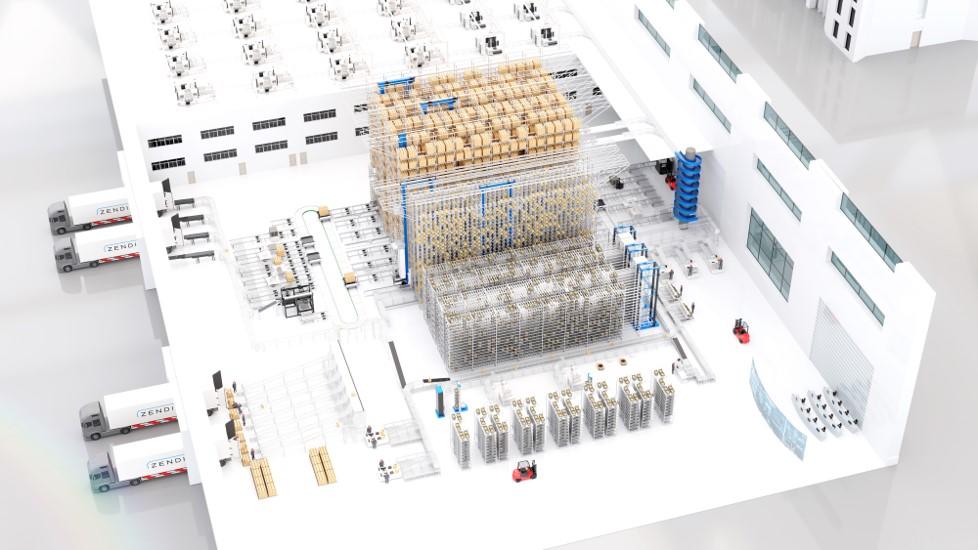
One-Stop Steward Service for the Entire Logistics System Integration Chain
Zhongding Intelligent (Wuxi) Technology Co., Ltd.
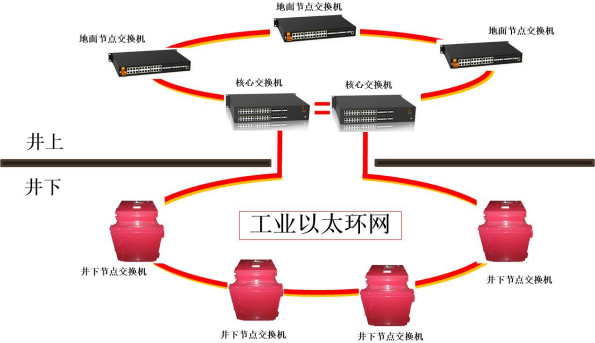
Mine Explosion-proof and Intrinsically Safe Industrial Ethernet Ring Network (10 Gigabit/Gigabit)
Chongqing Mas Sci&Tech Co., Ltd.

Conveyor Belt Intelligent Monitoring System
LUO YANG WIRE ROPE INSPECTION TECHNOLOGY CO., LTD.