en.Wedoany.com Reported - Researchers at the U.S. National Laboratory of the Rockies (NLR) are expanding nuclear magnetic resonance (NMR) technology into strategic industries such as batteries, semiconductors, bioplastics, and biofuels, using it to detect subtle defects in materials at the atomic scale. With a history of more than eight decades, this technology has previously played a routine role primarily in chemical analysis.
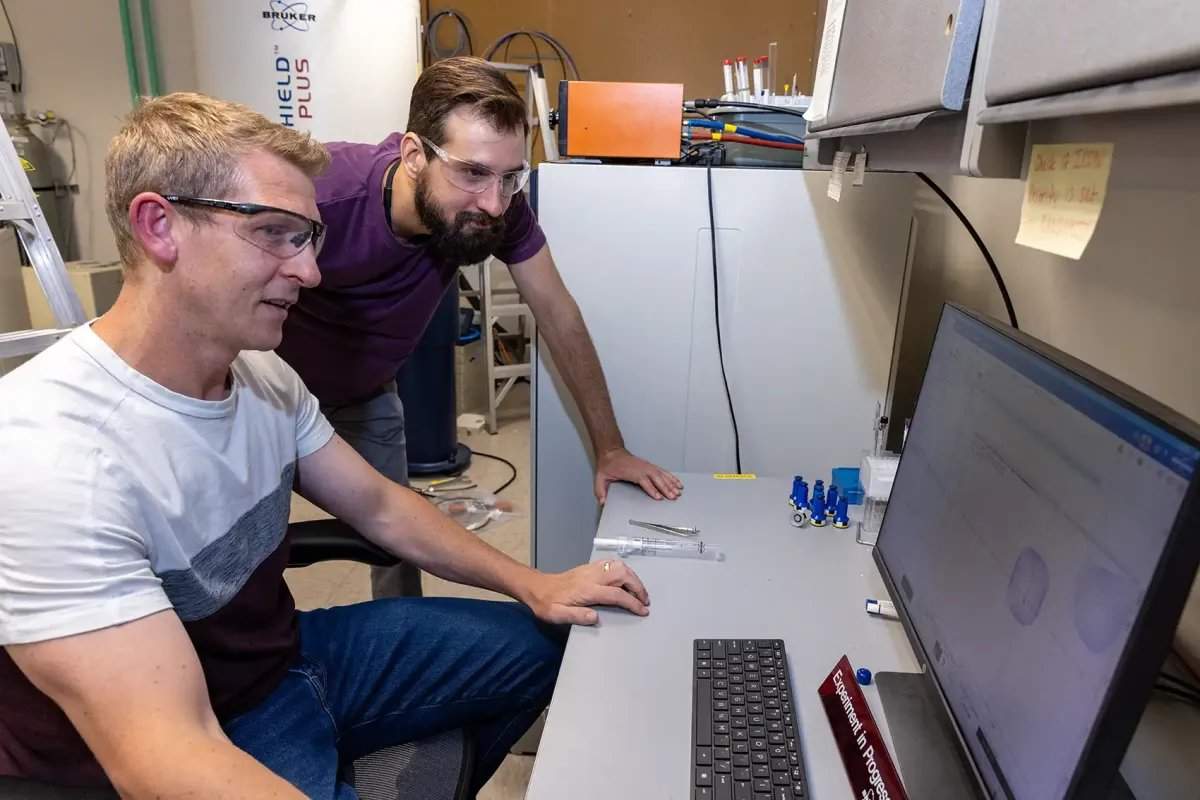
Bennett Addison, head of the laboratory's NMR equipment, noted that many researchers submitting samples are unsure whether the products they have synthesized match expectations. At the atomic scale, minor impurities or structural defects may be overlooked by conventional methods, potentially affecting the performance of semiconductors, polymers, or synthetic fibers. NMR technology can obtain detailed structural information from solids, gels, polymers, biological materials, and battery components without destroying samples—a capability that has not yet been widely utilized.
A typical case comes from researcher Ross Kerner's analysis of mixed halide semiconductors. Using a more sensitive NMR method, he examined thin-film samples manufactured by industrial suppliers and detected previously unidentified impurities in all of them. The data precisely quantified defect types and concentrations, prompting multiple manufacturers to adjust their production processes. Kerner stated that just two days of experiments were enough to enable different companies to improve material quality. The findings have been published in journals such as Nature, ACS Applied Energy Materials, and InfoMat.
In the bioeconomy sector, the NLR team used NMR to construct the first detailed molecular model of the secondary cell wall of poplar (Populus), a tree species important for biofuel and biomaterial production. By combining solid-state NMR with carbon-13 isotope enrichment techniques, researchers obtained quantitative information on the spatial arrangement of wood polymers. This model supports computer simulations aimed at optimizing processes that convert biomass into fuels, fertilizers, chemicals, and new materials. The laboratory has also employed high-throughput NMR to analyze thousands of plant samples in a short period, transforming plantations into large-scale databases for identifying differences in sugar and lignin content across tree species, thereby aiding genetic screening of energy crops.
In the development of sustainable polymers, NLR adopted the "magic angle spinning" NMR method, which rotates samples at a 54.7-degree angle within a magnetic field to obtain high-resolution information from semi-solid materials without dissolving them. Using this technique, researchers characterized a biodegradable and recyclable elastomer with potential applications in adhesives, robotics, and electronic devices. Additionally, the team used lithium-7 NMR to study ion motion in solid electrolytes at different temperatures, aiming to understand how disorder in crystal structures affects ion diffusion—a factor directly linked to the conductivity and efficiency of next-generation lithium batteries.
Currently, about 120 researchers regularly use the laboratory's NMR spectrometers, and dozens of companies also leverage its services to optimize products and industrial processes. Addison and Kerner believe that the main barrier to the broader adoption of advanced NMR methods lies not in the technology itself, but in researchers' reliance on established analytical procedures. A precise understanding of material behavior at the atomic level may determine the difference between an ordinary product and a technological innovation capable of impacting the energy, advanced materials, and bioeconomy industries.