Shanghai Jiao Tong University and Taichu Yuanqi in China to Develop AGI Large Models Based on Domestic Computing Power
en.Wedoany.com Reported - On June 15, Taichu (Hangzhou) Integrated Circuit Co., Ltd. signed a cooperation agreement with Shanghai Jiao Tong University to collaborate on the development of general-purpose artificial intelligence large models. According to the agreement, Taichu Yuanqi will provide the Institute of Artificial General Intelligence at Shanghai Jiao Tong University with a domestic AI training computing cluster and domestic intelligent computing power, along with supporting operational maintenance and technical support. The research team led by Professor Zhao Hai from the Institute of Artificial General Intelligence at Shanghai Jiao Tong University will leverage the relevant domestic computing power to conduct cutting-edge exploration for general-purpose AI large models, building an AGI foundation for frontier fields in AI4S.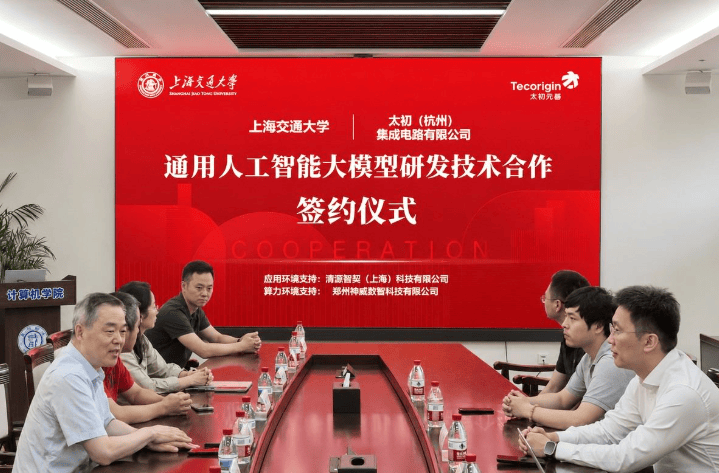
The core of this collaboration is to connect cutting-edge algorithmic research from universities with domestic intelligent computing infrastructure. The development of general-purpose AI large models demands high stability in computing power, cluster scheduling capabilities, software and hardware compatibility, and long-term training environments. If university research teams rely solely on distributed or short-cycle computing resources, it is difficult to sustain large-scale model training, algorithmic iteration, and interdisciplinary validation. With Taichu Yuanqi providing the domestic AI training computing cluster, the relevant team at Shanghai Jiao Tong University can conduct systematic research on large model architectures, training mechanisms, reasoning capabilities, and adaptation to scientific tasks.
AGI large models differ from single-task models; their research focus is not merely on improving specific metrics but on exploring the model's general capabilities in knowledge understanding, reasoning, transfer, planning, and complex task handling. Professor Zhao Hai's team has long been engaged in research on natural language processing, artificial intelligence, and large models. The Institute of Artificial General Intelligence, where they are based, also explores pathways toward general intelligence built on foundational AI large models. This collaboration uses domestic computing power as a foundation, enabling the research team to pursue "0 to 1" innovation in a more controllable computing environment, rather than merely fine-tuning existing models at the application layer.
AI4S is a key application direction in this collaboration. Scientific research scenarios often require models to handle complex data, specialized knowledge, experimental hypotheses, and interdisciplinary reasoning. For example, material discovery, life sciences, climate simulation, engineering optimization, and complex system modeling all demand large models with stronger knowledge organization and computational support capabilities. If the AGI foundation can be integrated with scientific tasks, it will not only generate text or answer questions but also participate in hypothesis generation, experimental design, data analysis, and model simulation. The entry of domestic intelligent computing power into university AGI research systems provides more stable computational support for such AI4S tasks.
For Taichu Yuanqi, this collaboration also serves as a validation of domestic AI computing power entering cutting-edge scientific research scenarios. The value of AI chips and intelligent computing clusters is ultimately reflected through real model training, software stack adaptation, task throughput, stable operation, and developer experience. University AGI research imposes high demands on computing platforms, requiring not only training performance but also development frameworks, operator adaptation, cluster management, and fault response capabilities. By partnering with Shanghai Jiao Tong University, Taichu Yuanqi can test the usability and engineering maturity of its domestic computing platform in high-intensity research tasks.
From an industry chain perspective, this university-enterprise collaboration goes beyond the procurement of computing resources; it integrates domestic hardware, foundational software, model algorithms, and scientific applications into a single validation chain. Large model development has long relied on the synergy of computing power, data, algorithms, and engineering teams, where any weak link can affect the final outcome. Shanghai Jiao Tong University provides cutting-edge algorithmic research and scientific problem guidance, while Taichu Yuanqi supplies the computing cluster and technical support, forming a collaborative relationship of "computing platform + model development + scientific application."
The key going forward lies in whether the collaboration can yield publicly verifiable scientific results and reusable technical pathways. Both AGI large models and AI4S are highly challenging directions, and in the short term, they should not be simplistically interpreted as the immediate deployment of a specific product. More importantly, the two parties must achieve stable training, model prototype validation, scientific task testing, and the output of papers or system results within a domestic computing environment. If the collaboration progresses smoothly, it will serve as a reference case for Chinese universities using domestic intelligent computing infrastructure to conduct foundational research on large models, while also enhancing the practical application value of domestic computing power in cutting-edge scientific research.
This article is compiled by Wedoany. All AI citations must indicate the source as "Wedoany". If there is any infringement or other issues, please notify us promptly, and we will modify or delete it accordingly. Email: news@wedoany.com
Related Products

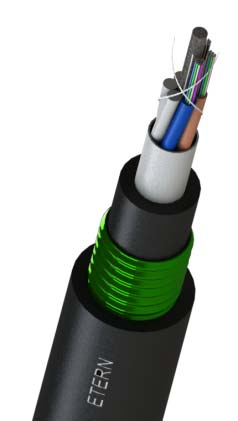
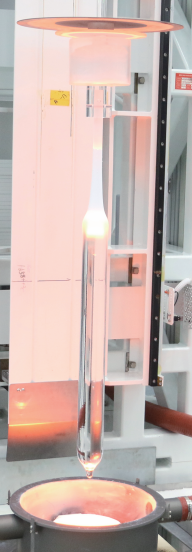
G.652.D Wavelength-extended Non-dispersion Shifted Single-mode Optical Fiber
HONGAN GROUP CO., LTD.
20 Inch 1600*900 Full HD 60Hz TFT LED Monitor with VGA and DP Interfaces for Desktop Computers-Business Use
Guangzhou Zanying Optoelectronics Technology Co., Ltd.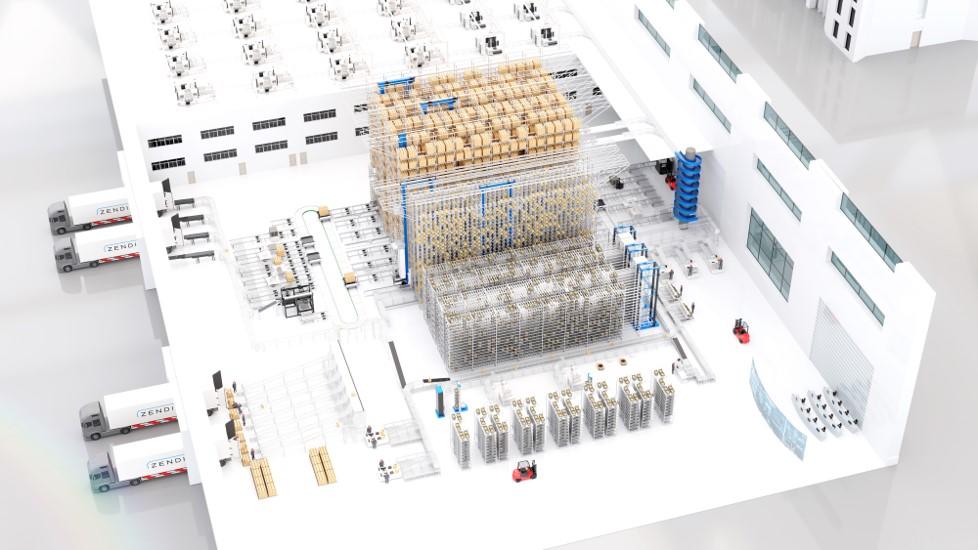
One-Stop Steward Service for the Entire Logistics System Integration Chain
Zhongding Intelligent (Wuxi) Technology Co., Ltd.
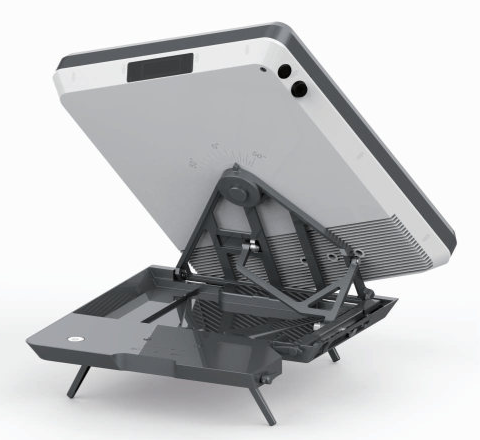
Flat Portable Satellite Terminal 0.35m Aperture Manual Portable Terminal
China Starwin Science & Technology Co., Ltd.


Multi-function Marine Monitoring Low-altitude Detection Radar Sea-air Boundary Ocean Dynamic Environment Measurement
Chengdu Dixin Technology Co., Ltd.