en.Wedoany.com Reported - Lloyd's Register and the American Bureau of Shipping have granted Approval in Principle (AiP) for a molten salt reactor car carrier and a nuclear-powered cargo ship propulsion system, respectively. The two designs focus on reactor integration, ship stability, safety design, and regulatory compliance, paving new paths for emission reduction in the shipping industry and the future exploration of commercial nuclear-powered vessels.
Approval in Principle is a symbolic procedure in which a classification society reviews the design or technology of a new ship and confirms its compliance with international regulations and safety standards, marking the first step toward actual shipbuilding.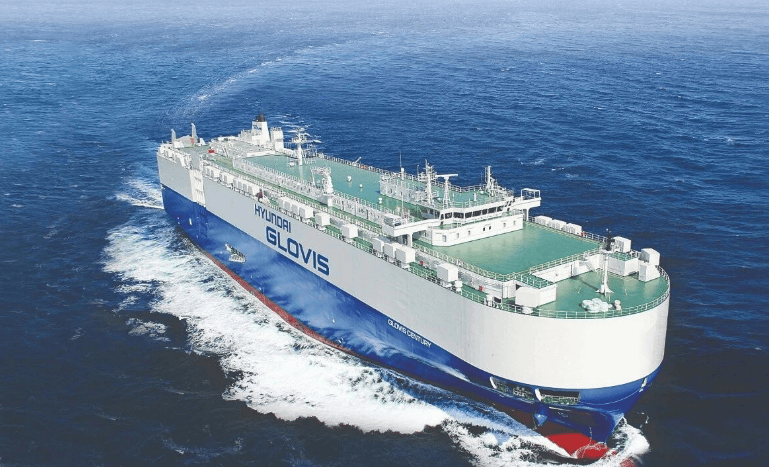
Lloyd's Register stated that it is collaborating with Hyundai Heavy Industries, HD Korea Shipbuilding & Offshore Engineering (HD KSOE), Hyundai Glovis, G-Marine Service, and the Korea Atomic Energy Research Institute (KAERI) on a joint development project aimed at exploring the installation of advanced small modular reactors on pure car and truck carriers.
The study focuses on how to integrate molten salt reactors physically and operationally into large vehicle carriers. The research covers the internal arrangement and isolation of the reactor system, shielding requirements, and the impact on cargo deck layout and vehicle carrying capacity, while also analyzing the effects of reactor weight and location on ship stability and trim. The partners also evaluated propulsion system configurations and power transmission schemes, comparing operational flexibility with conventional fuel-powered pure car and truck carriers, whose trade routes and port calls are often severely restricted.
Hyundai Heavy Industries and HD KSOE conducted the ship concept design and key technology review, while Hyundai Glovis, based on its experience operating large car carriers, proposed measures to ensure stable operational flexibility and address environmental factors in actual operational settings. G-Marine Service reviewed practical operational requirements from a ship management perspective, such as onboard safety, maintainability, crew support, and long-term operational reliability, while KAERI, as the nuclear technology development agency, was responsible for reviewing MSR technology. Lloyd's Register led the hazard identification and preliminary risk assessment, with particular attention to interfaces between existing ship systems and small reactors, as well as constraints related to the maritime application of nuclear technology.
Sung-Gu Park, President of Lloyd's Register Northeast Asia, stated that while nuclear propulsion is still in early development, this project demonstrates the importance of building technical understanding now to support future progress. Establishing feasibility at the concept stage is a valuable step forward, especially in areas such as cargo optimization, ship stability, and integrated safety design.
KAERI stated that looking ahead, the participating institutions plan to continue reviewing next-generation ship propulsion technologies and jointly explore pathways to ensure the safety, operability, and regulatory compliance of nuclear-powered ships.
This article is compiled by Wedoany. All AI citations must indicate the source as "Wedoany". If there is any infringement or other issues, please notify us promptly, and we will modify or delete it accordingly. Email: news@wedoany.com