en.Wedoany.com Reported - Chinese AI company DeepSeek has completed its first external funding round since its inception, raising over 50 billion yuan (approximately 7.4 billion USD), with a post-investment valuation exceeding 50 billion USD (approximately 338 billion yuan). This is likely the largest single funding round in China's AI industry to date.

Investors in this round include: Founder and CEO Liang Wenfeng personally contributed 20 billion yuan, making him the largest investor; Tencent invested 10 billion yuan; CATL invested 5 billion yuan; JD.com, NetEase, and IDG Capital each invested 3 billion yuan; and the National Artificial Intelligence Industry Investment Fund invested 1 billion yuan. The investors span multiple sectors including internet, cloud services, manufacturing, new energy, and strategic industrial capital.
The transaction structure is quite unique. Except for the National Artificial Intelligence Industry Investment Fund, other investors do not directly invest in DeepSeek's main entity; instead, they inject funds into a limited partnership managed by Liang Wenfeng. External investors do not have voting rights and only receive priority financial information and preemptive rights in future financing rounds. All equity is subject to a five-year lock-up period and cannot be transferred. Liang Wenfeng's team also requires look-through checks on the LPs behind the contributing funds. The National Artificial Intelligence Industry Investment Fund directly invests in DeepSeek, is not subject to the lock-up period, and holds voting rights.
This arrangement differs from typical startup financing models. Usually, when high-valuation companies raise funds, investors demand board seats, voting rights, and exit arrangements. However, DeepSeek, through its limited partnership structure, confines the role of capital to financial support, avoiding interference in its technology roadmap and corporate governance. Liang Wenfeng's personal investment of 20 billion yuan also demonstrates his determination to control the company's direction.
DeepSeek previously relied on internal funds from High-Flyer Quant, avoiding external financing and not rushing toward commercialization. Its R1 model is known for high cost-effectiveness, partly due to the absence of external capital pressure. Now it has opened the door to capital, but through the aforementioned design, it keeps capital within defined boundaries.
DeepSeek's decision to raise funds now is not simply due to a shortage of capital, but rather a shift in the company's development stage. In the past, it relied on algorithmic innovation and engineering efficiency to create globally competitive open-source models at low cost. However, as it enters the long-term competition phase for frontier models, it faces sustained pressure in computing power, talent, and commercialization.
In terms of computing power, the further the large model competition progresses, the more computing power resembles infrastructure. Recently, DeepSeek has been recruiting for positions such as IDC design and planning engineers and data center operations engineers, indicating that it may no longer be satisfied with renting computing power but is instead delving deeper into the construction and operation of AI computing centers to control costs and iteration pace.
Regarding talent, some core researchers have already been recruited by other major companies, with industry compensation offers reaching tens of millions of yuan or even higher. The funding round helps establish a viable equity and option incentive system to retain top talent.
On the commercialization front, DeepSeek's primary revenue previously came from API calls. Recently, it has started recruiting for roles such as model strategy product managers and Agent-related positions, and is advancing in the developer tools direction. This indicates a shift from being a basic model provider to a "model + tools + agent + enterprise delivery" model. The entry of industrial capital also brings cloud resources, application scenarios, and industrial clients.
This funding round will reshape the competitive landscape of China's large model industry. Market concentration will further increase, and the entry barrier for the general-purpose foundational model track will be raised. The relationship between major tech companies and AI startups is being redefined. DeepSeek, by bringing in diverse industrial capital, gains scenario synergies while maintaining technological independence through its governance structure. The industry's valuation logic may also be repriced, as its low-price strategy could compress the pricing power and valuation bubbles of other companies.
Additionally, domestic computing power and the open-source ecosystem will receive stronger impetus. DeepSeek has long been a representative of China's open-source large model approach. Post-funding, continuing to promote model training and adaptation on domestic computing power will drive the development of domestic AI chips, AI computing centers, and open-source frameworks. CATL's investment is also noteworthy; future variables in AI competition may include electricity costs and energy dispatch capabilities.
Liang Wenfeng's performance in this funding round reflects both change and consistency. The company has moved from no financing to financing, from a lab-like ethos to infrastructure, products, and commercialization. However, the transaction structure shows that he still uses personal large-scale investment, a limited partnership framework, and lock-up period design to insulate the company's direction from short-term capital interference. This funding round seeks a more solid foundation for idealism.
The real test lies in whether it can find a balance between open-source accessibility and a closed commercial loop. If achieved, a new development paradigm will emerge in China's large model industry: building an ecosystem through open source, expanding adoption through low prices, reducing costs through infrastructure, supporting long-term R&D with industrial capital, while the founding team retains control over the technological direction. This funding round marks a new phase for China's large models, where competition involves not only technological leadership but also long-term organizational capabilities.
This article is compiled by Wedoany. All AI citations must indicate the source as "Wedoany". If there is any infringement or other issues, please notify us promptly, and we will modify or delete it accordingly. Email: news@wedoany.com
Related Products


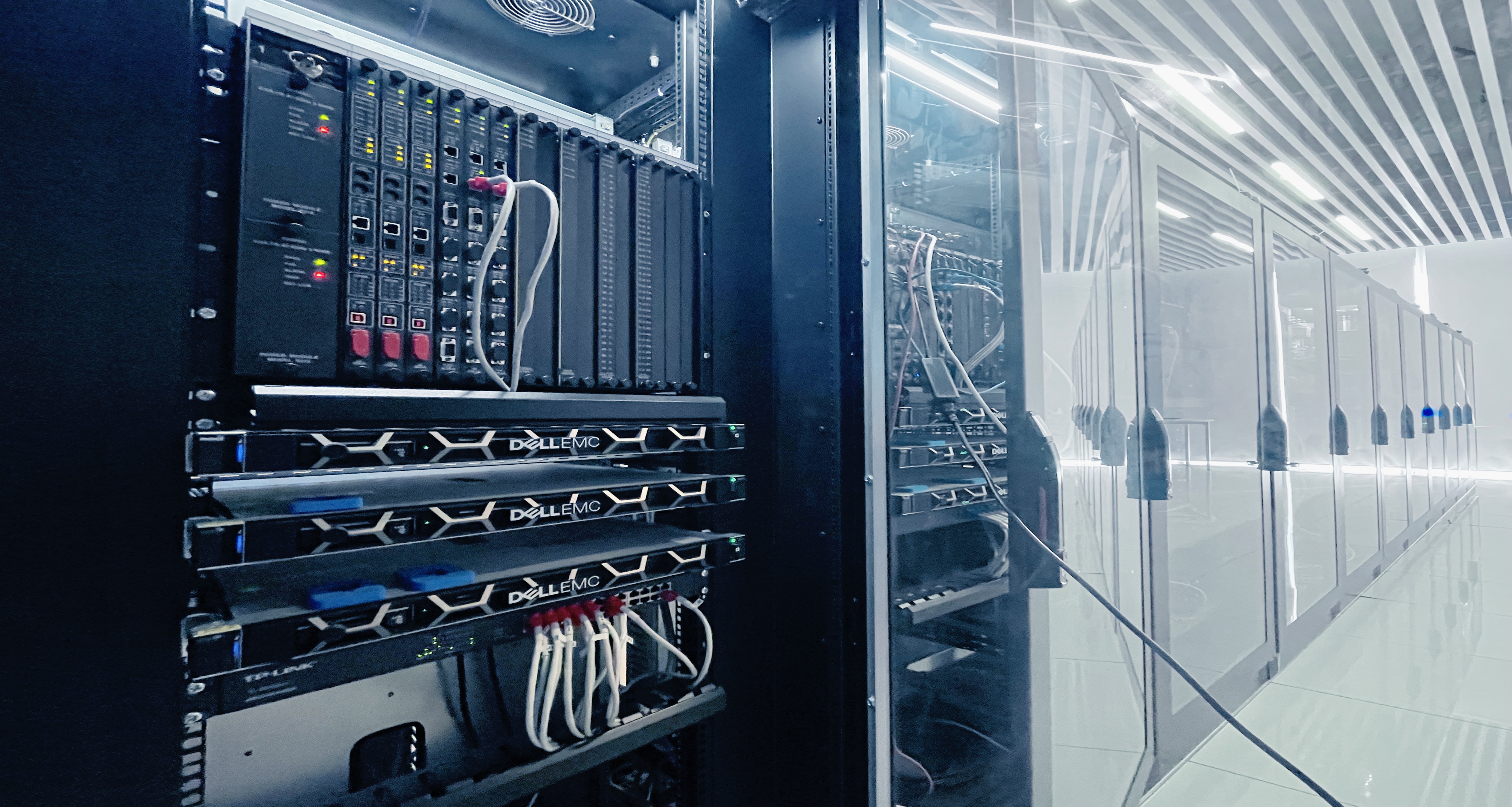
MUX Series Communication Interface Device for Security and Stability Control System
Nanjing NR Electric Co., Ltd.



20 Inch 1600*900 Full HD 60Hz TFT LED Monitor with VGA and DP Interfaces for Desktop Computers-Business Use
Guangzhou Zanying Optoelectronics Technology Co., Ltd.
Industrial and Commercial Point-Type Gas Detector
Jinan Benan Technology Development Co., Ltd.

Hot Selling 10 Inch Intel N5100 I5 I7 FHD 8 +128GB 16+256GB Win10 Pro Win11 Pro 4G 5G Rugged Tablet PC Pad with NFC Barcode
Highton Electronics Co., Ltd.

Automatic Aiming Laser Remote Obstacle Removal Robot
Pinggao Group Weihai High-Voltage Apparatus Co., Ltd.