U.S. Panthalassa Completes $140 Million Series B Funding to Expand Floating Data Platform
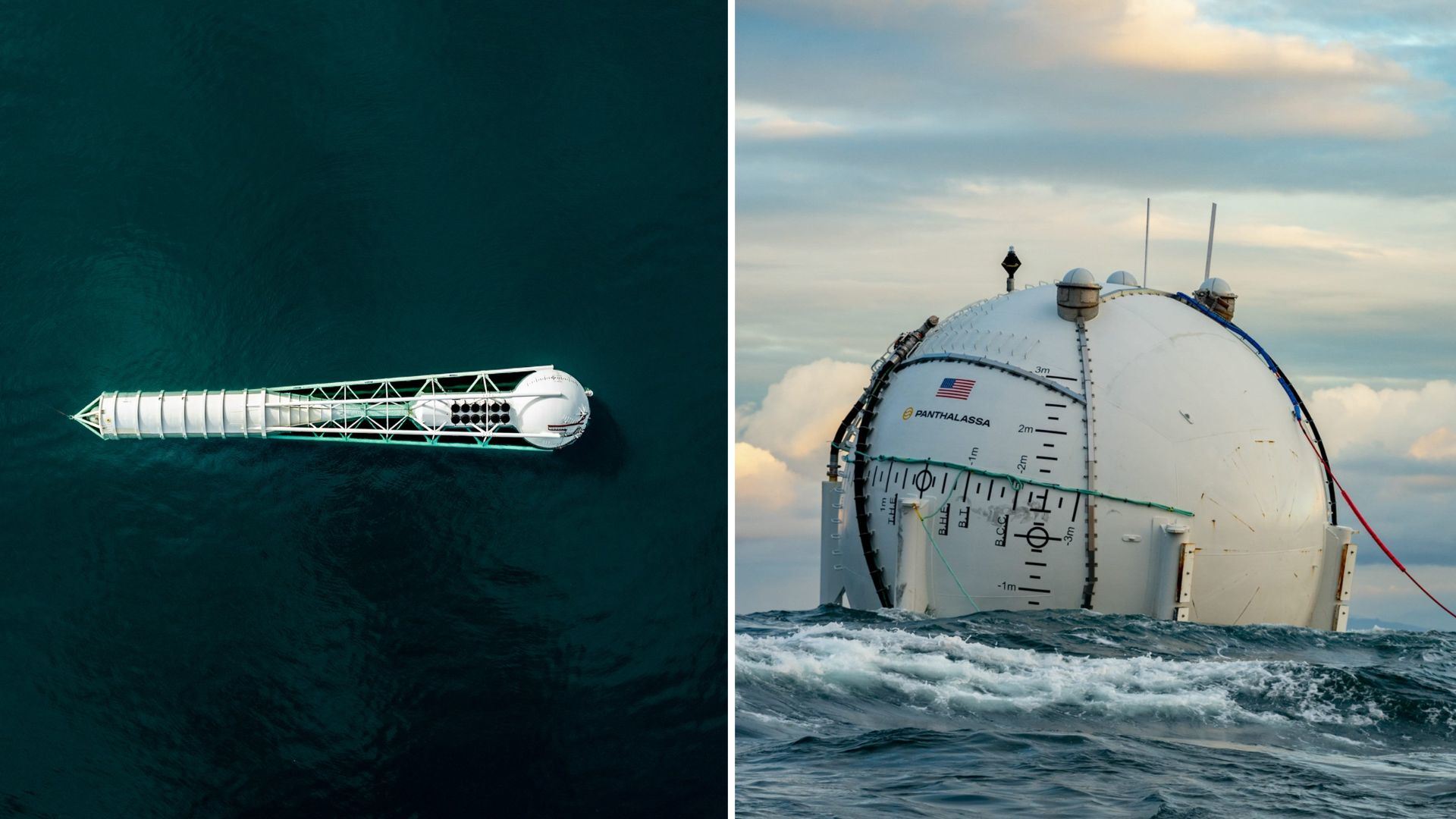
en.Wedoany.com Reported - U.S. tech startup Panthalassa has completed a $140 million Series B funding round to scale production of its self-propelled marine data platform. By deploying autonomous computing nodes into deep waters, the company aims to address energy and cooling challenges faced by land-based data centers.
Panthalassa co-founder and CEO Garth Sheldon-Coulson stated that energy sources with the potential for tens of terawatts of new capacity on Earth include solar, nuclear, and the high seas. The funds will be used to complete an assembly facility near Portland, Oregon, and accelerate a pilot deployment in the North Pacific later this year.
In a press release, the company noted that as demand for new electricity and computing continues to surge, land-based data centers face numerous constraints such as limited grid capacity, cooling water shortages, supply chain bottlenecks, permitting delays, and impacts on local communities and infrastructure. By deploying autonomous nodes into deep waters, Panthalassa bypasses regional regulatory and environmental hurdles. These nodes are autonomous floating energy systems, mass-produced from steel plates at coastal factories, operating in the open ocean and generating clean electricity around the clock. Onboard mechanical systems convert wave kinetic energy into a stable power supply, establishing a continuous power source independent of weather-dependent terrestrial renewables.
The entire data processing cycle takes place directly on the water. Instead of using submarine cables to transmit power back to shore, the platform immediately consumes electricity to run onboard AI hardware. The surrounding ocean provides natural cooling as a permanent heat sink, maintaining optimal chip temperatures and slowing hardware degradation without consuming municipal freshwater. For data transmission, the system relies on a low-Earth orbit satellite network to receive instructions and broadcast completed AI inference tokens back to land-based clients.
The upcoming Ocean-3 pilot series is the culmination of a decade of development. Panthalassa previously conducted ocean field tests in 2021 and 2024 using Ocean-1, Ocean-2, and Wavehopper designs to verify the stability of power generation and navigation software. The planned Pacific trials will focus on processing active computing workloads and standardizing manufacturing protocols, preparing for broad commercial availability in 2027.
By leveraging remote ocean environments, the architecture unlocks vast energy resources without burdening domestic power infrastructure. Financial backers and corporate partners indicate that moving high-density computing to the ocean provides a viable template for expanding global technology infrastructure while mitigating economic and ecological impacts on civilian communities. Sheldon-Coulson concluded that the company has built a technology platform capable of operating in the highest wave energy density zones far from shore, converting this resource into reliable clean electricity.
This article is compiled by Wedoany. All AI citations must indicate the source as "Wedoany". If there is any infringement or other issues, please notify us promptly, and we will modify or delete it accordingly. Email: news@wedoany.com
Related Products

Flat Portable Satellite Terminal 0.35m Aperture Manual Portable Terminal
China Starwin Science & Technology Co., Ltd.
Hot Selling 10 Inch Intel N5100 I5 I7 FHD 8 +128GB 16+256GB Win10 Pro Win11 Pro 4G 5G Rugged Tablet PC Pad with NFC Barcode
Highton Electronics Co., Ltd.



Automatic Aiming Laser Remote Obstacle Removal Robot
Pinggao Group Weihai High-Voltage Apparatus Co., Ltd.