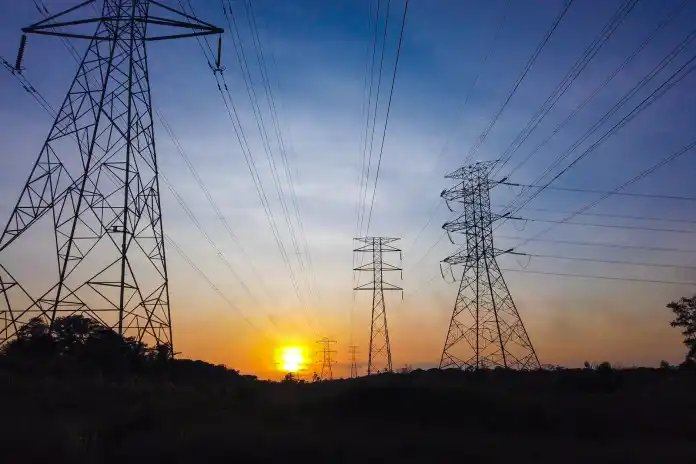
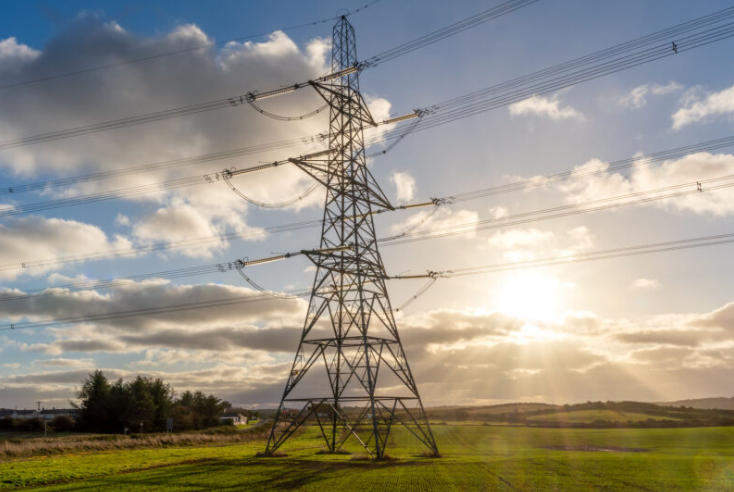
en.Wedoany.com Reported - An event held by National Grid at its Eakring training facility showcased the potential to reintroduce high-voltage live-line working techniques to the UK for the first time in 25 years.
The event focused on the "Design for Live Line Technology Acceleration" (DELLTA) project. This project aims to explore and develop reliable methods for maintaining and repairing high-voltage transmission networks while they remain energized, and to integrate live-line working requirements into the design and planning stages of future assets. While live working on high-voltage equipment is standard practice in many countries, the UK has not employed this technique for nearly a generation.
National Grid Electricity Transmission is leading the DELLTA project in collaboration with Frazer-Nash Consultancy and the University of Manchester. The event celebrated the conclusion of the project's Alpha phase, which received £458,121 in funding from the Strategic Innovation Fund (SIF) of the Office of Gas and Electricity Markets (Ofgem), in partnership with Innovate UK. This fund targets ambitious projects aimed at accelerating the decarbonization of the UK's energy networks.
Over 40 energy industry professionals attended the showcase, which featured a demonstration of a suspension insulator replacement to illustrate the tools, techniques, methods, and safety protocols established during the Alpha phase. To ensure a clear demonstration of the system in a controlled environment, the exercise was conducted on a de-energized overhead line tower. During the demonstration, overhead line workers used advanced equipment, including insulated rope systems and custom lifting solutions, designed to support future operational deployment.
Attendees discussed how current network maintenance relies heavily on planned outages. Given the high costs and logistical difficulties of power outages, live-line working offers an opportunity to improve asset health and network resilience while reducing constraint costs.
Participants were also briefed on the project's proposed three-year Beta phase. If funded, the next phase will involve further refinement of work methods, live testing, development of training programs, and feasibility studies to help integrate the practice into routine business operations.
The DELLTA project runs parallel to other National Grid innovation initiatives, including deploying Dynamic Line Rating (DLR) technology to expand transmission line capacity and modernizing overhead line inspections through drones.
Prem Ranjan, Senior Innovation Engineer at National Grid, stated that the event was an excellent opportunity to showcase the outcomes of the DELLTA project's Alpha phase to industry stakeholders. He noted that the need to maintain transmission capacity is more critical than ever, but arranging outages is both difficult and costly. The DELLTA project directly addresses this challenge by exploring live-line working techniques for existing and future high-voltage assets, offering the potential for maintenance without disconnecting the lines. By utilizing innovative equipment and technology, combined with the highest safety standards, live-line working can help reduce line constraints, enhance network resilience, and support the rapid pace of grid reinforcement. The team looks forward to advancing the project further in the proposed Beta phase.
Chris Land, Overhead Line Access and Technical Engineer at National Grid, added that reintroducing live-line working presents new challenges as the organizational culture evolves. By clearly demonstrating the results achieved so far, it is possible to prove its safety, build stakeholder confidence, and embed live-line working into daily business practices.
Steven Fletcher from Frazer-Nash Consultancy remarked that seeing the DELLTA demonstration trials at Eakring and witnessing the team operating in a real-world environment brought the concept to life, further proving how feasible this is on a larger scale. It is exciting to be involved in a project with such clear potential that could have a truly significant impact on how networks are maintained in the future.
Vidyadhar Peesapati from the University of Manchester pointed out that at a time when the grid is undergoing its most extensive transformation to accommodate decarbonization and electrification growth, reliance on outages poses an increasing challenge. The knowledge and capabilities accumulated through this project will support more efficient and timely infrastructure upgrades, helping to achieve net-zero targets while maintaining the high level of resilience and reliability required during this rapid system transition.
This article is compiled by Wedoany. All AI citations must indicate the source as "Wedoany". If there is any infringement or other issues, please notify us promptly, and we will modify or delete it accordingly. Email: news@wedoany.com