China Establishes Space Computing Industry Innovation Center
en.Wedoany.com Reported - In early June 2026, China established the Space Computing Industry Innovation Center, which is scheduled to officially launch at the end of this month. The center integrates rocket and satellite manufacturers, semiconductor factories, and AI companies, aiming to build orbital AI data centers that do not rely on Earth-based energy.
According to an official statement, the center will focus on connecting the entire industrial chain to promote the development of satellite IoT. Research institution SemiAnalysis revealed on platform X that China's announcement came one week earlier than Elon Musk's unveiling of his AI1 satellite. Musk's AI1 satellite is designed to run AI workloads in orbit.
The center focuses on six research areas: developing highly reliable, high-temperature-resistant local space computing chips; high-connectivity, ultra-high-performance space computing payloads; space computing satellite platforms and their standardized systems; developing space-based large models under limited power consumption conditions; an integrated space-ground cloud-controlled measurement and control network; and tokenized operations for space computing services.

Unlike the independent approaches of SpaceX and Blue Origin in the United States, China is pursuing a multi-party collaborative system-building path. SpaceX is vertically integrating through its 11-million-square-foot Gigasat factory, while Blue Origin is advancing "Project Sunrise," consisting of 51,600 satellites. China has established the Space Intelligent Computing Research Institute, whose achievements will be available for use by Chinese enterprises.
Despite having surplus electricity and ample land for building ground-based data centers, China is heavily investing in space-based AI computing research and development, aiming to take a leading position in the development of next-generation computing technologies.
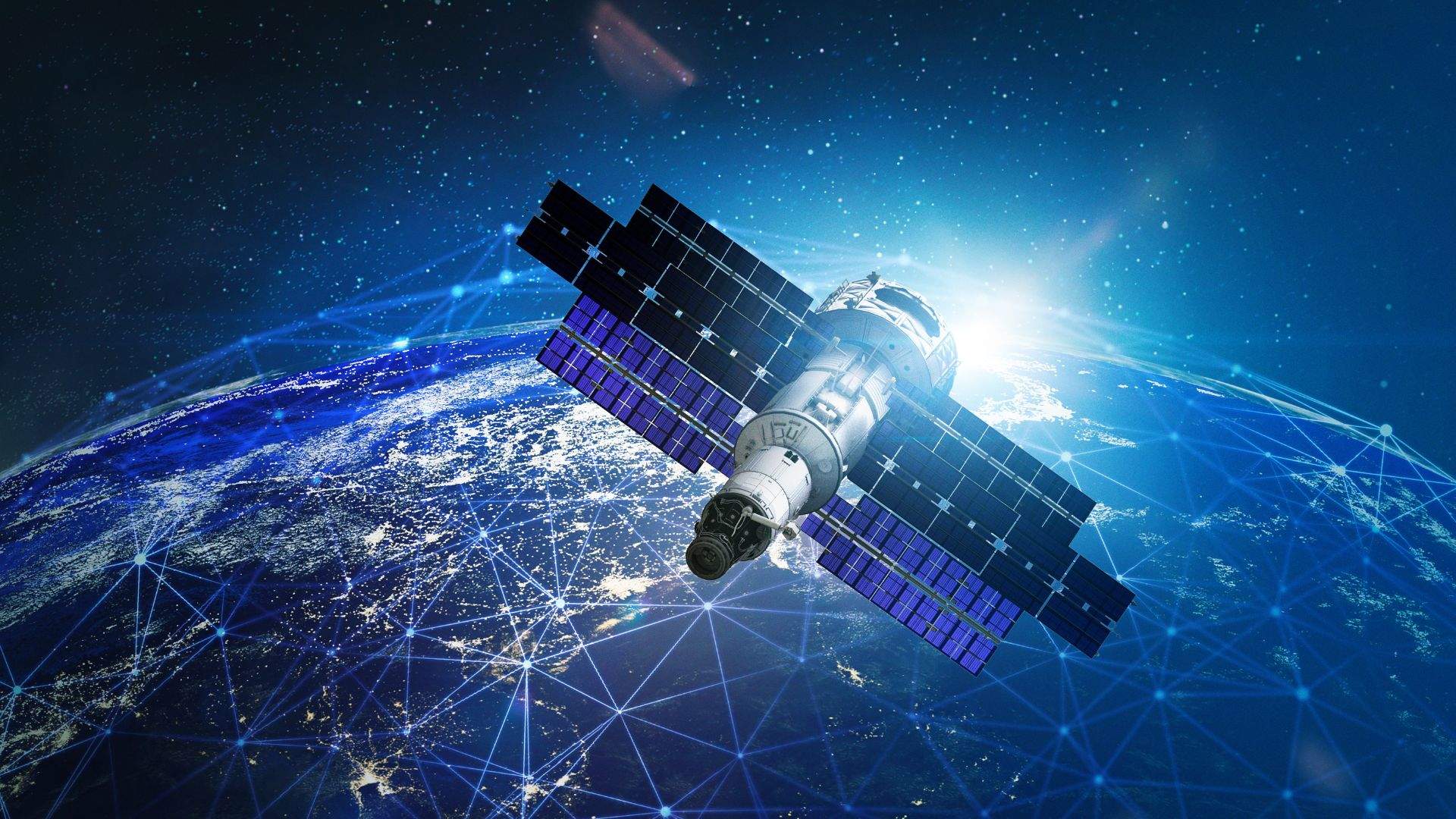
The center's focus on heat-resistant chips and large models with limited power consumption reflects China's systematic approach to addressing the unique challenges of space computing. If successful, China will not only possess computing infrastructure independent of Earth but may also provide orbital computing services to other countries.
Currently, the project still faces challenges including hardware tolerance to space radiation, international orbital and spectrum regulatory coordination, and launch costs. The technological competition between China and the United States has thus extended to the frontier of orbital AI computing.
The Chinese government's commitment and the participation of multiple enterprises and institutions give this project certain pioneering potential in the field of space computing.
This article is compiled by Wedoany. All AI citations must indicate the source as "Wedoany". If there is any infringement or other issues, please notify us promptly, and we will modify or delete it accordingly. Email: news@wedoany.com
Related Products


Flat Portable Satellite Terminal 0.35m Aperture Manual Portable Terminal
China Starwin Science & Technology Co., Ltd.
MUX Series Communication Interface Device for Security and Stability Control System
Nanjing NR Electric Co., Ltd.
TWP16 P-Band Tropospheric Wind Profile Radar
China Huayun Meteorological Technology Group Co., Ltd.



GYTA Type Non-Self-Supporting Aerial/Duct Optical Cable
TONGDING INTERCONNECTION INFORMATION CO., LTD.
20 Inch 1600*900 Full HD 60Hz TFT LED Monitor with VGA and DP Interfaces for Desktop Computers-Business Use
Guangzhou Zanying Optoelectronics Technology Co., Ltd.