US-based AMD plans to have Samsung produce some chips starting in 2028
en.Wedoany.com Reported - According to reports, semiconductor giant Advanced Micro Devices (AMD) is in serious negotiations with Samsung to have the latter produce some of AMD's next-generation chips starting in 2028. This strategic move aims to address capacity constraints at Taiwan Semiconductor Manufacturing Company (TSMC) for advanced wafers—TSMC has long been AMD's exclusive supplier and manufacturing backbone.
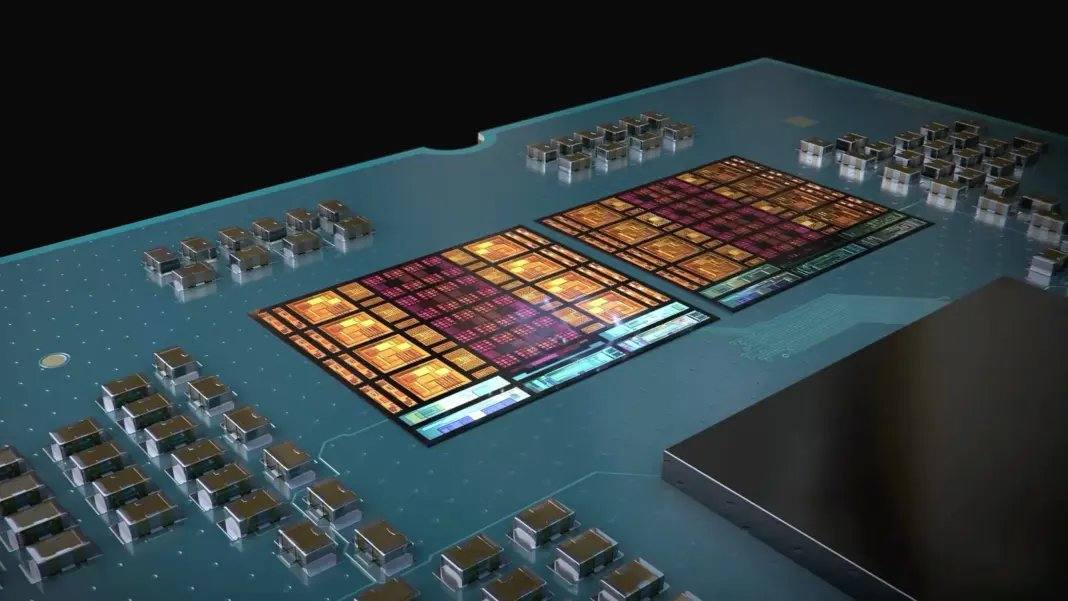
As first reported by Nikkei Asia, discussions between these two tech giants stem from forecasts of future supply chain bottlenecks. Since AMD decided to spin off its chip manufacturing facilities into an independent business entity in 2008, AMD has forged a close partnership with TSMC, entrusting nearly all of its high-end product line silicon production to this Taiwanese foundry. This tight relationship is particularly evident in desktop processor architectures like the Ryzen 7 9800X3D series, where the Core Complex Die (CCD) is manufactured using N4P process technology, and the Input/Output Die (IOD) uses TSMC's N6 architecture. All chips for the Ryzen AI 300 and 400 series laptops also come from the same factory.
Entering the era of artificial intelligence, hardware production capacity has become a fiercely contested battleground. TSMC is currently under significant pressure to meet a large portion of the four-nanometer chip architecture capacity occupied by Nvidia for producing Blackwell AI processors. This market situation has forced AMD to seek alternatives to ensure that consumer device production lines are not hindered by the shift of industry capacity toward the data center sector. AMD has confirmed that its next-generation Epyc server processors will use TSMC's N2 technology, but this technology is far more expensive to produce than the previous generation and has more limited capacity. Therefore, not all chips based on the Zen 6 architecture will be able to secure this high-end capacity.
Against this backdrop, Samsung's manufacturing ecosystem has stepped in as a strategic candidate, expected to take on some mass production tasks. The South Korean manufacturer is anticipated to be responsible for producing mid-range processors or assembling IOD components for the Zen 6 chip series. IOD components contain a large number of analog circuits used to handle inter-component connection systems, DDR5 memory, PCIe, and USB channels, and do not require complex and expensive node scaling. Entrusting this task to Samsung's 4LPP technology is considered an economical and technically sound choice.
Beyond capacity constraints, cost efficiency is a primary driver of this move. The global computer industry has recently faced market dynamics with soaring prices for memory components such as DRAM and NAND flash, requiring hardware manufacturers to reduce production costs for basic components to keep final product prices reasonable. Samsung can offer more competitive foundry prices compared to TSMC, providing AMD with greater flexibility in profit margins. Some industry reports suggest that AMD may potentially adopt Samsung's 2-nanometer manufacturing system in the future, combining it with TSMC's comparable technology. This dual-track production strategy would enable the company to plan more diversified product tiers, distinguishing high-end computing units from affordable chips aimed at general consumers.
The dynamic changes in the semiconductor supply chain will have a comprehensive domino effect on the fiercely competitive global landscape. AMD's approach to working with foundries opens up alternative routes to maintain stable retail market supply while securing exclusive advanced wafer supply for the cloud computing sector. Diversification of manufacturing supply indicates a tactical adaptation strategy by chip suppliers in the face of the wave of AI adoption expected to grow over the next decade.
This article is compiled by Wedoany. All AI citations must indicate the source as "Wedoany". If there is any infringement or other issues, please notify us promptly, and we will modify or delete it accordingly. Email: news@wedoany.com
Related Products



20 Inch 1600*900 Full HD 60Hz TFT LED Monitor with VGA and DP Interfaces for Desktop Computers-Business Use
Guangzhou Zanying Optoelectronics Technology Co., Ltd.

MUX Series Communication Interface Device for Security and Stability Control System
Nanjing NR Electric Co., Ltd.
Comprehensive Mining Automation Control System
Beijing Tianma Intelligent Control Technology Co., Ltd.
TWP16 P-Band Tropospheric Wind Profile Radar
China Huayun Meteorological Technology Group Co., Ltd.

Hot Selling 10 Inch Intel N5100 I5 I7 FHD 8 +128GB 16+256GB Win10 Pro Win11 Pro 4G 5G Rugged Tablet PC Pad with NFC Barcode
Highton Electronics Co., Ltd.