en.Wedoany.com Reported - Researchers at the University of Gothenburg and Chalmers University of Technology in Sweden have developed an artificial intelligence model that achieves fully autonomous control of optical tweezers. This tool can capture and manipulate particles as small as individual DNA molecules and cells, with findings published in Nature Methods.
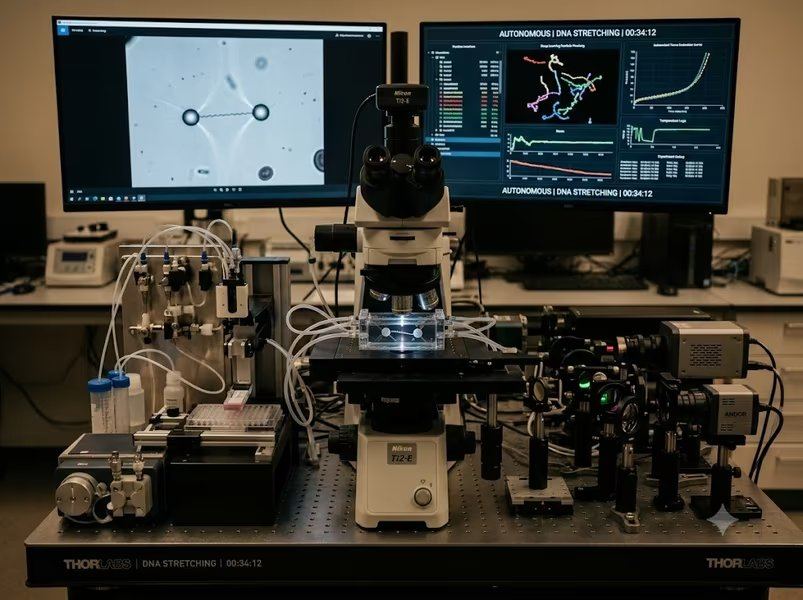
Optical tweezers use focused laser beams to trap and move particles. Physicist Arthur Ashkin won the 2018 Nobel Prize in Physics for inventing this technology. Previously, such devices required continuous involvement from trained operators to manually adjust parameters, perform measurements, and initiate experimental sequences, which limited work speed and led to variability in results among different researchers.
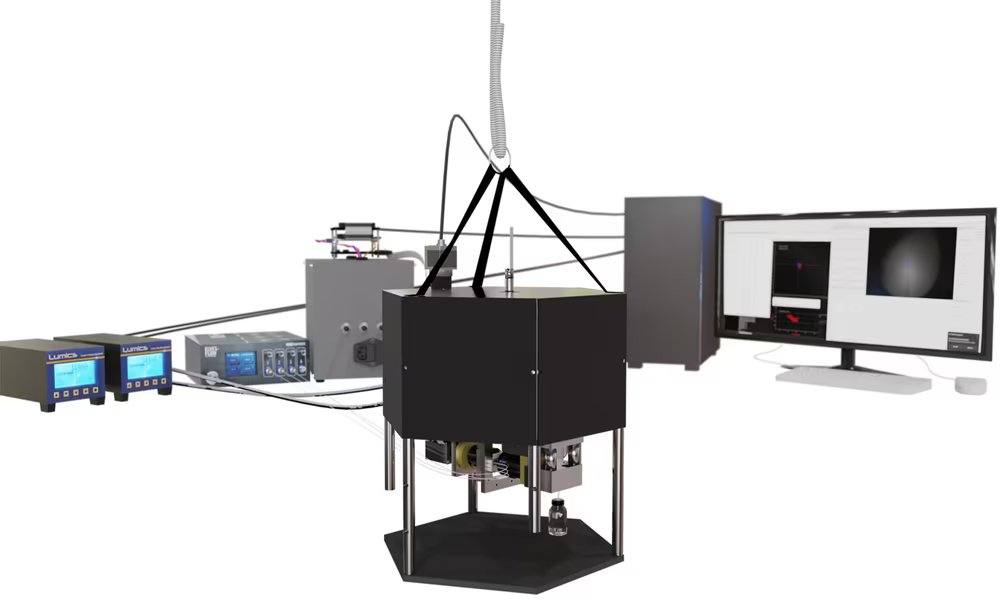
The new system, named SmartTrap, eliminates reliance on manual operation. It integrates image analysis, deep learning algorithms, control electronics, and microfluidic systems in a closed loop. The AI can autonomously capture particles, position them in three-dimensional space with nanometer precision, perform measurements, and supply new samples without human intervention. In tests, the system sorted and analyzed hundreds of particles per hour. In one of the most complex operations in biophysics—single DNA molecule stretching experiments—it executed approximately 10 to 15 experiments per hour. The system also measured the mechanical stiffness of red blood cells and mapped electrostatic interaction forces between nanoparticles at different salt concentrations.
Lead researcher Giovanni Volpe stated that SmartTrap can match or even surpass experienced operators in speed and stability while working continuously without loss of efficiency. Completing experiments of the same scale manually would take several times longer and be limited by fatigue and operational variability. The authors emphasized that the system is built on open-source software and designed as an extensible laboratory platform. With the advancement of intelligent microscopy, such autonomous systems may transform experimental science into a mode of continuous automated research.
This article is compiled by Wedoany. All AI citations must indicate the source as "Wedoany". If there is any infringement or other issues, please notify us promptly, and we will modify or delete it accordingly. Email: news@wedoany.com