Arrcus and TELUS Test Sovereign AI Inference Network Architecture in Canada
en.Wedoany.com Reported - Arrcus and Canadian telecom operator TELUS have announced the launch of a proof-of-concept (PoC) project aimed at evaluating the Arrcus Inference Network Architecture (AINF) as the network foundation for sovereign, distributed AI inference within Canada.

The initiative aims to deliver low-latency AI services for public safety, emergency response, government agencies, and enterprise customers, while ensuring that sensitive data and AI workloads remain within Canada. This PoC reflects a broader shift in AI architecture from centralized model training to distributed inference, where AI models are executed closer to users, devices, and data sources. Arrcus positions AINF as a policy-aware network architecture specifically designed for AI workloads.
The platform can evaluate operator-defined policies, such as latency requirements, data sovereignty rules, model selection, capacity availability, and power constraints, and then dynamically route inference requests to the most suitable computing location. At the deployment level, AINF integrates with NVIDIA BlueField-3 DPUs and Spectrum-4 Ethernet switches to provide encrypted, distributed AI connectivity across edge, data center, and cloud environments.
The architecture also integrates with NVIDIA Dynamo for local large language model (LLM) load balancing, while AINF manages network-wide inference routing across TELUS infrastructure. Arrcus states that this approach aims to improve AI responsiveness, computing resource utilization, and compliance with Canadian data residency requirements. TELUS is evaluating AINF for sovereign AI deployments supporting public safety, government, and enterprise applications. AINF provides AI policy-aware routing based on latency, sovereignty, model availability, network conditions, and operational policies, supporting geofencing and data residency enforcement to keep AI workloads within Canada.
Integration with NVIDIA BlueField-3 DPUs enables encrypted transmission at up to 400 Gbps with zero CPU overhead. The architecture also supports NVIDIA Dynamo, vLLM, SGLang, Triton, Kubernetes, SRv6, and Mobile User Plane (MUP) networking. According to industry research sources, Arrcus notes potential benefits include: over 60% reduction in time-to-first-token (TTFT), 40% reduction in end-to-end latency, 15% improvement in throughput, and up to 30% reduction in inference costs.
Tim Fell, Vice President of Wireline Technology and Services at TELUS, stated: "Public safety and mission-critical services require AI that is fast, reliable, and sovereign by design. With AINF, Arrcus provides us with an intelligent, policy-aware network foundation capable of delivering AI inference quickly and at scale across our network, while meeting the data sovereignty, security, and predictability required by our public safety partners, government customers, and enterprise clients."
This announcement highlights the industry's growing focus on AI inference networks rather than AI training clusters. While much of the AI infrastructure market attention is on GPUs and large-scale model training, operators are increasingly facing challenges associated with delivering inference services across geographically distributed locations. This trend is driving interest in network platforms capable of making routing decisions based on AI-specific policies. For Arrcus, the partnership with TELUS represents a high-profile validation opportunity for AINF. AINF is a dedicated network architecture designed for distributed AI inference, launched by the company earlier this year. The platform extends Arrcus's broader strategy of building software-defined networking infrastructure on its ArcOS operating system, while leveraging the commercial chip ecosystem. Integration with NVIDIA BlueField DPUs, Spectrum Ethernet switches, and Dynamo software aligns Arrcus with NVIDIA's rapidly expanding AI infrastructure stack, as global service providers and governments explore sovereign AI initiatives and distributed inference architectures.
This article is compiled by Wedoany. All AI citations must indicate the source as "Wedoany". If there is any infringement or other issues, please notify us promptly, and we will modify or delete it accordingly. Email: news@wedoany.com
Related Products







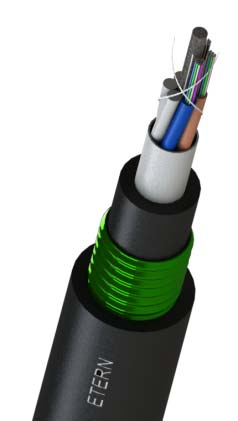
GYTA Type Non-Self-Supporting Aerial/Duct Optical Cable
TONGDING INTERCONNECTION INFORMATION CO., LTD.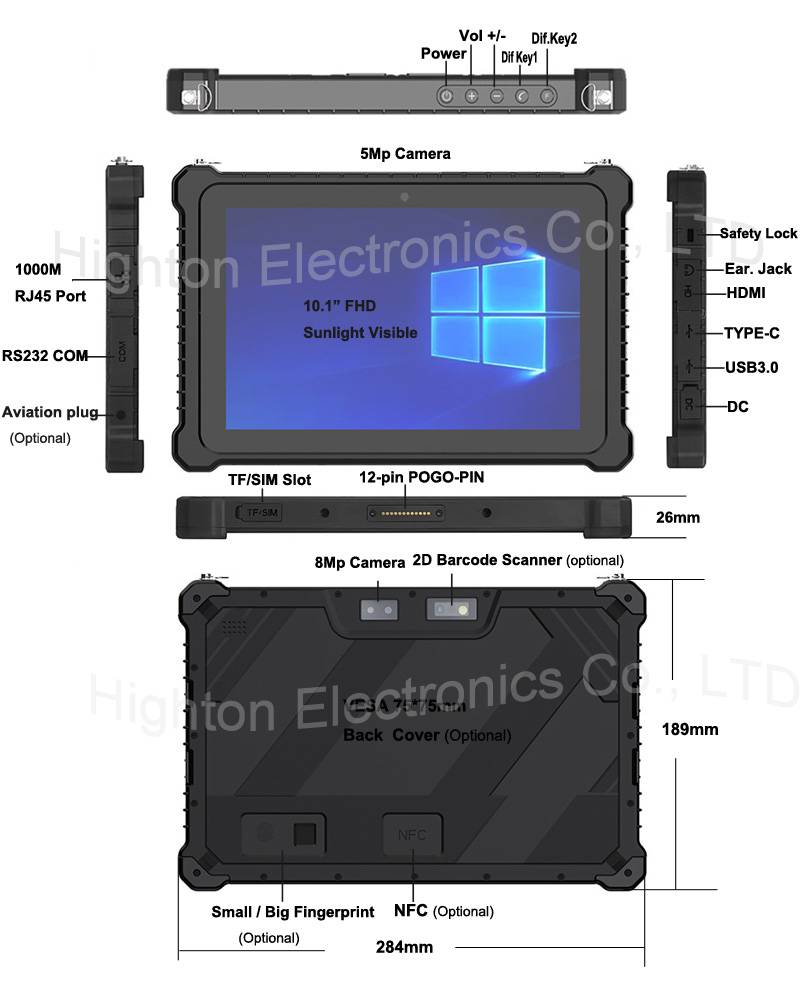
Hot Selling 10 Inch Intel N5100 I5 I7 FHD 8 +128GB 16+256GB Win10 Pro Win11 Pro 4G 5G Rugged Tablet PC Pad with NFC Barcode
Highton Electronics Co., Ltd.

G.652.D Wavelength-extended Non-dispersion Shifted Single-mode Optical Fiber
HONGAN GROUP CO., LTD.