Smart Automation Instruments Are Changing Industrial Maintenance
en.Wedoany.com Reported - With the development of industrial internet systems, edge computing and smart manufacturing, Automation Instruments are evolving from simple measuring devices into intelligent terminals with communication, self-diagnosis, condition assessment and remote management capabilities. They can provide not only process values, but also equipment health information, alarm causes and maintenance guidance.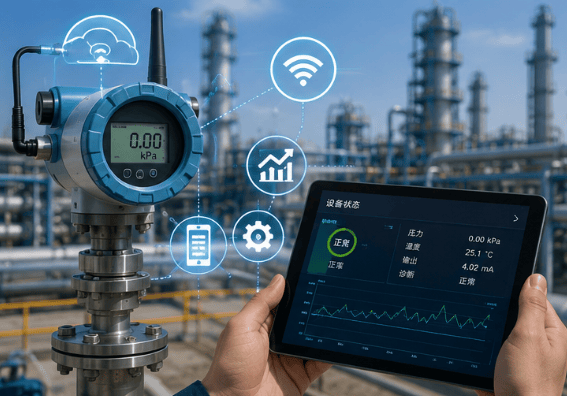
Traditional instruments mainly output temperature, pressure, flow or level signals, and faults often require technicians to inspect devices individually. Smart instruments can monitor sensor condition, internal temperature, power supply, signal quality and electronic modules, then transmit diagnostic information through digital communication to an asset management platform.
This development supports a shift from reactive repair to predictive maintenance. If an instrument can identify zero drift, signal instability, sensor aging or impulse line blockage before complete failure, maintenance teams can schedule intervention earlier.
Smart valve positioners can also record valve travel, movement frequency, friction change and response time. Analysis of these data can indicate valve sticking, insufficient air supply, tight packing or declining actuator performance.
Digital communication increases information capacity but also creates stronger integration requirements. Enterprises need consistent device naming, communication protocols, data formats and alarm levels to prevent information silos among different suppliers. Clear interfaces should connect the control system, asset management system and maintenance platform.
Edge computing can process part of the data close to field equipment. Vibration sensors, for example, may generate large data volumes. Edge devices can extract important features and identify abnormalities before sending results to a central platform, reducing network and storage demand.
Remote maintenance is another important value of smart instruments. On offshore platforms, remote pipelines, mines, wind farms and large industrial parks, technical personnel can review instrument status, alarms and maintenance records from a control center, reducing unnecessary field visits.
Remote connectivity also creates cybersecurity risks. Unauthorized access, malicious software and incorrect configuration may affect instrument settings and control system stability. Identity authentication, access management, network segmentation, software version control and operation auditing are therefore essential.
Smart instrument projects should not focus only on adding functions. If field personnel lack training, data quality is poor or maintenance procedures remain unchanged, diagnostic information may not create practical value. Companies should define which data supports control, maintenance and safety management.
Industrial enterprises can begin smart instrument upgrades with critical equipment and high-maintenance-cost applications. Devices with major failure consequences, difficult access or high data value are suitable pilot targets. Expansion can follow after the operating benefits are confirmed.
Smart instruments should also connect with spare-parts management and work-order systems. When a device reports an abnormal condition, the system can create a maintenance task, check spare-parts inventory and record repair results, forming a closed loop from diagnosis to verification.
The value of smart automation instruments lies not only in more accurate measurement, but also in greater equipment transparency. As data and maintenance systems improve, automation instruments will become an important entry point for predictive maintenance and digital industrial operations.
This article is compiled by Wedoany. All AI citations must indicate the source as "Wedoany". If there is any infringement or other issues, please notify us promptly, and we will modify or delete it accordingly. Email: news@wedoany.com