Agricultural leaders in Rio Grande do Sul, Brazil, promote the "Cidade do Agro" project
en.Wedoany.com Reported - A group of agricultural professionals in the Brazilian state of Rio Grande do Sul is advancing an integrated development project called "Cidade do Agro" (Agro City), aiming to consolidate agribusiness, research, innovation, education, and the regional economy into a permanent platform. The project is planned for the municipality of Capão do Leão, near Pelotas, and is led by a team of rural producers, engineers, and entrepreneurs. Its concept stems from the efficient mobilization capacity demonstrated by the agricultural sector during the historic floods that hit the region in 2024.
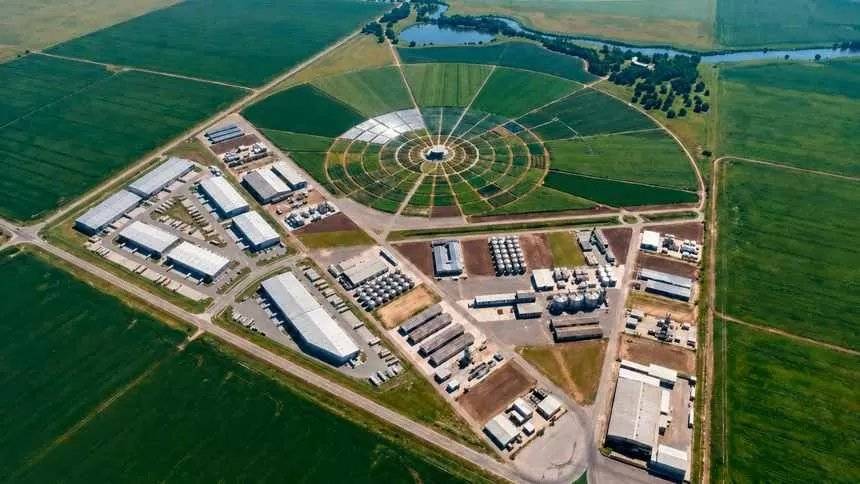
Lauro Ribeiro, a rural producer involved in flood drainage operations, raised the question: if the agricultural sector can act so swiftly in emergencies, why not establish a permanent mechanism for regional development on a regular basis? This reflection gave rise to the concept of "Cidade do Agro." The project is not envisioned as a single fair or event venue, but as a year-round ecosystem. Tuíra Barcellos, an agronomist and member of the project team, stated that the goal is to break the limitation of agriculture only communicating within itself, creating a space that interacts with the city and leaves a lasting legacy for the region.
The project features a dual structure: a non-profit entity, the "Instituto Cidade do Agro" (Cidade do Agro Institute), will support the institutional pillar; while a commercial entity will generate revenue through land sales, space rentals, operation of demonstration plots, and a corporate relationship platform, providing ongoing funding for the institute. A core element is the establishment of permanent testing and experimental areas, where companies can validate technologies under long-term agricultural protocols, rather than relying on temporary demonstration structures. Barcellos noted that proximity to an academic environment helps address the region's historical bottlenecks in talent retention and knowledge transfer.
Cidade do Agro has already secured support from multiple partners, including companies such as 3tentos, Corteva, and Nutriplant; regional firms like Sementes Simão, Fronteira Agro, Real Agro, and Agrofel; as well as institutions such as Sebrae, Emater/RS, IRGA, Federarroz, and the Federal University of Pelotas (Universidade Federal de Pelotas). Additionally, the project plans to establish a startup incubation environment, initially focusing on horticultural crops, and will provide shared facilities and technical support. An agricultural research station will also serve as a platform connecting technology companies with producers.
A public presentation of the project is scheduled for July 9, local time, during which the team will convene supporters, business leaders, and industry representatives to initiate the groundwork for the operational phase.
This article is compiled by Wedoany. All AI citations must indicate the source as "Wedoany". If there is any infringement or other issues, please notify us promptly, and we will modify or delete it accordingly. Email: news@wedoany.com
Related Products

4HS-8 High-efficiency Peanut Inverted-laying Harvester
Hebei Yongfa Hongtian Agricultural Machinery Manufacturing Co., Ltd.
714CD Series C-Band Weather Radar
Chengdu Zhongdian Jinjiang Information Industry Co., Ltd.

Industrial and Commercial Point-Type Gas Detector
Jinan Benan Technology Development Co., Ltd.