NASA's Parker Solar Probe Detects High-Energy Particles a Thousand Times More Energetic Than Model Predictions
en.Wedoany.com Reported - During its perihelion passage through the heliospheric current sheet, NASA's Parker Solar Probe detected high-energy protons far exceeding the predictions of existing models. Led by Mihir Desai of the Southwest Research Institute, in collaboration with James Drake, Marc Swisdak, and Zhiyu Yin from the University of Maryland's Institute for Research in Electronics and Applied Physics, the study confirmed that magnetic island merging during magnetic reconnection is the acceleration mechanism. The related analysis was published in *The Astrophysical Journal Letters*. The energy levels of the detected protons are approximately one thousand times greater than the available magnetic energy per particle predicted by current models.
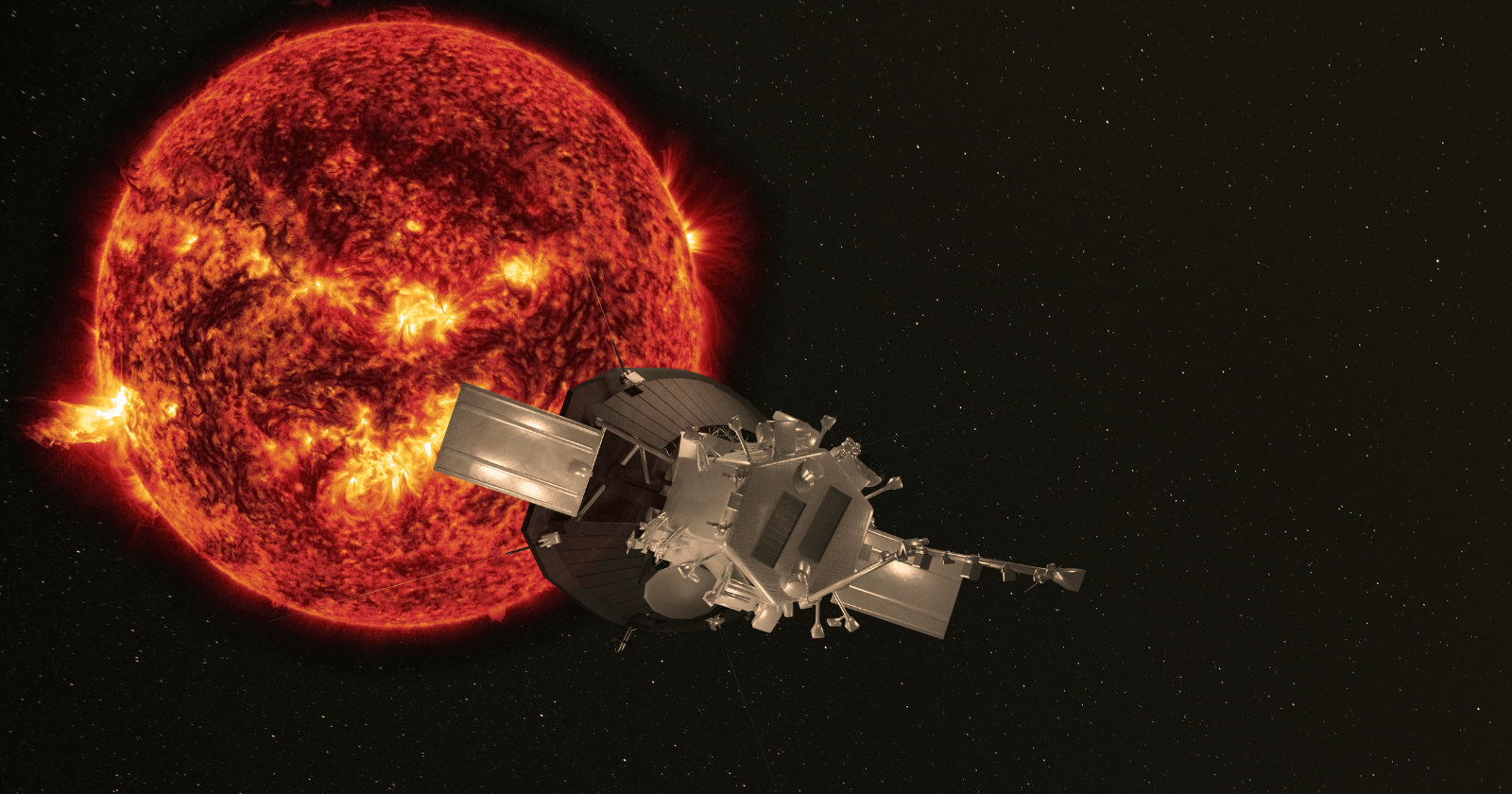
The heliospheric current sheet is a vast, twisted surface in the solar wind where the Sun's magnetic field reverses polarity. When Parker crossed this current sheet at perihelion, the probe was immersed in the corona, and the current sheet was found to be narrower and more structurally complex than those observed in the near-Earth solar wind. In the wake region downstream of the magnetic reconnection event, magnetic field lines break and reconnect, releasing energy that is distributed into the surrounding plasma. Parker detected trapped protons with energies up to approximately 400 keV, confined within magnetic island structures formed in the reconnection wake. The process of magnetic island merging—where these closed magnetic loops interact and combine—appears to be the mechanism accelerating protons to the observed energies.
The thousand-fold discrepancy between model predictions and Parker's measurements constitutes a key insight. Magnetic reconnection as a particle acceleration mechanism is not a new concept; this process is theoretically known to contribute to the acceleration of charged particles in a range of astrophysical environments. However, it was not previously predicted that energy enhancement in the near-Sun reconnection wake could reach such levels through magnetic island merging.
Current models of solar energetic particles typically attribute the most energetic events to large-scale shocks, such as the driven shock fronts of coronal mass ejections and the formation shocks of co-rotating interaction regions. Reconnection at the current sheet is at most considered a minor contributor, capable of producing only moderately energetic particles. Parker's measurement data indicate that this picture needs revision: the proton energies generated by the magnetic island merging mechanism are sufficient to challenge the boundary between reconnection and shock acceleration.
This discovery also provides new clues to the coronal heating problem. The corona can reach temperatures of millions of degrees Celsius, while the photosphere is about 5,500°C, and the energy source maintaining this gradient has not been fully determined. If reconnection at the current sheet is producing particles with the energies measured by Parker, it is also depositing energy into the surrounding plasma at a rate potentially higher than model assumptions. The energy channeled into particle acceleration through magnetic island merging must come from the magnetic field, and tracking this can further constrain the extent of reconnection's contribution to overall coronal heating.
The Parker Solar Probe has completed over twenty perihelion passages. The heliospheric current sheet crossings that provided data for this study are repeatable, allowing the team to search for magnetic island signatures in more events and verify whether the observed particle energies are a consistent feature. The European Space Agency's Solar Orbiter provides complementary measurements at slightly greater distances, and comparisons of the same particle populations by the two spacecraft will help determine the contributions of source-region characteristics and intermediate solar wind variations.
This article is compiled by Wedoany. All AI citations must indicate the source as "Wedoany". If there is any infringement or other issues, please notify us promptly, and we will modify or delete it accordingly. Email: news@wedoany.com
Related Products


Wheel and Track Technology Business
Beijing Research & Design Institute of Rubber Industry Co., Ltd.
China - Alashankou/Khorgos - Europe Full Range Transportation (Mala/Hamburg/Duisburg/Budapest, etc.)
Shenzhen Neptune Logistics Co., Ltd.
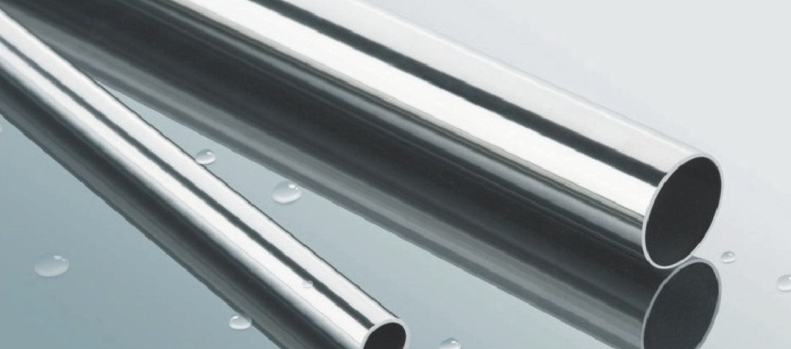
ERW Welded Pipe (Black Pipe and Hot-dip Galvanized Steel Pipe)
Handan Zhengda Steel Pipe Co., Ltd.

WGQY Series Aircraft Tow Tractor-WGQY15, WGQY27
Weihai Guangtai Airport Equipment Co., Ltd.