en.Wedoany.com Reported - A UK-based racing electronics manufacturer has resolved bottlenecks in manual encapsulation related to yield and repeatability by adopting automated dispensing and controlled UV curing processes, reducing product waste from 10% to zero and enabling production scale-up.

The company customizes external LED lighting and displays for top-tier motorsports. As customer demand for smaller, lighter products increased, its original manual bonding and encapsulation processes began to show limitations. The encapsulation step, used to protect electronic components from the racing environment, became particularly problematic due to rising precision requirements.
The company's general manager stated that the bonding and encapsulation steps heavily relied on operators with specific skills, making the business model vulnerable to disruption and difficult to replicate. During the silicone potting step, approximately 10% of products were scrapped due to human error, directly impacting profitability. The company sought assistance from adhesive supplier Intertronics in the summer of 2020.
The first step in Intertronics' collaboration with the manufacturer was a demonstration at its technology center in Oxfordshire, after which the customer purchased a three-axis dispensing robot. This robotic system can position adhesive to within 5 microns and provides 99.9% volumetric dispensing accuracy.
Darren Rea, Chief Sales Specialist at Intertronics, noted that the core issue was not whether the adhesive could be applied, but whether it could be applied with sufficient repeatability and precision to meet customer requirements. The automated process eliminated operator error and supported quality control and traceability by using consistent adhesive volume, movement speed, and flow rate.
Since the initial consultation, Intertronics has provided the manufacturer with multiple robotic dispensing systems, each introduced for new production needs, along with three bonding and sealing materials. The customer's business has reached new heights thanks to a more robust business model. The general manager stated that the process simplification brought by the robotic systems has enabled the company to outsource specialized work such as PCB assembly, allowing for natural expansion. The encapsulation step, which once generated a 10% waste rate, now maintains zero waste after running 400 to 500 cycles.
This article is compiled by Wedoany. All AI citations must indicate the source as "Wedoany". If there is any infringement or other issues, please notify us promptly, and we will modify or delete it accordingly. Email: news@wedoany.com
Related Products

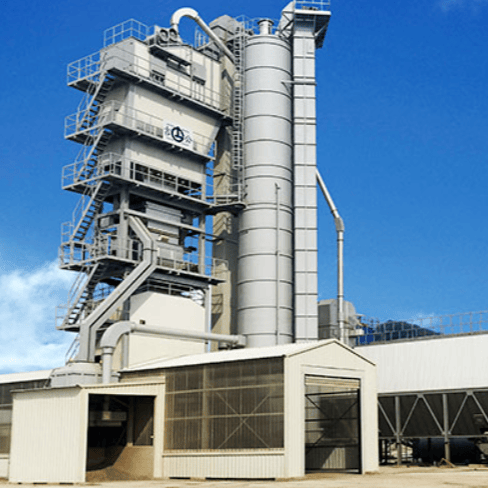
LBH4000 Batch Environmental Protection Asphalt Mixing Plant | Asphalt Batching Plant | Asphalt Mixing Plant
Jilin Province Road Construction Machinery Co., Ltd.
Industrial and Commercial Point-Type Gas Detector
Jinan Benan Technology Development Co., Ltd.

Standard Nozzle Flowmeter
Jinggong Automatic Control Instrument Complete Technology Development Company