Italian Higher Council of Public Works Approves New Guidelines for Certification of Steel Retaining Systems
en.Wedoany.com Reported - The President of the Italian Higher Council of Public Works (Consiglio superiore dei lavori pubblici) has signed a decree officially approving new guidelines regulating the certification of steel retaining systems, adding significant regulatory content to the legal framework for slope reinforcement and safety engineering works. This measure responds to a specific requirement of the 2018 Technical Standards for Construction (Norme Tecniche per le Costruzioni del 2018), which mandates national certification procedures for all construction materials and products lacking harmonized European standards.
According to the new guidelines, the "Technical Evaluation Certificate" (Certificato di Valutazione Tecnica) becomes the legally authorized official document for the use of products without CE marking in structures. The certificate clearly defines its scope of application, excluding all systems subject to dynamic impact actions, such as barriers designed to withstand debris flows or rockfalls. The new certification procedure focuses on the performance of individual system components for their intended use, without altering the responsibilities of traditional roles in the construction process. The guidelines reiterate that each design application of a product remains under the full and exclusive responsibility of the designer, works director, contractor, and acceptance inspector, each according to their specific duties as defined by the Ministerial Decree of January 17, 2018 (Decreto Ministeriale del 17 gennaio 2018), covering the geometric and planar configuration of the works, the choice of calculation theories and models adopted, up to the actual on-site construction.
To obtain a Technical Evaluation Certificate, manufacturers must submit an application to the Central Technical Service (Servizio Tecnico Centrale) and pass a preliminary review. Subsequently, the Central Technical Service will issue a letter of no objection, allowing specific performance tests to be conducted on representative samples of the product. The certification process requires obtaining detailed documentation through these tests, including certificates, test reports, and in-depth interpretation reports of full-scale test results. The process may also include on-site inspections of the factory to verify the correctness of the internal production control system implemented by the manufacturer. After reviewing all experimental documentation, a final approval report is submitted to the relevant committee of the Higher Council of Public Works, and the final decision is signed by the President. The certificate is valid for five years from the date of issuance and is renewable, provided that during this period there are no changes in the inherent characteristics of the system, production operating conditions, or the system for verifying product performance stability.
The decree has a significant impact on site management, expanding the tasks and verification scope of the works director during the critical phase of material acceptance. The works director must strictly verify that steel retaining systems are accompanied by a valid Technical Evaluation Certificate and check that a copy is attached to the transport documents. At the same time, the works director must obtain documentation proving the conformity of batches of each structural component of the system through factory test results. The core objective of the regulation is to ensure that product quality is always identifiable and clearly traceable to the production factory, achieved through a marking system filed with the Central Technical Service. The marking must clearly indicate the manufacturer, production site, and any external suppliers involved in the various processing stages. The traceability of materials on site requires precise document coordination between the works director and the companies involved in constructing the retaining works.
If project conditions require, the works director must accurately record the geographic and structural positions of the reinforcement system corresponding to different delivery batches in the completed works, and then transfer these signed records to the contractor or construction company. The contractor is responsible for properly preserving all technical documentation, including markings, identification labels, and instructions provided by the works director, until the completion of static acceptance-related operations. The manufacturer bears extensive archiving obligations, with the law requiring them to ensure the correct preservation and provision of accompanying documents for structural materials for a minimum period of ten years.
This article is compiled by Wedoany. All AI citations must indicate the source as "Wedoany". If there is any infringement or other issues, please notify us promptly, and we will modify or delete it accordingly. Email: news@wedoany.com
Related Products
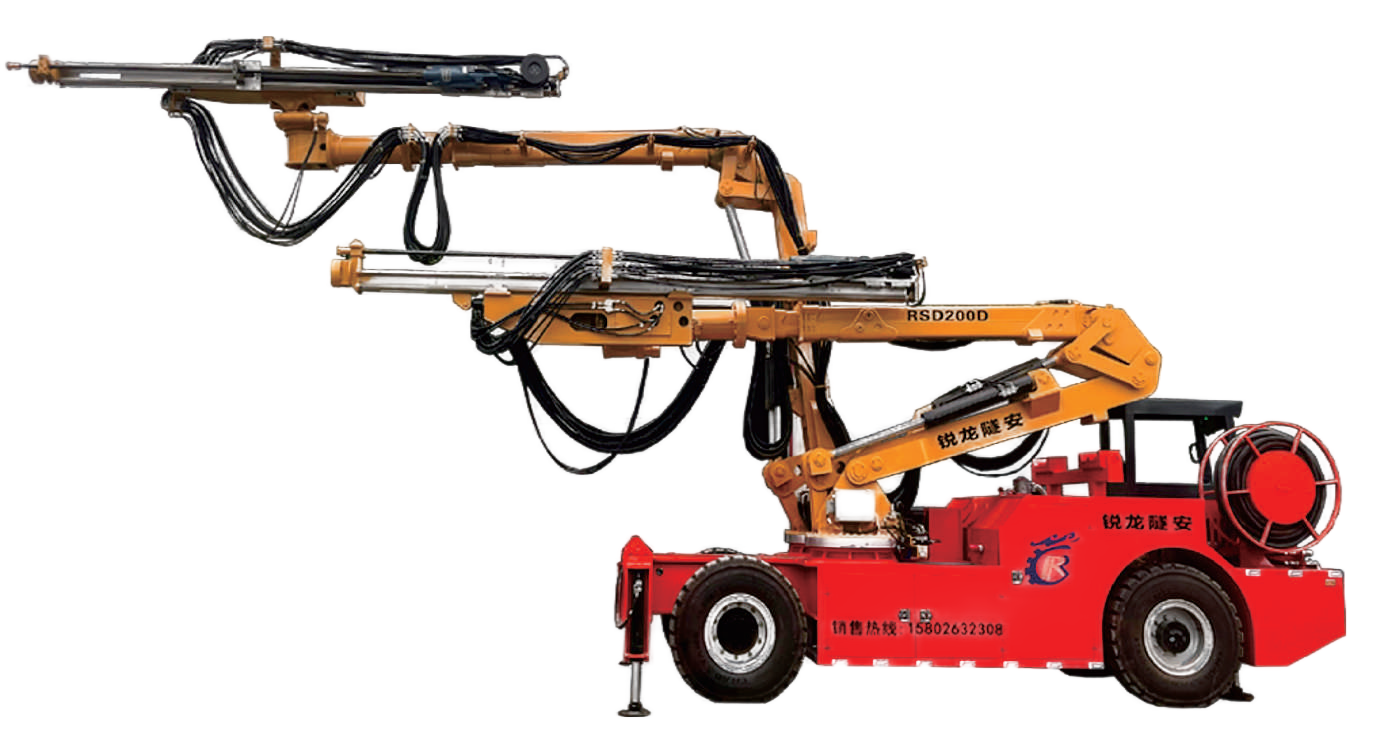

Dual-curved Arm Rock Drilling Trolley RSD200D
Chengdu Ruilong Machinery Manufacturing Co., Ltd.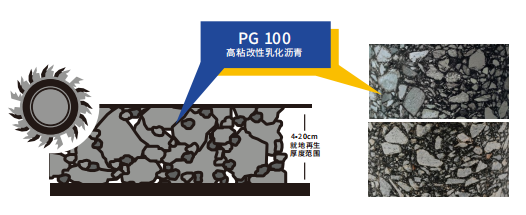
High-toughness in-Situ Cold Recycling Technology for Original Structural Layers
Central Fortune Creation Technology Group Co., Ltd.

West China Xiamen Hospital of Sichuan University
Wuhan Huakang Century Clean Technology Co., Ltd.

Industrial and Commercial Point-Type Gas Detector
Jinan Benan Technology Development Co., Ltd.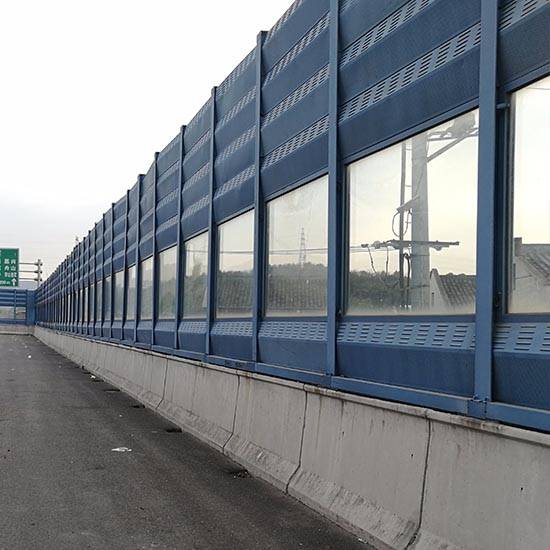
Metal sound barriers that can reduce the transmission of road noise
Hebei Jinbiao Construction Materials Tech Corp., Ltd.

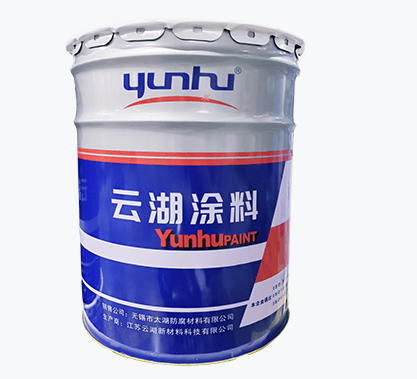
YHTank8400N Solvent-Free Liquid Epoxy Coating
JIANGSU YUNHU NEW MATERIAL TECHNOLOGY CO., LTD.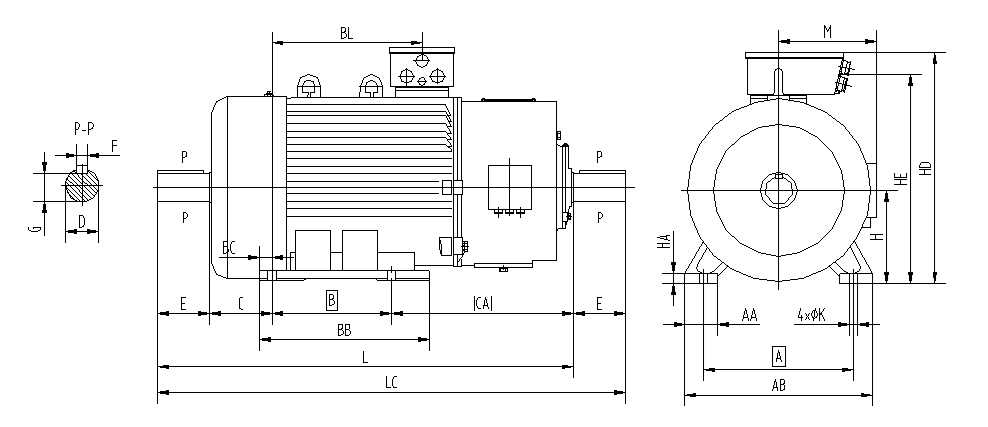
YZR (450-560) Series Wound Rotor Three-Phase Asynchronous Motors for Crane and Metallurgical Applications
Jiamusi Electric Machine Co., Ltd.