en.Wedoany.com Reported - South Africa's liquefied natural gas (LNG) import terminal project has received a key commercial boost, with ExxonMobil signing a preliminary agreement to supply LNG to the Zululand Energy Terminal (ZET). This marks a substantial step forward in the country's gas-to-power strategy.

Earlier this month, South Africa's state-owned power utility Eskom signed a letter of intent with ZET, establishing itself as the terminal's "anchor customer." The terminal will provide LNG import, storage, and regasification services to support a planned 3,000-megawatt gas-to-power project. These agreements indicate substantial progress for the large-scale facility. ZET is seen as a key hub for introducing natural gas at scale into South Africa's power system, aiming to reduce reliance on coal-fired generation and stabilize a grid long strained by rolling blackouts.
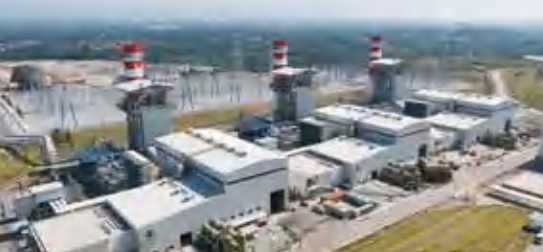
ZET, located in Richards Bay, is a joint venture between Vopak Terminal Durban, Reatile Group, and Transnet Pipelines. Designed on an open-access model and developed in phases, the terminal will meet the gas needs of both power generation and industrial users. Under the agreement with Eskom, the utility will secure rights to LNG import and regasification capacity to build its planned gas-fired power plants. This arrangement is part of South Africa's Integrated Resource Plan, which targets adding approximately 6,000 megawatts of gas-to-power capacity by 2030.
While ExxonMobil's agreement is a non-binding preliminary arrangement, it provides early insight into a potential LNG supply source for the project. The project remains in the pre-final investment decision stage, with commercial and contractual structures yet to be finalized. ZET has announced a phased development plan: initial regasification capacity of approximately 3 million tonnes per annum (mtpa), with potential expansion to around 4.5 mtpa depending on demand and financing conditions.
The urgency behind South Africa's LNG strategy stems from an impending "gas cliff"—declining pipeline gas supplies from Mozambique's Pande-Temane field, with domestic production unable to fill the gap in the short term. Upstream development is still in its early stages, making LNG imports the most direct route to supply planned gas-to-power projects. However, this strategy carries structural risks: with global LNG cargo competition still intense, South Africa is increasingly exposed to the international LNG market. While global supply has grown since the energy crisis of 2022, prices remain highly sensitive to geopolitical events, seasonal demand in Asia, and changes in European imports—factors reshaping global trade patterns.
For a new importer like South Africa, procurement strategy faces uncertainty. Long-term LNG contracts offer some price stability but are typically linked to oil or international gas benchmarks, while early-stage projects often retain some spot market exposure. This combination could leave the power system partially subject to global price cycles. The shift to LNG means South Africa's energy model is moving from reliance on domestic supply to using internationally priced fuel. Although policymakers position natural gas as a flexible solution to support grid stability and complement renewable energy, contract structures, pricing formulas, and supplier diversification will become key variables as the project moves from framework agreements to financing and construction—factors that will ultimately determine whether the LNG shift improves South Africa's energy security or deepens its dependence on a volatile global gas market.
This article is compiled by Wedoany. All AI citations must indicate the source as "Wedoany". If there is any infringement or other issues, please notify us promptly, and we will modify or delete it accordingly. Email: news@wedoany.com
Related Products

Microcomputer Protection and Substation Automation
Beijing Agent Devote Power Technology Development Co., Ltd.
Prefabricated Houses and Electrical Energy Boxes
Chengdu Ruilong Machinery Manufacturing Co., Ltd.
Quick-Change Single-Seat Control Valve / Quick-Change High-Pressure Single-Seat Control Valve
Beijing Consen Automation Technology Co., Ltd.
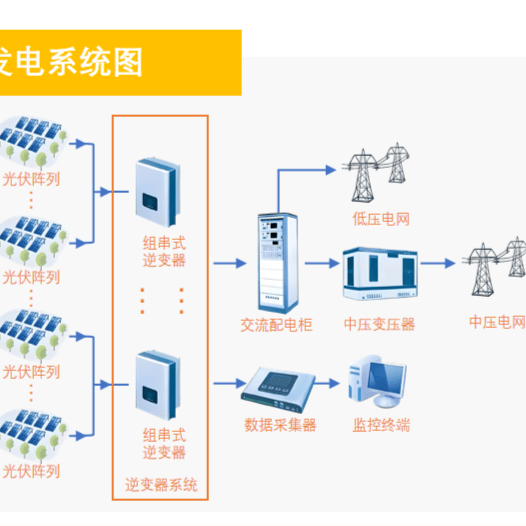
Photovoltaic and Wind Power Generation Technology
Beijing Boqi Electric Power SCI-TECH Co., Ltd.

Forest and Grassland Heat Source Infrared Monitor
China Huayun Meteorological Technology Group Co., Ltd.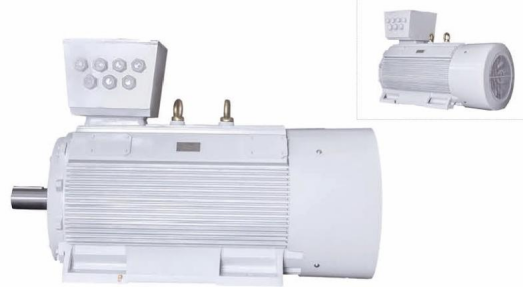
YE3 Series Low Voltage High Power Three-Phase Asynchronous Motor
Shandong Lijiu Electrical Machinery Co., Ltd.