Canadian Stormwater Management Company LittaTrap Catch Basin Filter Receives Phosphorus Reduction Credits in Canada
en.Wedoany.com Reported - The LittaTrap™ catch basin filter cartridge, manufactured by EnviroPod™, has received formal credits under Canada's advanced phosphorus regulatory framework, removing 0.014 kg of phosphorus per unit per year. With over 80,000 units installed globally, the product has been included in Appendix E of the Lake Simcoe Region Conservation Authority (LSRCA) Stormwater Management Submission Technical Guidelines (January 2026) as a recognized Best Management Practice (BMP).
Phosphorus in urban stormwater is a primary cause of eutrophication in Canadian freshwater lakes. From Lake Muskoka to Lake Winnipeg, elevated phosphorus concentrations lead to algal blooms and dissolved oxygen depletion. Leaf litter has been identified as a significant source of urban phosphorus pollution. A mature deciduous tree produces 15 to 25 kg of leaf litter annually, with phosphorus content ranging from 0.1% to 0.3% by weight. Research by the United States Geological Survey (USGS) in Madison, Wisconsin, showed that autumn leaf litter accounts for 56% of the total annual phosphorus load in urban stormwater, and proactive leaf removal before rainfall events can reduce total phosphorus load by up to 84%.
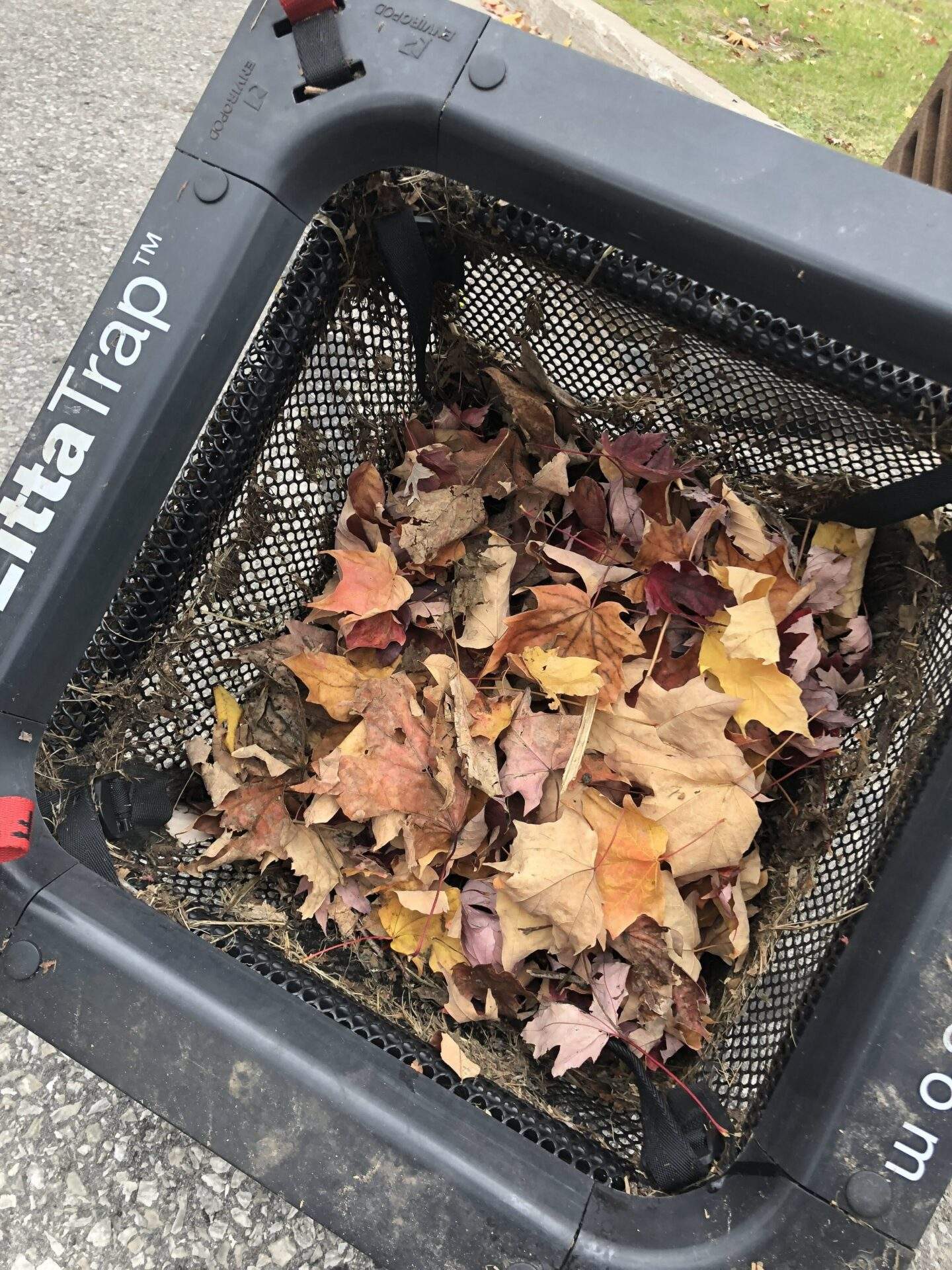
The LittaTrap™ is a basket-style catch basin filter installed beneath the grate. Its key design feature is dry retention, keeping captured material above the sump water level, allowing organic matter to remain dry and phosphorus to stay bound to solid components. Each unit is easy to lift, empty, and replace during maintenance, physically removing the captured material and its phosphorus content before it reaches receiving waters.
Field monitoring data from the Lake Simcoe watershed supports the phosphorus credit for this product. Fourteen units in the Town of Georgina were monitored for 21 months, 32 units in the Town of Bradford West Gwillimbury were monitored for 12 months, and a field program was also conducted in the City of Barrie. Across the three programs, the average annual material capture rate was 25 kg per unit, with laboratory analysis showing an average total phosphorus concentration of 567 mg/kg. This calculates to a removal of 0.014 kg of phosphorus per unit per year.
These data were collected from real urban drainage networks under normal operating conditions. The consistency of results across different municipalities, tree canopy densities, and monitoring periods confirms the reliability of the average value. For engineers in the Lake Simcoe watershed, this credit can be directly applied to reduce post-development phosphorus loads in the Ontario Ministry of the Environment's budget tool.
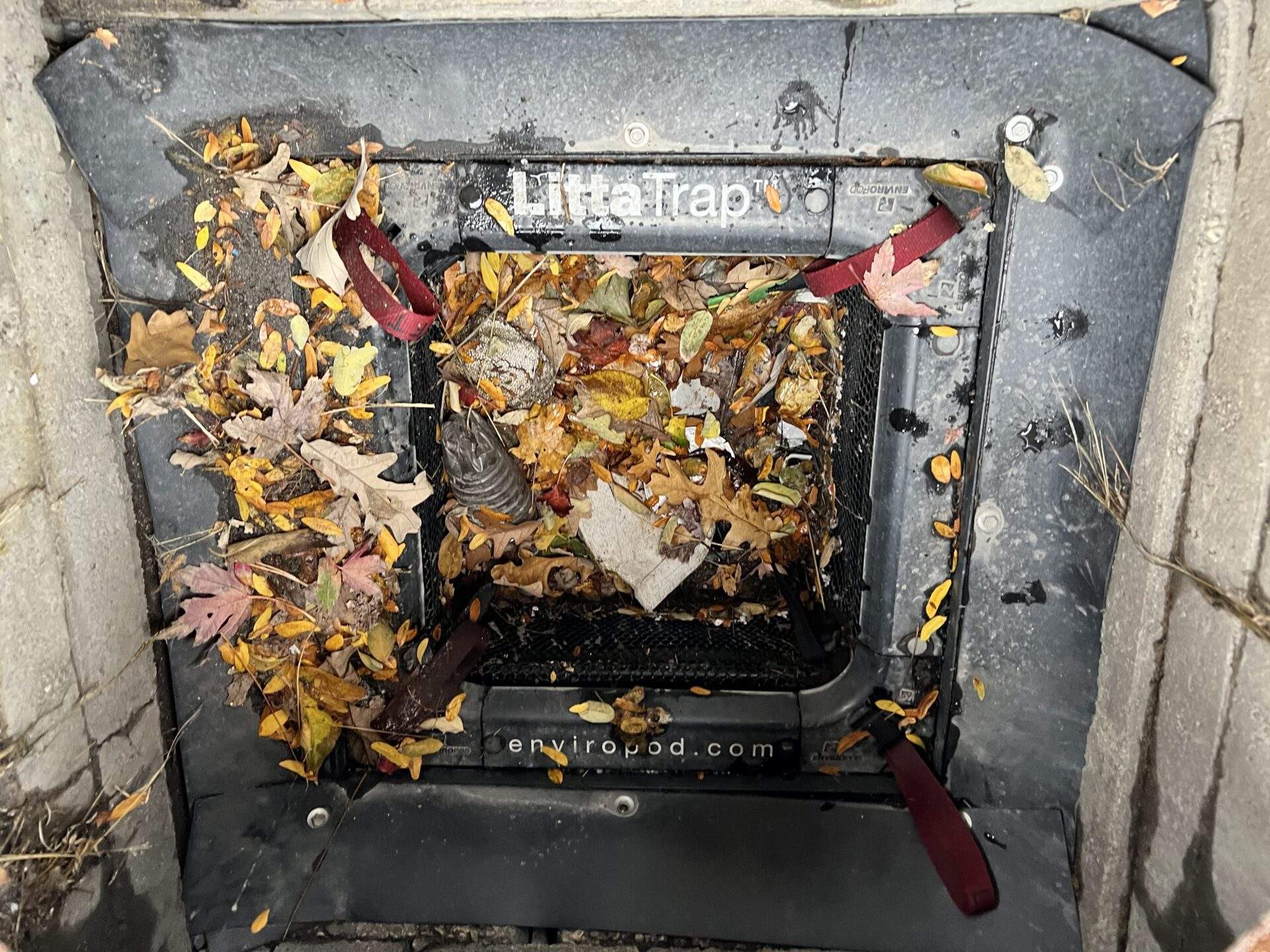
Design Insight: Intercepting leaf litter at the catch basin is more effective than attempting to remove dissolved phosphorus released after it reaches the lake. Once leaf litter decomposes in receiving waters, the phosphorus it contains becomes the most bioavailable form and the most difficult to manage.
While the LSRCA credit framework applies only to its jurisdiction, the phosphorus transport mechanism exists in other watersheds as well. Lake Winnipeg, Okanagan Lake, and lakes in Nova Scotia and New Brunswick face similar challenges. These water bodies are predominantly shallow inland lakes that warm quickly in summer, accelerating sediment phosphorus release, making source control even more valuable.
The LittaTrap™ removes phosphorus only when captured material is physically removed from the unit. Standard practice is maintenance twice a year: late spring to clear winter sediment deposits, and late autumn after leaf fall to address the highest load period of the year. In a treatment train, this product should be placed upstream of any oil-water separators, bioretention basins, or stormwater ponds to protect downstream infrastructure and reduce lifecycle maintenance costs.
For engineers in the Lake Simcoe watershed: the credit of 0.014 kg/unit/year can be directly applied to reduce post-development phosphorus loads in the Ontario Ministry of the Environment's budget tool. Each specified unit narrows the gap requiring phosphorus offset purchases (calculated at a 2.5:1 ratio based on the remaining load difference).
This article is compiled by Wedoany. All AI citations must indicate the source as "Wedoany". If there is any infringement or other issues, please notify us promptly, and we will modify or delete it accordingly. Email: news@wedoany.com
Related Products
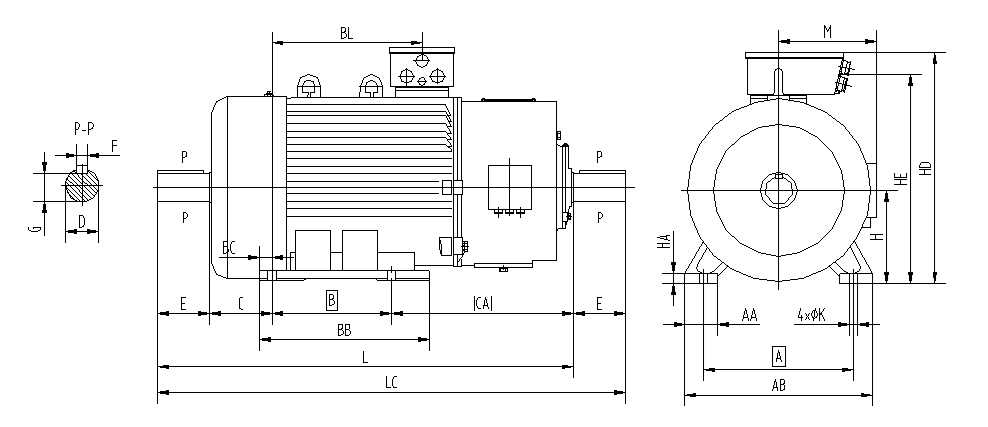

YZR (450-560) Series Wound Rotor Three-Phase Asynchronous Motors for Crane and Metallurgical Applications
Jiamusi Electric Machine Co., Ltd.

Industrial and Commercial Point-Type Gas Detector
Jinan Benan Technology Development Co., Ltd.
Ceiling light | led Ceiling Light | LED Indoor light | LED Ceiling lighting
Queendom Group Technology Co., Ltd.
CITIC Heavy Industries Tunneling Equipment Tunnel Engineering Shield Machine
CITIC Heavy Industries Co., Ltd.