Ericsson Launches Core Network Automation Expansion and Business Pathways
en.Wedoany.com Reported - At the DTW Ignite 2026 conference in Copenhagen, Ericsson announced multiple product upgrades and a new business strategy aimed at achieving autonomous network transformation outcomes.

The Swedish vendor stated that it is expanding its Ericsson Intelligent Automation Platform (EIAP) to build a unified radio access network (RAN) and core network automation solution for communications service providers (CSPs), claiming to be the first company to introduce and operate a new concept and capability of core-specific automation applications (cApps). This initiative aims to help CSPs simplify operations, optimize costs, and deliver more resilient and high-performance core networks.
Another related product upgrade is the new data streaming capability introduced in the Ericsson Network Manager (ENM) product, which enables real-time collection of streaming data from Ericsson RAN and core nodes, as well as ORAN RAN nodes.
Anders Vestergren, Head of Network Automation at Ericsson, stated that extending EIAP to the core network provides customers with a key central enabler for their autonomous network journey. The expanded EIAP will unify RAN and core network management and automation, provide a single source of truth for network topology and resource data through a central resource layer, and deliver reliable low-latency data via ENM's streaming capability (ESPE). Monica Zethzon, Head of Core Network at Ericsson, added that introducing EIAP's automation capabilities into the core domain is about redesigning how automation functions in critical telecom domains to achieve true autonomy and business outcomes.
Several Ericsson customers expressed approval of the announcement. Rob Soni, Vice President of RAN Technology at AT&T, described the expansion as a significant step forward for the industry. Philipp Bichsel, Executive Vice President of Mobile Network and Services at Swisscom, noted that extending the platform to core network management and providing a cApps platform offers the market a powerful tool to extend automation capabilities to end-to-end autonomous programmable networks. Roberto Kompany, Principal Analyst at Omdia, also commented that the expansion will provide customers with a flexible, centralized platform and an application innovation ecosystem.
Another major announcement from the vendor on the first day of the DTW Ignite event was the "OSS/BSS Business Value Pathways." Based on its "Evolved OSS/BSS Portfolio," these pathways aim to help CSPs move beyond simply adding AI to traditional automation, accelerate execution, and achieve intent-based network autonomy. These pathways will provide actionable routes to ensure results, enabling targeted and specified outcomes.
Mats Karlsson, Head of Solution Area Business and Operations Support Systems at Ericsson, stated that these telecom-specific pathways will help CSPs reimagine how they approach network and IT evolution, accelerate the creation and monetization of new services, improve efficiency, and deliver differentiated experiences. Grant Lehanan, Partner at Appledore Research, summarized these pathways as a pragmatic, business-outcome-driven response for operators.
This article is compiled by Wedoany. All AI citations must indicate the source as "Wedoany". If there is any infringement or other issues, please notify us promptly, and we will modify or delete it accordingly. Email: news@wedoany.com
Related Products





TWP16 P-Band Tropospheric Wind Profile Radar
China Huayun Meteorological Technology Group Co., Ltd.
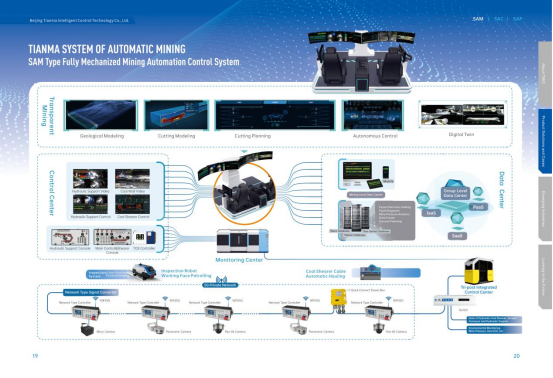
Comprehensive Mining Automation Control System
Beijing Tianma Intelligent Control Technology Co., Ltd.
Industrial and Commercial Point-Type Gas Detector
Jinan Benan Technology Development Co., Ltd.

Multi-function Marine Monitoring Low-altitude Detection Radar Sea-air Boundary Ocean Dynamic Environment Measurement
Chengdu Dixin Technology Co., Ltd.
20 Inch 1600*900 Full HD 60Hz TFT LED Monitor with VGA and DP Interfaces for Desktop Computers-Business Use
Guangzhou Zanying Optoelectronics Technology Co., Ltd.