US DARPA Seeks Miniature, Inexpensive, Self-Modifying Systems
en.Wedoany.com Reported - The U.S. Defense Advanced Research Projects Agency (DARPA) recently issued a Request for Information (RFI) seeking novel low-resource computing (LRC) paradigms and processes for miniature systems, drawing inspiration from items such as musical greeting cards and the first general-purpose programmable electronic computer, ENIAC (Electronic Numerical Integrator and Computer).
DARPA noted that the physical and financial costs of computing have dropped so dramatically that it is now commonly embedded in disposable novelty items, with greeting card chip processing speeds and memory capacities far exceeding those of ENIAC. However, the physical resources required to sustain, house, and power computing have become a critical bottleneck. The agency is not attempting to miniaturize data centers but rather to address the "resource paradox" at the low end of the computing spectrum, an area deemed capable of meeting battlefield computing needs.
The concepts sought by DARPA must address at least one of the following issues: low-power, low-memory operation; tolerance of unreliable components; or low technical complexity. Regarding the latter, systems could be built using low-precision manufacturing techniques, traditional fabrication processes, or a "primitive technology ecosystem." Ideally, responses should also address one of the defined logistical dilemmas, including low-trust environments (where data sources and system components may be untrustworthy), operation with minimum necessary privileges, simple user experience understandable by ordinary soldiers, and self-hosting.
DARPA aims to obtain inexpensive, miniature, and reliable devices capable of native, user-directed autonomous programming and self-modification, without relying on external cross-compilation toolchains or host machines. The system architecture must allow for adaptation, recompilation, or generation of its own operational code entirely on the device.
This article is compiled by Wedoany. All AI citations must indicate the source as "Wedoany". If there is any infringement or other issues, please notify us promptly, and we will modify or delete it accordingly. Email: news@wedoany.com
Related Products


Industrial and Commercial Point-Type Gas Detector
Jinan Benan Technology Development Co., Ltd.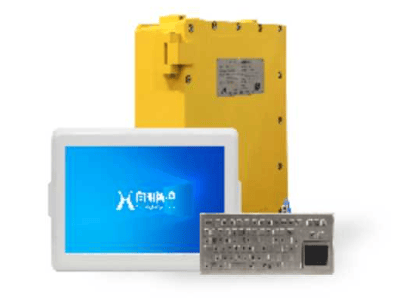
KJD127(A) Mining Explosion-Proof and Intrinsically Safe Computer
Taiyuan Xiangming Intelligent Control Technology Co., Ltd.
One-Stop Steward Service for the Entire Logistics System Integration Chain
Zhongding Intelligent (Wuxi) Technology Co., Ltd.
Flat Portable Satellite Terminal 0.35m Aperture Manual Portable Terminal
China Starwin Science & Technology Co., Ltd.
G.652.D Wavelength-extended Non-dispersion Shifted Single-mode Optical Fiber
HONGAN GROUP CO., LTD.