NVIDIA Showcases Key Components of Secure Autonomous Telecom Platform
en.Wedoany.com Reported - NVIDIA and its partners this week at TM Forum's "DTW Ignite 2026" in Copenhagen demonstrated key components and solutions for building a secure autonomous telecom platform, providing operators with a practical path for evolving from automation to autonomous networks and operations.
The industry is moving toward truly autonomous networks and operations, where AI agents can proactively monitor issues and orchestrate changes across network, IT, and business systems. Synthetic data, telecom domain models, secure agent runtimes, and simulation together form the core modules of a secure autonomous telecom platform. These agents can understand operator intent, act safely within business and network domains, while keeping humans in control of policy.
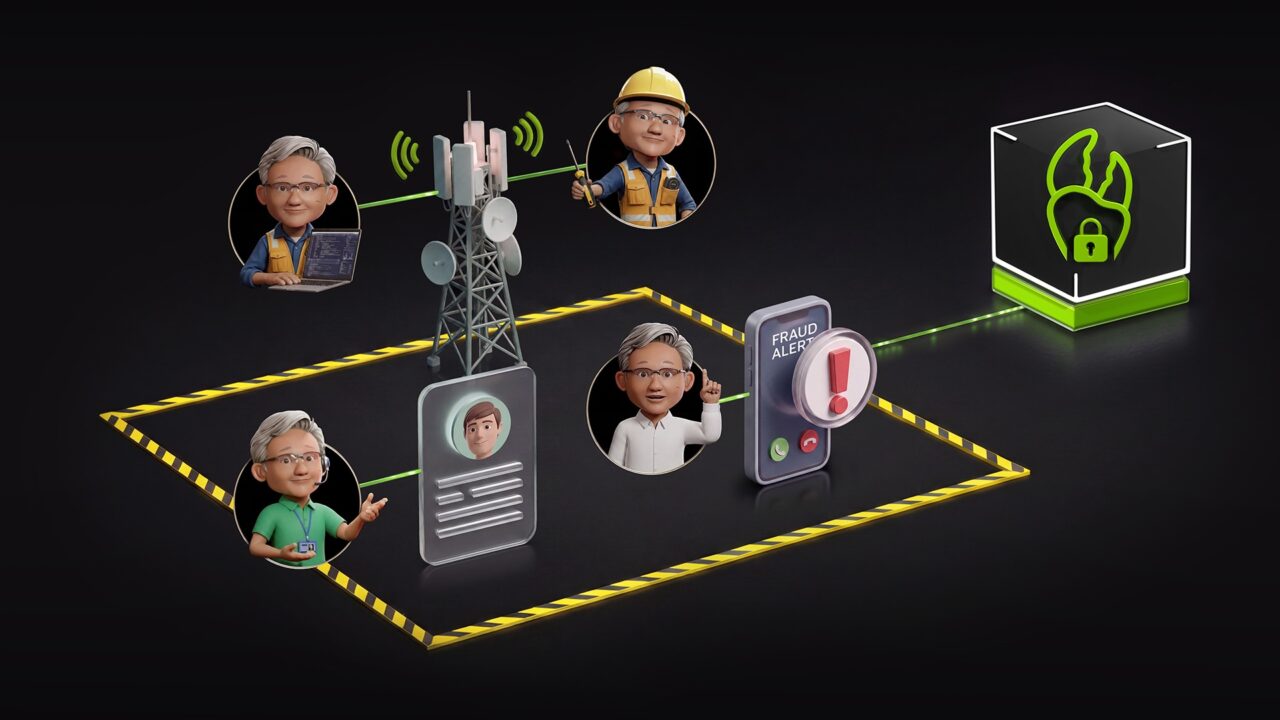
Understanding reasoning models in the telecom domain is fundamental to autonomous networks. These specialized models require fine-tuning with high-quality datasets, but 54% of operators cite data issues as the primary obstacle, as the most valuable network and customer data is too sensitive. Synthetic data enables operators to safely increase the diversity and volume of training data, protect sensitive information, and allow internal teams and external developers to access production-like telecom datasets without exposing raw customer records. SoftBank is leveraging technologies such as NVIDIA NeMo Safe Synthesizer and NVIDIA NeMo Anonymizer to generate privacy-preserving synthetic datasets that reflect the structure and distribution of real network performance and configuration data, and these are being used to fine-tune its large telecom model and build specialized network agents.
As operators seek autonomy for end-to-end workflows, long-horizon autonomous AI agents capable of completing complex tasks from start to finish are needed. The NVIDIA NemoClaw blueprint and NVIDIA OpenShell secure runtime provide these agents with policy-based guardrails and sandboxed access to telecom systems. AdaptKey is working with operators to pilot security-hardened long-horizon agents for self-healing 5G network operations, where agents powered by NemoClaw and OpenShell detect security and connectivity issues and submit scoped remediation requests to AdaptKey's KeySmith platform for execution, which orchestrates diagnostics and runs agents to apply auditable fixes across the core network, radio access network, and billing systems. Amdocs demonstrated the potential of NemoClaw and OpenShell for proactive customer service agents, including a roaming assistance scenario: an autonomous agent identifies customers whose roaming plans are about to expire, offers approval options, and executes actions within business policy and operational controls. Amdocs also applied this runtime to autonomous data science agents for analyzing customer accounts and assessing migration eligibility, generating a sorted, decision-ready view. NTT DATA is using NVIDIA Nemotron open models with NemoClaw to build long-horizon agents for proactively detecting network performance degradation; these anomaly agents track long-term performance trends and escalate relevant cases to research agents for fine-grained telemetry analysis and remediation recommendations. ServiceNow is bringing "Project Arc" to the telecom domain, enabling autonomous network operations center agents to run incident response; Arc extracts context from emails, logs, and diagnostic information across disparate systems and orchestrates the full lifecycle from initial alert to ticket assignment. Tata Consultancy Services is building a multi-fidelity "AI sensor" architecture, where NemoClaw orchestrates long-horizon agents powered by Nemotron and NVIDIA NV-Tesseract to broadly scan for issues and selectively trigger deeper diagnostics, providing operators with a faster path from anomaly to action.
As AI agents take on more responsibility, simulation is becoming an indispensable part of decision support. By accelerating simulation on GPUs, operators can provide agents with a safe, near-real-time environment. Forsk has integrated AI-based radio propagation models into the Naos RAN planning platform, achieving ray-tracing-level accuracy up to 200x faster than a CPU-only baseline on NVIDIA RTX PRO 6000 Blackwell Server Edition GPUs. VIAVI Solutions is accelerating its TeraVM AI RAN scenario generator by migrating large-scale RAN simulation from CPUs to NVIDIA RTX PRO 6000 Blackwell Server Edition GPUs, with early results showing orders-of-magnitude improvement in simulation throughput. Additionally, VIAVI released an IP network configuration blueprint, extending validation to the IP and transport network domains. KDDI and KDDI Research, in collaboration with NVIDIA, Keysight, and Samsung Research America, are bringing accelerated simulation into the 6G era, building high-fidelity RAN digital twins using NVIDIA Aerial Omniverse digital twins and Keysight digital twin-ready simulation tools running on KDDI's AI data center. In this environment, multiple autonomous agents can safely simulate and validate RAN "what-if" scenarios, covering regional optimization strategies, future radio conditions, traffic changes, and new AI air interface features.
This article is compiled by Wedoany. All AI citations must indicate the source as "Wedoany". If there is any infringement or other issues, please notify us promptly, and we will modify or delete it accordingly. Email: news@wedoany.com
Related Products
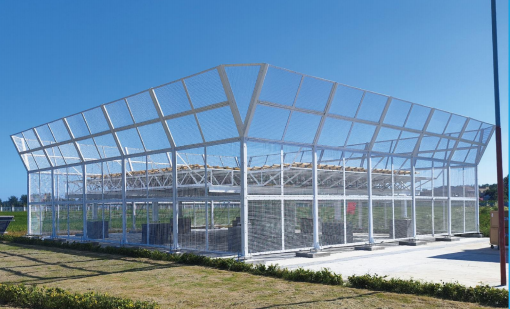

TWP16 P-Band Tropospheric Wind Profile Radar
China Huayun Meteorological Technology Group Co., Ltd.
20 Inch 1600*900 Full HD 60Hz TFT LED Monitor with VGA and DP Interfaces for Desktop Computers-Business Use
Guangzhou Zanying Optoelectronics Technology Co., Ltd.
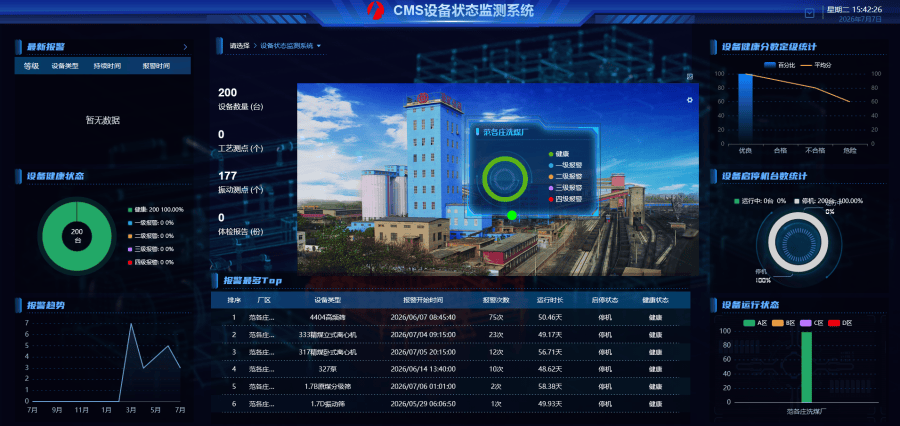

Comprehensive Mining Automation Control System
Beijing Tianma Intelligent Control Technology Co., Ltd.
Flat Portable Satellite Terminal 0.35m Aperture Manual Portable Terminal
China Starwin Science & Technology Co., Ltd.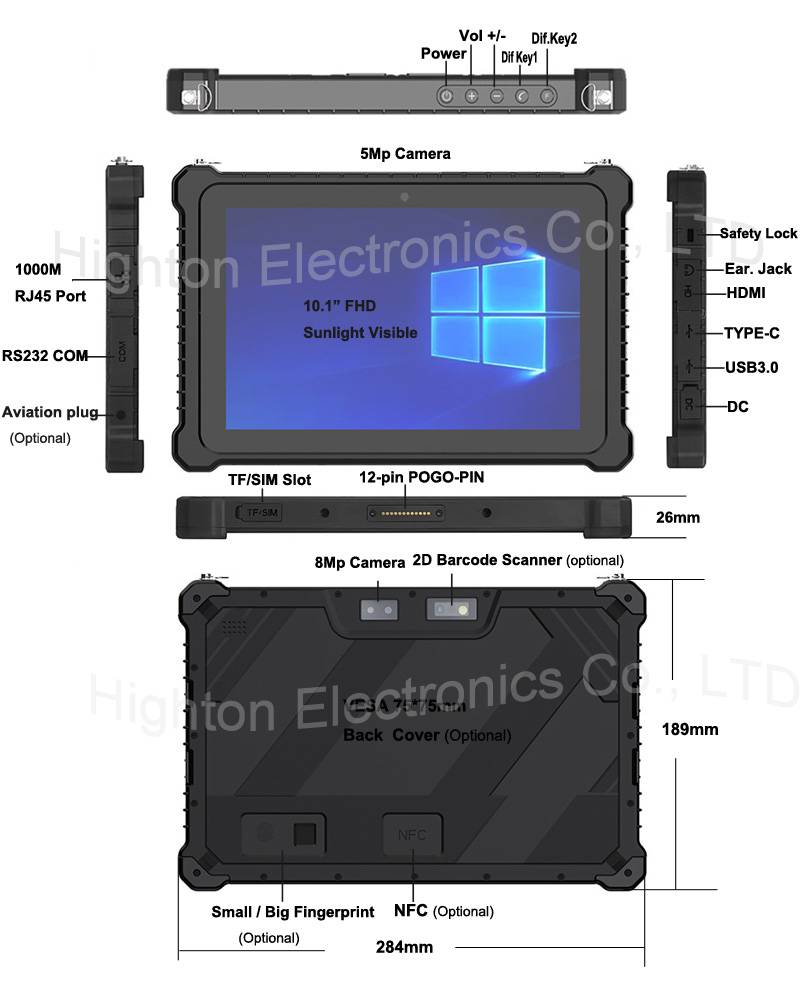
Hot Selling 10 Inch Intel N5100 I5 I7 FHD 8 +128GB 16+256GB Win10 Pro Win11 Pro 4G 5G Rugged Tablet PC Pad with NFC Barcode
Highton Electronics Co., Ltd.