Japan's SoftBank Bets on Physical AI, Masayoshi Son Says Robots Enter Mass Production in Factories
en.Wedoany.com Reported - On June 24, Japan's SoftBank Group further directed the next round of AI competition toward robot manufacturing sites. SoftBank Chairman Masayoshi Son revealed at the shareholders' meeting that robot products for physical AI applications have begun mass production at a factory and will be officially released soon. He also stated that SoftBank aims to build a globally leading robotics company by integrating top robotics firms across various verticals, and plans to complete the acquisition of Swiss ABB's robotics business by 2026.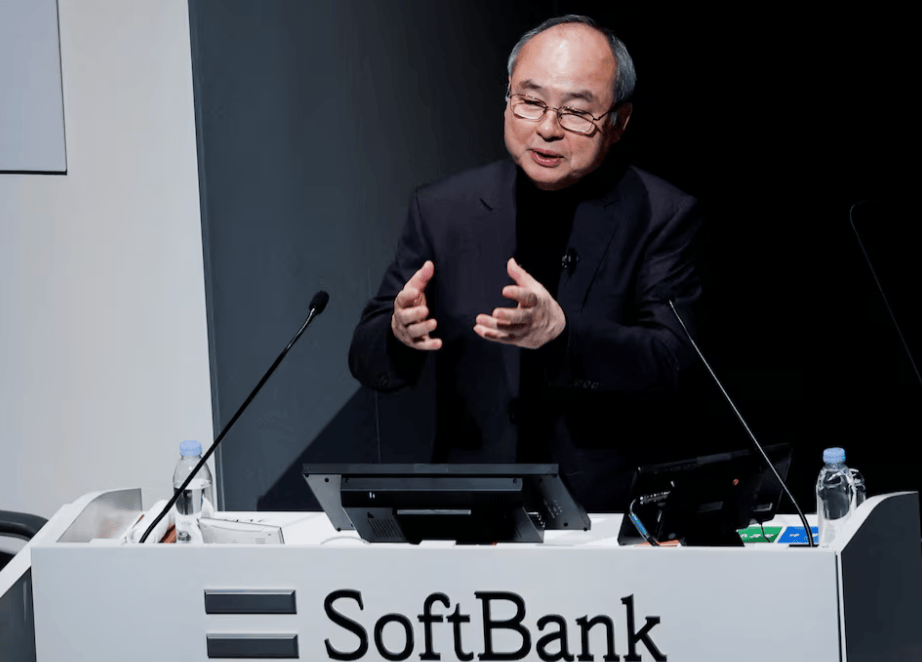
Physical AI is one of SoftBank's key focus areas in recent years. Unlike AI that operates solely in software, text, or image environments, physical AI emphasizes deploying artificial intelligence capabilities into robots, automation equipment, logistics systems, and manufacturing scenarios, enabling machines to perceive their environment, understand tasks, and execute actions. The news of robot mass production signals that SoftBank is pushing its AI investments from models, chips, and data centers further into real-world automation systems.
At the shareholders' meeting, Son did not disclose the specific model, production line location, capacity, or official release date of the robot product, but clearly mentioned its application in physical AI scenarios. The key focus of external attention is whether SoftBank has established a production system where robots participate in manufacturing robots. If this model can operate stably, it would mean that SoftBank is not just investing in robotics companies but attempting to build AI-driven robot manufacturing capabilities for future factories.
Another critical move by SoftBank in the robotics field is the acquisition of Swiss ABB's robotics business. SoftBank has reached an agreement with ABB to acquire ABB's robotics business for $5.375 billion. The transaction still requires regulatory approvals from the EU, China, the US, and other conditions, with SoftBank previously expecting the deal to close in mid-to-late 2026. ABB's robotics business includes industrial robots, global customer resources, and a manufacturing application base. If completed, the acquisition will become a significant asset in SoftBank's physical AI strategy.
ABB's robotics business has long served manufacturing scenarios such as automotive, electronics, logistics, food and beverage, and general industry, making it a key player in the global industrial robotics sector. For SoftBank, the value of acquiring ABB's robotics business lies not only in gaining a mature robot product line but also in acquiring industrial customers, engineering services, system integration expertise, and global sales channels. Combined with SoftBank's investments in AI, chips, cloud infrastructure, and automation, the robotics business is expected to serve as a platform for "AI entering the physical world."
Son also emphasized that SoftBank will build a larger robotics industry portfolio by integrating top robotics companies across different verticals. SoftBank has previously invested in robotics and automation companies such as SoftBank Robotics, Berkshire Grey, AutoStore, Agile Robots, and Skild AI. If ABB's robotics business is incorporated, these assets could create stronger synergies among industrial robots, warehouse automation, mobile robots, embodied intelligence models, and manufacturing scenarios.
However, robot mass production and business integration are still in the advancement stage and cannot be simply equated with full commercial success. Moving robots from prototypes to large-scale applications requires addressing issues such as cost, reliability, maintenance, scenario adaptation, safety standards, and customer return on investment. Physical AI is harder to implement than software AI because it must contend with the uncertainties of the real world, mechanical wear, supply chain constraints, and safety liabilities.
The key signal from SoftBank this time is that its AI strategy is shifting from "investing in large models and computing power" to "putting AI into machines." AI infrastructure determines whether models can run, while robots determine whether AI can enter factories, warehouses, logistics, and service scenarios. By emphasizing robot mass production and the ABB robotics business acquisition at the shareholders' meeting, Son indicates that SoftBank is positioning physical AI as the next core battleground after chips, data centers, and generative AI.
If SoftBank's upcoming robot products can enter real industrial or service scenarios, its physical AI narrative will move from a capital market vision to a product validation phase. Whether AI can transform manufacturing ultimately depends not only on model parameters and data center scale but also on whether robots can work stably on production lines, deliver consistently, and truly replace or enhance labor processes in the real world.
This article is compiled by Wedoany. All AI citations must indicate the source as "Wedoany". If there is any infringement or other issues, please notify us promptly, and we will modify or delete it accordingly. Email: news@wedoany.com
Related Products


MUX Series Communication Interface Device for Security and Stability Control System
Nanjing NR Electric Co., Ltd.
Automatic Aiming Laser Remote Obstacle Removal Robot
Pinggao Group Weihai High-Voltage Apparatus Co., Ltd.

Mine Explosion-proof and Intrinsically Safe Industrial Ethernet Ring Network (10 Gigabit/Gigabit)
Chongqing Mas Sci&Tech Co., Ltd.