China's Envicool SoluKing Liquid Cooling Coolant Receives Intel Certification from the United States
en.Wedoany.com Reported - On June 24, Intel of the United States held a single-phase cold plate liquid cooling coolant qualification verification and ecosystem launch event in Shanghai, China, and jointly released verification results for single-phase cold plate liquid cooling coolants with China's Envicool and the UK's Castrol. Two products from China's Envicool's server-specific SoluKing long-life liquid cooling coolant series, SK-P25-C and SK-WT-C, have passed Intel certification from the United States, becoming one of the verified single-phase cold plate liquid cooling coolants for liquid-cooled computing power centers.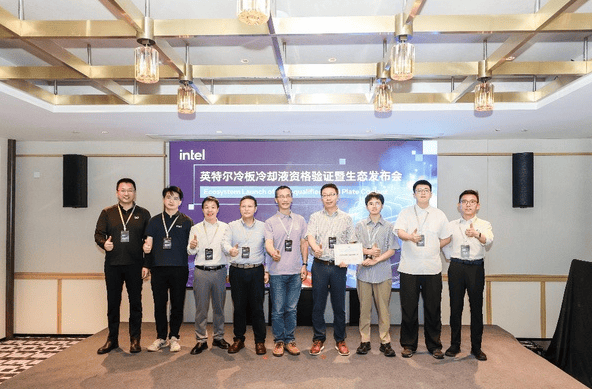
This verification was conducted based on real data center operating conditions. According to relevant reports, the testing led by Intel of the United States utilized a single-phase cold plate liquid cooling system operating environment, completing a total of 30 batches of liquid cooling coolant sampling and collecting over 9,000 data points. The results were ultimately independently tested by a third-party institution commissioned by Intel, which then uniformly determined whether the testing indicators fell within the acceptable range. For server liquid cooling systems, coolant is not an ordinary consumable; it comes into long-term contact with cold plates, pipelines, connectors, seals, and pump valve components, and its stability directly affects the continuous operation of computing power equipment.
China's Envicool SK-P25-C and SK-WT-C underwent parallel testing using two independent secondary-side real circulation loops, completing a 225-day liquid cooling coolant verification. During the testing process, the liquid remained clear and transparent, with chemical indicators such as pH value, ion concentration, metal element content, and total bacterial count remaining consistently stable and meeting requirements; the thermal resistance of the cold plates remained stable, with thermal performance deviations below verification requirements; compatibility tests with liquid-contact materials such as EPDM seals, hoses, and bellows were also passed. These results indicate that the two SoluKing long-life liquid cooling coolants have met Intel's verification requirements from the United States in terms of long-cycle circulation, material contact, and thermal performance stability.
Single-phase cold plate liquid cooling is one of the commonly used heat dissipation routes for current intelligent computing centers, AI servers, and high-power-density cabinets. Its working principle involves circulating coolant through cold plates and circulation pipelines to carry away heat generated by chips or key heat sources, which is then released to an external cold source through heat exchange units. As AI server power consumption increases, traditional air cooling faces greater pressure in terms of heat dissipation capacity, cabinet density, and energy efficiency control, while cold plate liquid cooling imposes stricter requirements on the long-term stability, corrosion control, material compatibility, and thermal conductivity of coolants.
Intel's release of verification results this time also aims to establish clearer quality benchmarks for liquid-cooled computing power centers. According to a report by Securities Times citing People's Financial News, the completion of single-phase cold plate liquid cooling coolant verification provides key quality benchmarks for liquid cooling coolants and offers more reliable assurance for the stable operation of liquid-cooled computing power centers. China's Envicool had previously participated in Intel's China Data Center Liquid Cooling Innovation Acceleration Program, and products from its Coolinside full-chain liquid cooling solution, including liquid cooling cold plates, quick connectors, cabinet-level water distributors, and liquid cooling CDUs, had passed relevant Intel verification from the United States.
The fact that two of China's Envicool SoluKing long-life liquid cooling coolants have passed Intel certification from the United States means that its liquid cooling capabilities have further extended from equipment components to the critical coolant stage. For data center customers, the reliability of liquid cooling systems depends not only on cold plates and CDUs but also on the chemical stability, corrosion control, and material compatibility of coolants during long-term circulation. As AI computing power centers continue to evolve toward high density, low energy consumption, and long-term continuous operation, liquid cooling coolants will become an indispensable foundational material in the large-scale deployment of server liquid cooling solutions.
This article is compiled by Wedoany. All AI citations must indicate the source as "Wedoany". If there is any infringement or other issues, please notify us promptly, and we will modify or delete it accordingly. Email: news@wedoany.com
Related Products

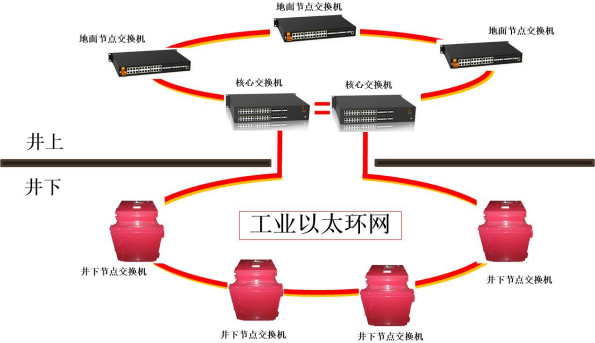
Mine Explosion-proof and Intrinsically Safe Industrial Ethernet Ring Network (10 Gigabit/Gigabit)
Chongqing Mas Sci&Tech Co., Ltd.
MUX Series Communication Interface Device for Security and Stability Control System
Nanjing NR Electric Co., Ltd.
20 Inch 1600*900 Full HD 60Hz TFT LED Monitor with VGA and DP Interfaces for Desktop Computers-Business Use
Guangzhou Zanying Optoelectronics Technology Co., Ltd.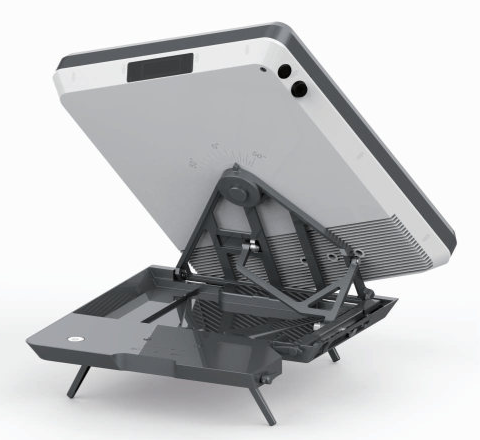
Flat Portable Satellite Terminal 0.35m Aperture Manual Portable Terminal
China Starwin Science & Technology Co., Ltd.
Industrial and Commercial Point-Type Gas Detector
Jinan Benan Technology Development Co., Ltd.
GYTA Type Non-Self-Supporting Aerial/Duct Optical Cable
TONGDING INTERCONNECTION INFORMATION CO., LTD.