U.S. Anthropic predicts advanced cybersecurity open-weight AI will emerge within 7 to 10 months
en.Wedoany.com Reported - Anthropic's Deputy Chief Information Security Officer, Jason Clinton, predicts that open-weight AI models with advanced cybersecurity capabilities could emerge within 7 to 10 months. This gives organizations a narrow time window to harden their systems before sophisticated offensive cyber capabilities become widely available.
Speaking at the 2026 Confidential Computing Summit, Clinton noted that driven by scaling laws and increased training compute, the performance of AI models is steadily improving at a predictable pace. He referenced recent incidents, including attacks attributed to China-linked actors, which allegedly used AI models to support intrusion activities targeting institutions in Southeast Asia. Clinton believes AI-assisted attacks have become an established element of the threat landscape, and cyber defenders must assess the models and AI platforms being used by adversaries.
Clinton also introduced Anthropic's recently disclosed "Mythos" model. He stated that the model's advanced vulnerability discovery and offensive cybersecurity capabilities were an unintended result of reinforcement learning aimed at improving general coding performance. Although the model was not specifically designed for cybersecurity tasks, its demonstrated abilities suggest that future generations of frontier AI models will likely continue to enhance such capabilities, and that every major AI model will eventually reach a similar level of proficiency.
In his speech, Clinton put forward a core viewpoint: AI may ultimately create a "permanent defender advantage." He predicted that software vendors will widely deploy AI systems throughout the entire development lifecycle, including coding, testing, vulnerability scanning, staging, and deployment. As model costs decrease and performance improves, organizations are expected to leverage AI to automatically identify and fix vulnerabilities before products are delivered to customers, thereby reducing the likelihood of attackers discovering and exploiting critical vulnerabilities immediately after software release.
Anthropic's assessment shows that the advanced cybersecurity capabilities of open-weight models currently lag behind frontier proprietary models by approximately 7 to 10 months. Clinton views this as a critical window of opportunity, urging defenders to accelerate the adoption of zero-trust architectures, AI-assisted security operations centers, and vulnerability remediation programs before offensive AI tools become widely available.
Additionally, Clinton emphasized the growing importance of confidential computing as AI deployment expands globally. He believes that frontier model developers need trusted execution environments and hardware-based security guarantees to safely deploy advanced models across different data center environments while protecting model weights and intellectual property. He stated that confidential computing has evolved from a privacy technology into a foundational component of AI safety, model governance, and even future national security strategies.
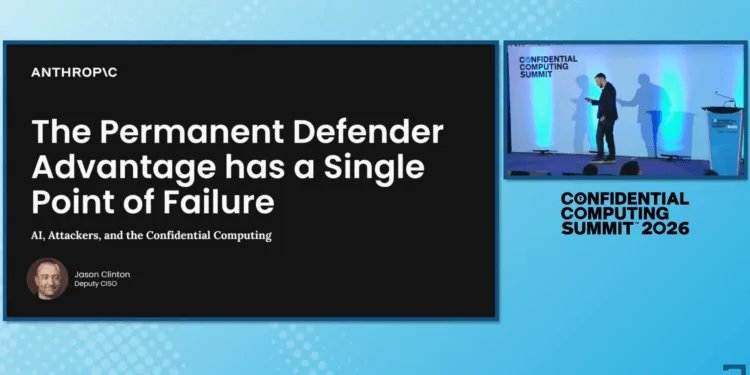
"Everything we say and do publicly now is to prepare everyone for what is coming."
This article is compiled by Wedoany. All AI citations must indicate the source as "Wedoany". If there is any infringement or other issues, please notify us promptly, and we will modify or delete it accordingly. Email: news@wedoany.com
Related Products








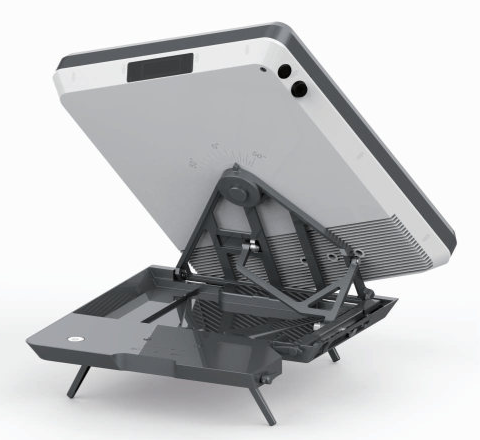
Flat Portable Satellite Terminal 0.35m Aperture Manual Portable Terminal
China Starwin Science & Technology Co., Ltd.


Hot Selling 10 Inch Intel N5100 I5 I7 FHD 8 +128GB 16+256GB Win10 Pro Win11 Pro 4G 5G Rugged Tablet PC Pad with NFC Barcode
Highton Electronics Co., Ltd.