Finland's Nokia Expands Autonomous Network Fabric with AWS and Databricks
en.Wedoany.com Reported - Nokia announced new collaborations with Databricks and Amazon Web Services (AWS) at the DTW Ignite conference in Copenhagen, aiming to expand its Autonomous Network Fabric. The partnership focuses on agentic AI applications for telecom operators' Operations Support Systems (OSS) and Business Support Systems (BSS), addressing key issues such as data fragmentation and cloud integration.

Telecom operators are under pressure to reinvent themselves in the AI era, needing to consolidate fragmented internal operational data to achieve more efficient network autonomy. DTW Ignite has become a key venue for industry discussions on this topic, with operators exploring how to better leverage AI in their OSS and BSS infrastructure around the graded certification of network autonomy. The vendor community has also issued a dense series of announcements on AI-tooled OSS and BSS, focusing on the practicality of AI agents in daily operations.
The collaboration with Databricks aims to address the data layer. Nokia and Databricks launched a proof of concept to build a unified, infrastructure-agnostic data platform to integrate the hundreds of siloed systems that telecom networks typically rely on. The validation confirmed that the two companies can jointly develop a federated architecture to meet the scale and speed required to feed network data to AI agents. The engineering team simulated analytical ingestion and plans to scale to match the cloud-scale of tier-one operators. Technical breakthroughs include a "write once" data processing workflow for network data that can run across Databricks and open-source stacks (such as Apache Flink, Kafka, and Iceberg), as well as vendor-neutral data transformation logic aimed at reducing platform lock-in. Additionally, a custom compiler was introduced that converts Python logic into platform formats with correct connectors, enabling workflows to automatically adapt in different environments without manual rewriting. The demo also showcased how AI can create data products based on natural language prompts, generating workflows through agents, requesting human approval, and implementing them. The architecture is built specifically for agents, generating data products on the fly when queries are made, rather than pre-storing datasets, and supports cross-domain zero-copy data sharing.
The collaboration with AWS involves the cloud layer. Nokia is deploying its Autonomous Networks Fabric on AWS, expected to go live later this year. Its OSS applications for orchestration, assurance, and inventory management are already available on AWS. The architecture leverages agents, digital twins, intent-based networking, and unified data management to provide observability, analytics, security, and automation. Migrating systems to AWS aims to bring better cloud scalability, availability, and choice, with Amazon's Bedrock and SageMaker tools mentioned. Nokia also stated it is optimizing cloud footprint to reduce compute and storage requirements compared to traditional on-premises deployments. Nokia and AWS have previously collaborated, including recent demonstrations of an "industry-first" agent for network slicing with du and Orange, and a "world-first" commercial 5G service on a cloud-hosted (SaaS) core with Belgium's Citymesh.
Oguz Sunay, Chief Technology Officer for Autonomous Networks at Nokia, stated that enabling a common, flexible data platform in a cloud environment can help operators accelerate AI adoption. Nevash Pillay, Global Head of Telecommunications at Databricks, noted that operators need a more consistent way to leverage data. Amir Rao, Global Director of Telecom Solutions at AWS, said the shift to autonomous network operations is about speed and step-change efficiency. Nokia believes its autonomous network portfolio has delivered quantifiable results, including operators achieving automation rates exceeding 90%, service delivery times of no more than 4 hours, annual service interruptions of no more than 1 minute, while reducing slice deployment time by up to 85% and customer-impacting incidents by up to 50%.
This article is compiled by Wedoany. All AI citations must indicate the source as "Wedoany". If there is any infringement or other issues, please notify us promptly, and we will modify or delete it accordingly. Email: news@wedoany.com
Related Products


GYTA Type Non-Self-Supporting Aerial/Duct Optical Cable
TONGDING INTERCONNECTION INFORMATION CO., LTD.
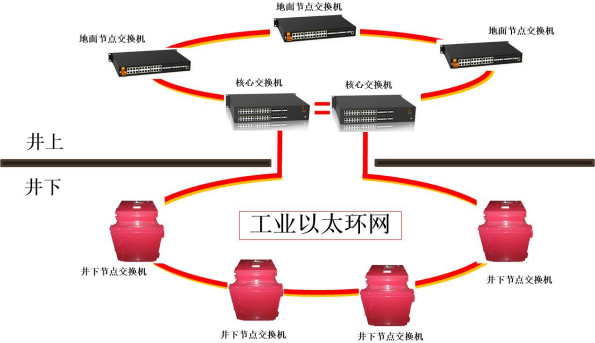
Mine Explosion-proof and Intrinsically Safe Industrial Ethernet Ring Network (10 Gigabit/Gigabit)
Chongqing Mas Sci&Tech Co., Ltd.
Comprehensive Mining Automation Control System
Beijing Tianma Intelligent Control Technology Co., Ltd.


Multi-function Marine Monitoring Low-altitude Detection Radar Sea-air Boundary Ocean Dynamic Environment Measurement
Chengdu Dixin Technology Co., Ltd.
Flat Portable Satellite Terminal 0.35m Aperture Manual Portable Terminal
China Starwin Science & Technology Co., Ltd.

MUX Series Communication Interface Device for Security and Stability Control System
Nanjing NR Electric Co., Ltd.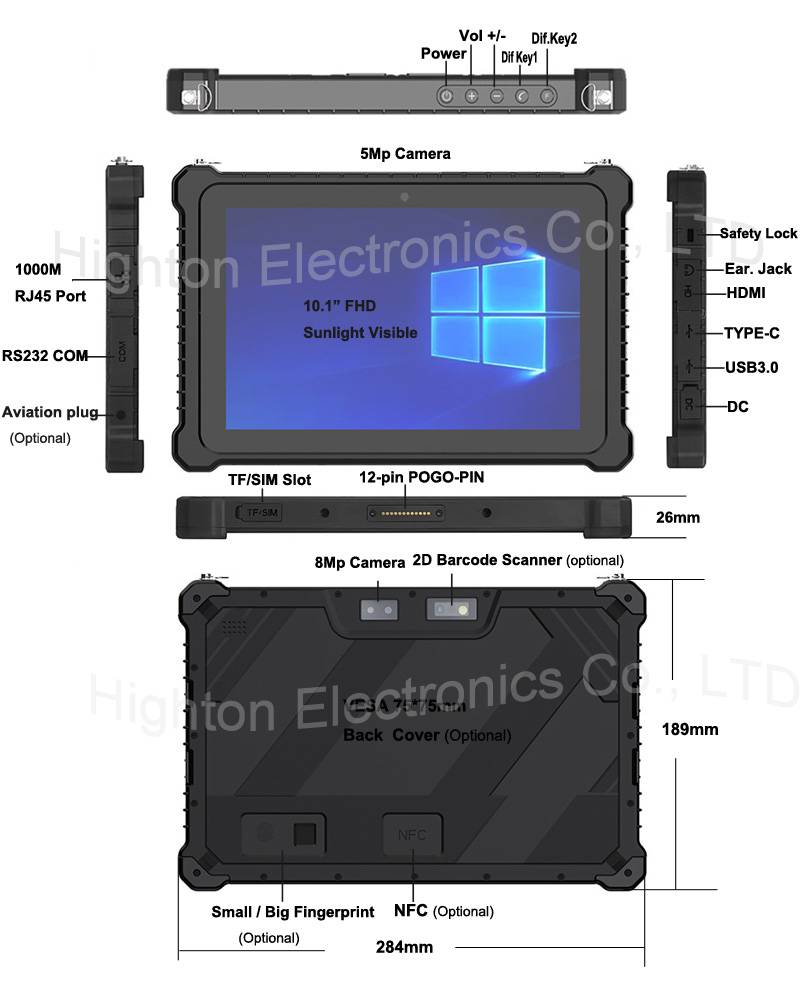
Hot Selling 10 Inch Intel N5100 I5 I7 FHD 8 +128GB 16+256GB Win10 Pro Win11 Pro 4G 5G Rugged Tablet PC Pad with NFC Barcode
Highton Electronics Co., Ltd.
Automatic Aiming Laser Remote Obstacle Removal Robot
Pinggao Group Weihai High-Voltage Apparatus Co., Ltd.