CICT Mobile Showcases Space-Air-Ground Integrated Ubiquitous Coverage Solution at MWC Shanghai 2026
en.Wedoany.com Reported - At the 2026 Mobile World Congress Shanghai (MWC Shanghai), CICT Mobile, a subsidiary of China Information and Communication Technologies Group (CICT), showcased its Space-Air-Ground Integrated Ubiquitous Coverage Solution. Centered on three technical architectures—"Space Layer: Satellite-Terrestrial Integration, Air Layer: Air-Ground Coordination, and Ground Layer: Integrated Sensing and Communication"—this solution aims to address challenges faced by traditional mobile communications in ubiquitous coverage, low-altitude continuity, and cost efficiency, providing operators and industry users with end-to-end connectivity from space to ground.

To tackle issues such as geographic coverage blind spots, difficulty in reaching wide-area mobile scenarios, and insufficient network resilience in extreme conditions, CICT Mobile has introduced a satellite coverage antenna solution. By employing a large-aperture, multi-element design in a massive array antenna, this solution achieves high gain and precise multi-beam steering, enhancing signal quality and transmission efficiency for satellite communications. It utilizes ultra-wide-angle beamforming technology to support 3D wide-angle scanning, ensuring stable signal connectivity during satellite attitude changes. Technically, the low-profile, lightweight design reduces the profile height by 33% compared to traditional vibrators, helping to lower launch costs and facilitate large-scale commercial deployment of satellite payloads. The integrated radiating element technology minimizes solder joints, simplifying assembly processes to accelerate production and deployment. This satellite-terrestrial integration roadmap aims to transform ubiquitous connectivity from "seamless coverage" to "seamless connection."
To meet network coverage demands in scenarios such as low-altitude logistics and electric vertical takeoff and landing (eVTOL) aircraft, CICT Mobile has launched an air-ground integrated coverage antenna. This solution adopts an "one-site, two-network" air-ground coordination architecture, where air and ground coverage share a common Remote Radio Unit (RRU) and support independent electrical tilting to adapt to different coverage needs. By employing air-facing main lobe beamforming technology to create horizontal equal-level lines, it eliminates coverage blind spots and ensures communication continuity for aircraft in low-altitude airspace. Thanks to the shared RRU design and the ability to upgrade existing sites, this solution reduces equipment requirements and site resource usage, lowering deployment costs. Compared to traditional Active Antenna Unit (AAU)-based integrated sensing and communication products, this solution offers cost advantages in coverage, providing operators with a low-altitude network deployment pathway.
At the ground network level, CICT Mobile has introduced a massive array antenna solution for next-generation communication technology (6G) and a full-scenario, low-cost solution for fifth-generation mobile communication (5G). The 6G massive array antenna achieves flexible beamforming through a large number of elements, offering high gain, wide coverage, ultra-large bandwidth, and low latency. It features an independent layered feed network design to reduce network losses and improve radiation efficiency, supports high-capacity and strong wall-penetration scenarios, enables integrated sensing and communication, and supports dynamic multi-beam, beam scanning, and tracking. It is suitable for wide-area cellular coverage, industrial internet, smart manufacturing, and smart parks. For 5G coverage upgrades, CICT Mobile has launched a full-scenario, low-cost solution, including a new generation of miniaturized, high-efficiency antennas, 5G high-power pico base stations, and a 12-channel shared Access Distribution System (ADAS) solution. The new generation miniaturized, high-efficiency antenna, making its domestic debut, achieves smaller size, wind load, and weight. The 5G high-power pico base station targets medium-to-low capacity scenarios such as office buildings, shopping malls, rural areas, and tourist attractions, supporting split or integrated architectures and PON network backhaul, with overall construction costs reduced by over 50% compared to traditional macro base stations. The 12-channel ADAS shared solution, centered on a "APOI-MU-EU-RU" four-tier architecture, enables unified bearer for 2/3/4/5G multi-standard and multi-frequency bands, suitable for shared construction in complex scenarios like shopping malls, office buildings, and subways.
The Space-Air-Ground Integrated Ubiquitous Coverage Solution aims to build a three-dimensional, three-tier network coordinating space, air, and ground layers, providing a foundation for ubiquitous intelligent connectivity. The demonstration of this solution at MWC Shanghai is intended to promote the industrial implementation of related technologies. From 6G forward-looking technologies to existing 5G networks, CICT Mobile is progressively realizing the vision of ubiquitous intelligent connectivity, guiding the direction of the global communications industry.
This article is compiled by Wedoany. All AI citations must indicate the source as "Wedoany". If there is any infringement or other issues, please notify us promptly, and we will modify or delete it accordingly. Email: news@wedoany.com
Related Products
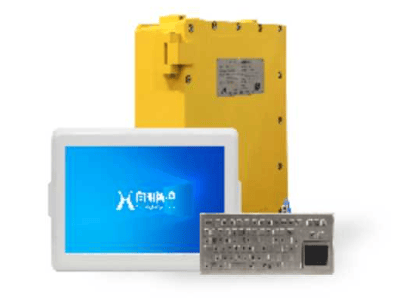

KJD127(A) Mining Explosion-Proof and Intrinsically Safe Computer
Taiyuan Xiangming Intelligent Control Technology Co., Ltd.


MUX Series Communication Interface Device for Security and Stability Control System
Nanjing NR Electric Co., Ltd.

Conveyor Belt Intelligent Monitoring System
LUO YANG WIRE ROPE INSPECTION TECHNOLOGY CO., LTD.

20 Inch 1600*900 Full HD 60Hz TFT LED Monitor with VGA and DP Interfaces for Desktop Computers-Business Use
Guangzhou Zanying Optoelectronics Technology Co., Ltd.