RWTH Aachen University Develops Induction-Assisted Pull-Winding Process for Thermoplastic Pipe Production
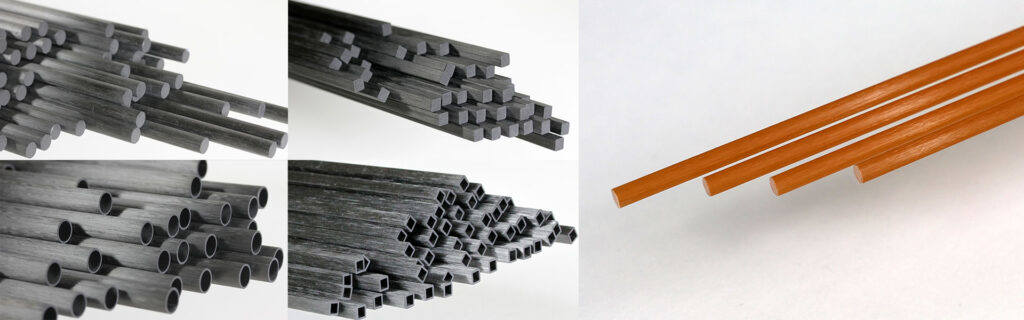
en.Wedoany.com Reported - Researchers at the Institute of Textile Technology (ITA) of RWTH Aachen University have developed an induction-assisted pull-winding process for the continuous production of thermoplastic composite pipes. This process combines fiber winding with in-line consolidation technology, using carbon fiber-reinforced thermoplastic hybrid yarns to manufacture lightweight tubular components with customized fiber architecture and high torsional stiffness.
Compared to traditional thermoset processes, this technology offers advantages in automation potential, cycle time, weldability, and recyclability. Induction heating provides efficient and localized energy input, supporting compact process integration and scalable production. The process is particularly suitable for applications requiring fiber-reinforced tubular structures compatible with thermoplastic matrices, with potential uses including lightweight mobile systems, industrial supports, and modular frames requiring scalable automated production.
Traditional composite pipes are typically manufactured using braided reinforcements, which create fiber crossover points that may lead to local stress concentrations. Fiber winding avoids these stress peaks by enabling continuous fiber placement and orientation tailored to torsional load requirements. The pull-winding process combines continuous pultrusion principles with controlled fiber winding: hybrid yarns are wound at specific angles around a moving mandrel, forming a load-path-oriented structure capable of transmitting both bending and torsional loads. By adjusting the winding angle, the structural response can be customized for target applications. Combined with a thermoplastic matrix, this process enables short cycles, weldable joints, improved damage tolerance, and recyclability, thereby supporting efficient and repairable lightweight structures.
A core challenge in thermoplastic composite manufacturing is the efficient introduction of thermal energy, as the viscosity of thermoplastic matrices is significantly higher than that of thermoset matrices. To address this, ITA, together with IFF GmbH, has developed an induction-assisted mold concept for the continuous consolidation of wound thermoplastic profiles. In the process, carbon fiber-reinforced PA6 hybrid yarns are directly heated inside the mold via electromagnetic induction, generating heat to melt the matrix, thereby achieving impregnation and consolidation in a continuous manufacturing environment. This research builds on previous developments by ITA at RWTH Aachen University in induction-assisted pull-winding of thermoplastic composite pipes.
This article is compiled by Wedoany. All AI citations must indicate the source as "Wedoany". If there is any infringement or other issues, please notify us promptly, and we will modify or delete it accordingly. Email: news@wedoany.com
Related Products

Standard Nozzle Flowmeter
Jinggong Automatic Control Instrument Complete Technology Development Company


Pneumatic high-pressure wear-resistant ball valve
Zhejiang Deca Control Valve Meter Co., Ltd.

Industrial and Commercial Point-Type Gas Detector
Jinan Benan Technology Development Co., Ltd.