Brazil's Ministry of Communications Invests 150 Million Reais to Launch Private Mobile Network for Public Security in the Federal District
en.Wedoany.com Reported - The Brazilian Ministry of Communications (MCom) has announced the launch of the first phase of the Federal Government's private mobile network, designed for communication among public agencies and security forces. Now operational in the Federal District, the network integrates several previously independent systems.
The initial investment in the project is approximately 150 million reais, part of a larger plan valued at 1 billion reais that encompasses private mobile networks, fixed networks, and encryption solutions, with completion expected by December 2026. In the Federal District, the newly connected network serves entities including the Military Police of the Federal District (Polícia Militar do Distrito Federal), the Brazilian Army (Exército Brasileiro), the Police of the Chamber of Deputies (Polícia da Câmara dos Deputados), and the Police of the Federal Senate (Polícia do Senado Federal). Minister of Communications Frederico de Siqueira Filho stated that essential public services can no longer rely on commercial networks, especially during emergencies, disasters, security operations, and large-scale events. National Secretary of Public Security (Secretário Nacional de Segurança Pública) Francisco Lucas Costa noted that this is the first time all systems are integrated into a project based on technological sovereignty, allowing all security forces and armed forces to communicate in an encrypted and secure manner under a single umbrella.

In addition to the mobile network, the government also showcased progress on the private fixed network. This infrastructure connects federal public administration agencies via dedicated fiber optics. The first activated customer is the National Mining Agency (ANM) located in Aracaju (Sergipe state). The network initially serves 12 public buildings and plans to expand to other capitals in the coming months.
Telebras will be responsible for operating both the fixed and mobile networks. According to MCom, the mobile infrastructure activated in the Federal District employs encryption and traffic isolation mechanisms to ensure communication security. The state-owned enterprise will also be responsible for the future expansion of the infrastructure, with its main data center core housed in a Tier 4 data center in Brasília and a redundant backup in Rio de Janeiro.
Although the mobile network is initially available only in the Federal District, the Ministry of Communications stated that the project aims to cover other federal units. The minister noted that this will be gradually expanded as states join, with some state governments already expressing interest, but expansion will depend on tests and pilot projects. Digital sovereignty was one of the main arguments raised by the government during the launch. Edson Holanda, an advisor at the National Telecommunications Agency (Anatel), linked the private network to the need for state control over strategic infrastructure, stating that data center projects capable of connecting to the private network are crucial for sovereignty.
This article is compiled by Wedoany. All AI citations must indicate the source as "Wedoany". If there is any infringement or other issues, please notify us promptly, and we will modify or delete it accordingly. Email: news@wedoany.com
Related Products


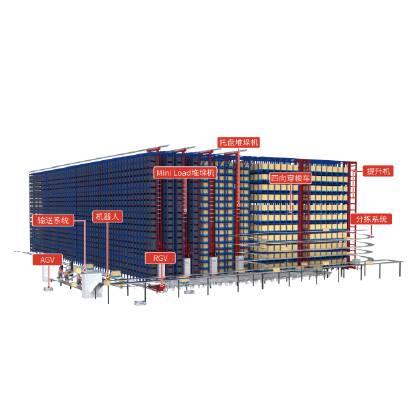



G.652.D Wavelength-extended Non-dispersion Shifted Single-mode Optical Fiber
HONGAN GROUP CO., LTD.

Comprehensive Mining Automation Control System
Beijing Tianma Intelligent Control Technology Co., Ltd.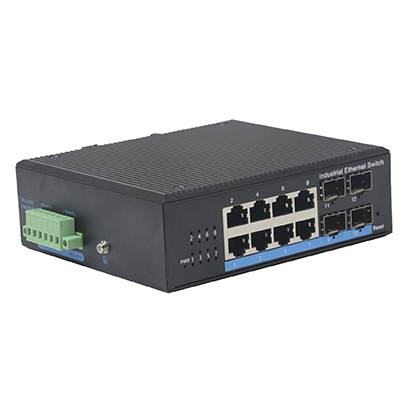

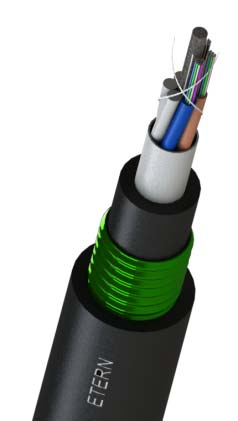

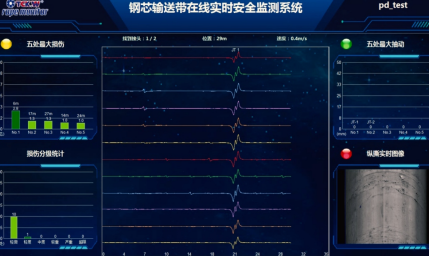
Conveyor Belt Intelligent Monitoring System
LUO YANG WIRE ROPE INSPECTION TECHNOLOGY CO., LTD.