US Qblox Signs Quantum Platform License with Fermilab
en.Wedoany.com Reported - Quantum control electronics supplier Qblox has announced two parallel initiatives to expand its North American commercial operations and corporate positioning. The company has entered into a formal deployment contract with the U.S. Department of Energy (DOE) and Fermi National Accelerator Laboratory (Fermilab), while also establishing an infrastructure partnership with Hewlett Packard Enterprise (HPE).
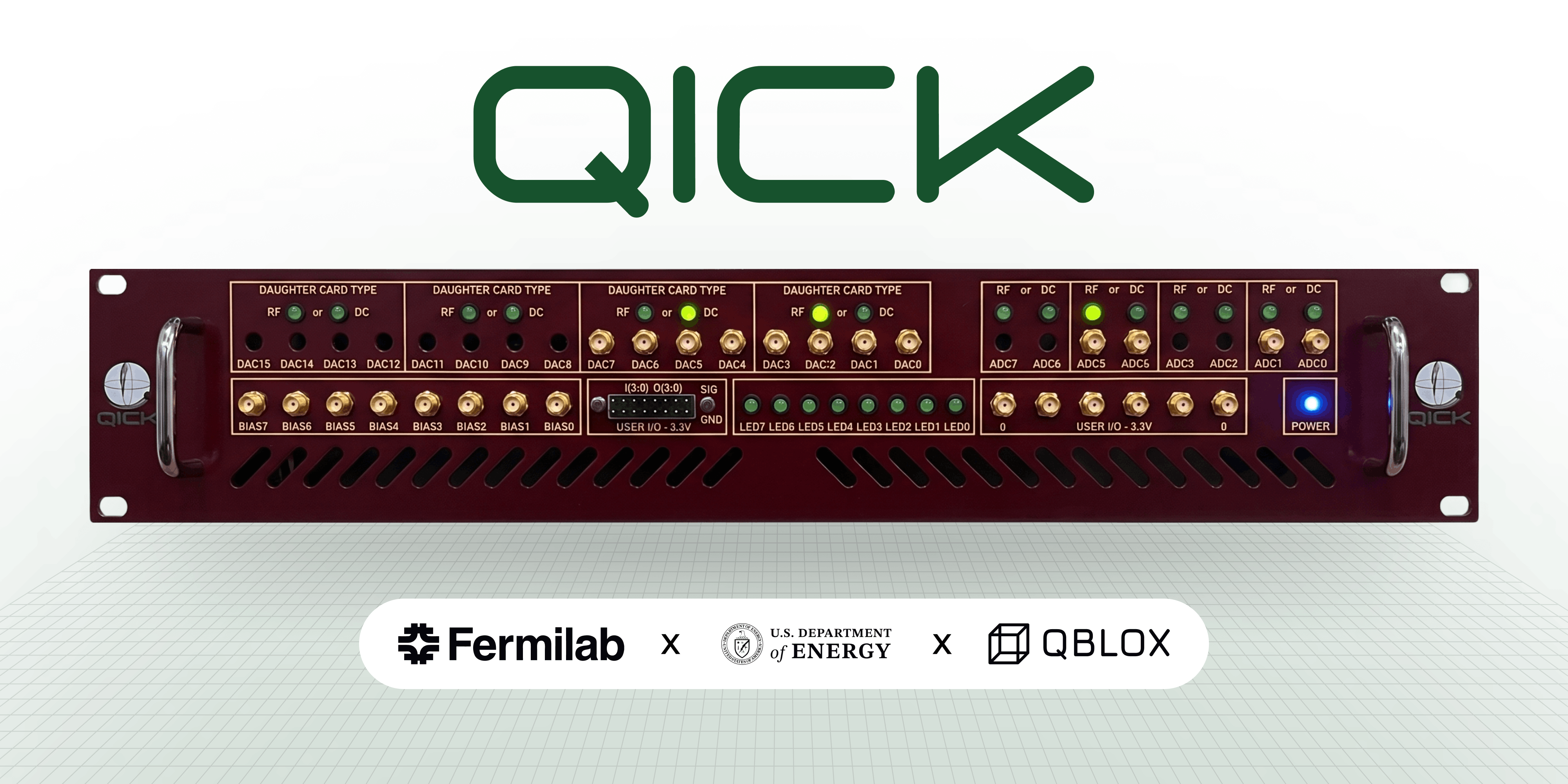
These two announcements enable Qblox to scale open-source hardware designs within the U.S. research network while embedding modular control topologies directly into high-performance computing (HPC) and artificial intelligence data center clusters. Facilitated by the DOE Office of Technology Commercialization, the agreement between Fermilab and Qblox has evolved from a letter of intent into a formal Cooperative Research and Development Agreement (CRADA) and a full commercial licensing structure. Under this framework, Qblox will formally manage the manufacturing, domestic supply chain coordination, and commercial distribution of the Quantum Instrumentation Control Kit (QICK) in the United States.
Originally developed by Fermilab engineers, QICK is an open-source architecture utilizing Field-Programmable Gate Array (FPGA) and Radio Frequency System-on-Chip (RFSoC) technologies to manage real-time quantum readout and pulse control. Serving as a low-latency orchestration engine, the platform is designed to stabilize and synchronize expanding qubit arrays and precision quantum sensing nodes. Beyond physical hardware manufacturing, the CRADA also stipulates the creation of a workforce development program. Qblox will design and launch structured technical training programs built around the QICK architecture, providing engineering students, academic researchers, and facility technicians with hands-on experience in operating low-level quantum instrumentation.
Concurrently, the architectural collaboration between Qblox and HPE aims to address integration barriers that arise when quantum processing units (QPUs) connect to large-scale classical computing arrays. As quantum platforms transition from standalone experimental benches to hyperconnected supercomputing environments, the control stack becomes a critical translation layer between classical infrastructure and quantum chips. This partnership integrates Qblox's multi-qubit modular control electronics directly into HPE's AI-native high-performance computing architecture. A joint engineering team, led by Qblox CEO Niels Bultink and HPE Labs Distinguished Technologist Masoud Mohseni, is developing high-fidelity hybrid testbeds covering areas such as hybrid algorithm co-design, system interoperability protocols, and performance benchmarking. The combined hardware stack aims to create highly scalable deterministic control fields capable of operating consistently across diverse physical qubit configurations—including superconducting circuits, spin qubit nodes, and ion trap devices—accelerating the deployment of hybrid infrastructure in industrial scientific modeling.
June 25, 2026
This article is compiled by Wedoany. All AI citations must indicate the source as "Wedoany". If there is any infringement or other issues, please notify us promptly, and we will modify or delete it accordingly. Email: news@wedoany.com
Related Products



Automatic Aiming Laser Remote Obstacle Removal Robot
Pinggao Group Weihai High-Voltage Apparatus Co., Ltd.
Mine Explosion-proof and Intrinsically Safe Industrial Ethernet Ring Network (10 Gigabit/Gigabit)
Chongqing Mas Sci&Tech Co., Ltd.
GYTA Type Non-Self-Supporting Aerial/Duct Optical Cable
TONGDING INTERCONNECTION INFORMATION CO., LTD.

20 Inch 1600*900 Full HD 60Hz TFT LED Monitor with VGA and DP Interfaces for Desktop Computers-Business Use
Guangzhou Zanying Optoelectronics Technology Co., Ltd.

Conveyor Belt Intelligent Monitoring System
LUO YANG WIRE ROPE INSPECTION TECHNOLOGY CO., LTD.