en.Wedoany.com Reported - At its annual user conference Beyond, Samsara unveiled a suite of AI-powered tools designed to integrate the various information touchpoints drivers encounter before, during, and after their shifts, transforming fleet operational data into actionable insights. The company believes AI can help automate repetitive tasks in daily operations.
Traditionally, drivers need to gather information from multiple sources such as weather, traffic, and construction sites, while dispatch and safety departments rely on different systems for communication and coaching. Samsara's new product line includes AI Co-Pilot, Coaching Prioritization, AI-Generated Driver Briefings, Bird's Eye View, a new 360-degree camera, and two-way audio communication through its camera platform.
Co-founder and CEO Sanjit Biswas stated in his keynote that the company is entering an "intelligent era." He noted that AI can now formulate plans, identify tools, and take action on behalf of operations, automating tasks that must be completed daily. As fleets continue to grapple with driver turnover, insurance costs, nuclear verdicts, and increasingly complex regulatory requirements, the industry has more information than ever before but limited time to interpret and act on it. The goal of the new product line is precisely to help fleets turn information into action.
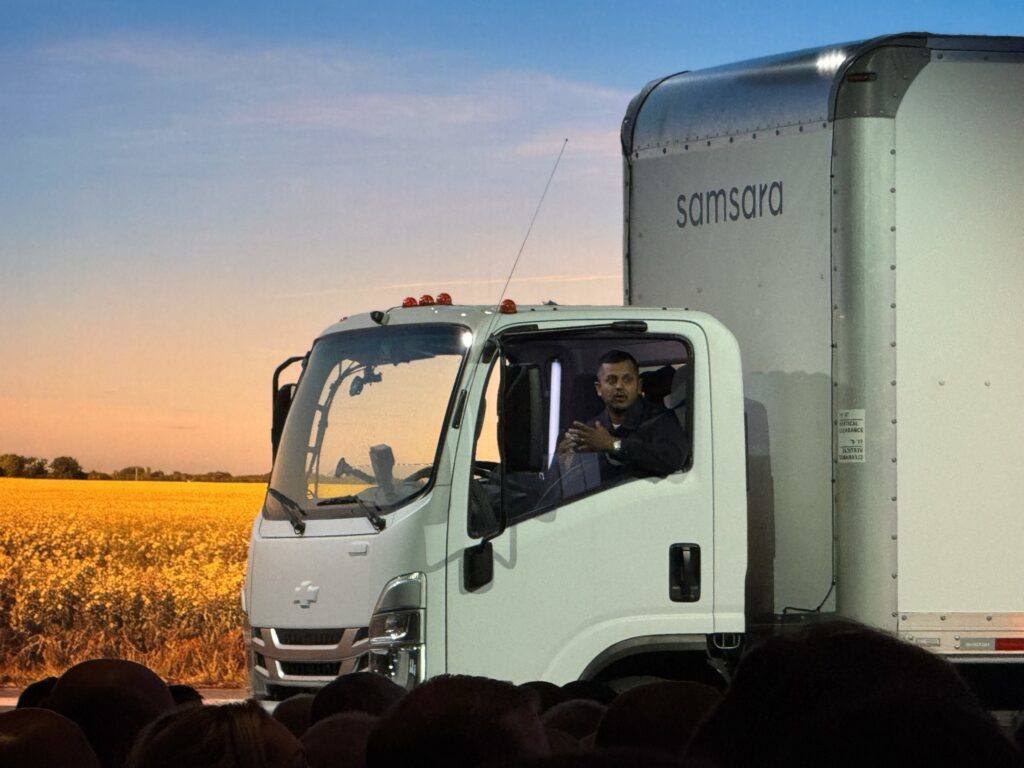
AI-Generated Driver Briefings are part of the redesigned driver experience. Upon entering the cab, drivers receive an AI voice greeting through Samsara's existing camera system. The AI agent reviews the driver's safety score, summarizes the route ahead, identifies recent following distance incidents, and provides information on high-risk areas along the route based on issues, such as notifying about construction zones and reduced speed limits on Interstate 15. This feature is automatically generated using data already available on Samsara's connected vehicle platform, and fleets can customize the level of detail and timing of shared information. The feature is currently in beta.
With the two-way audio feature, dispatchers can contact drivers directly through Samsara's camera system without relying on phones, and can push updated navigation instructions. The Bird's Eye View feature merges footage from four cameras installed around the vehicle into a single top-down view, allowing drivers to see the full surroundings from one screen, with AI continuously monitoring the scene and identifying potential hazards such as pedestrians.
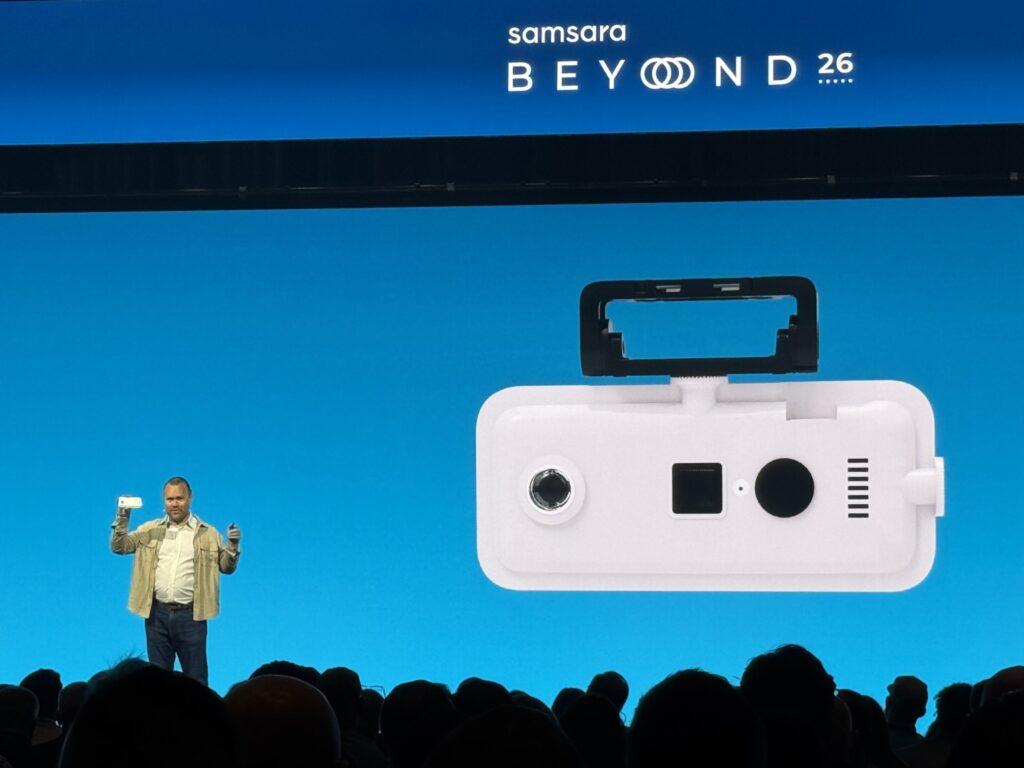
Samsara also introduced a new 360-degree camera designed specifically for forklifts, telehandlers, baggage carts, and construction equipment. This device combines front and rear ultra-wide-angle views into a single image, providing a full view of the asset's surroundings through a single camera installation.
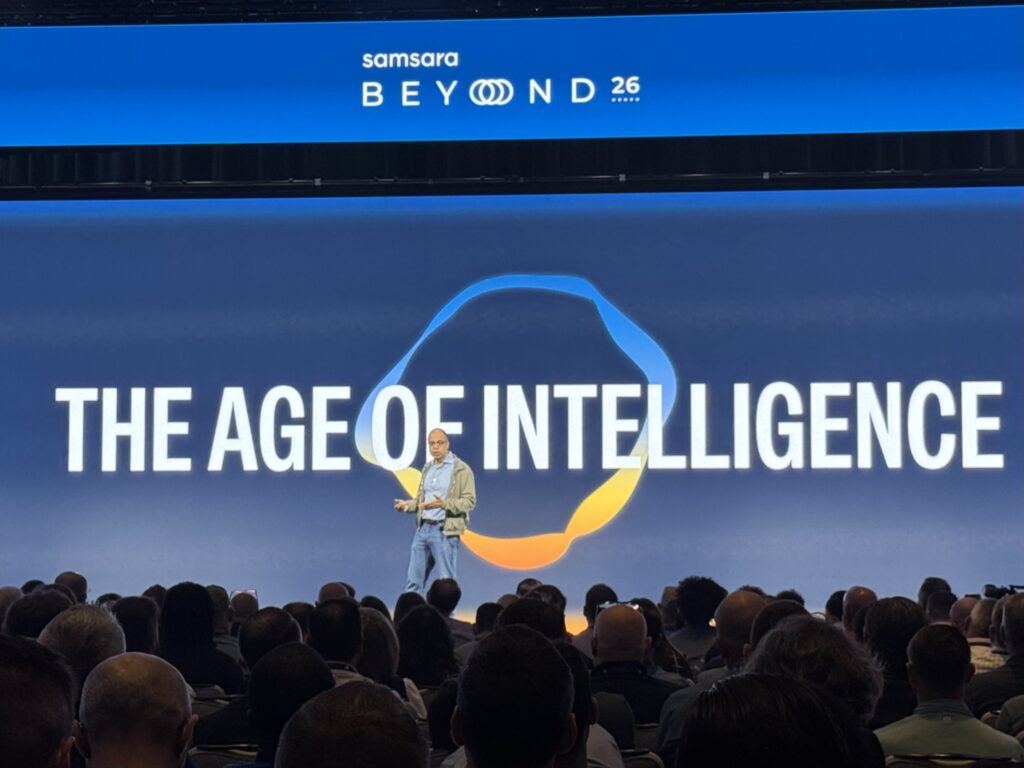
In a demonstration by Vice President of Product Safety Arpan Podduturi, AI was described as being able to deliver relevant information to drivers at the right time without introducing additional distractions. The AI Co-Pilot feature aims to replicate the effects of traditional ride-along coaching while achieving scale. Samsara analyzed billions of miles of driving data to identify 22 behaviors across six categories that are reportedly the strongest predictors of collisions. After checking behaviors such as mirror checks, attention, and distraction, the system can propose coaching suggestions and automatically assign targeted training. For example, the system identified a driver charging an e-cigarette while driving in one incident, classified it as distracted driving, and automatically assigned relevant coaching content.
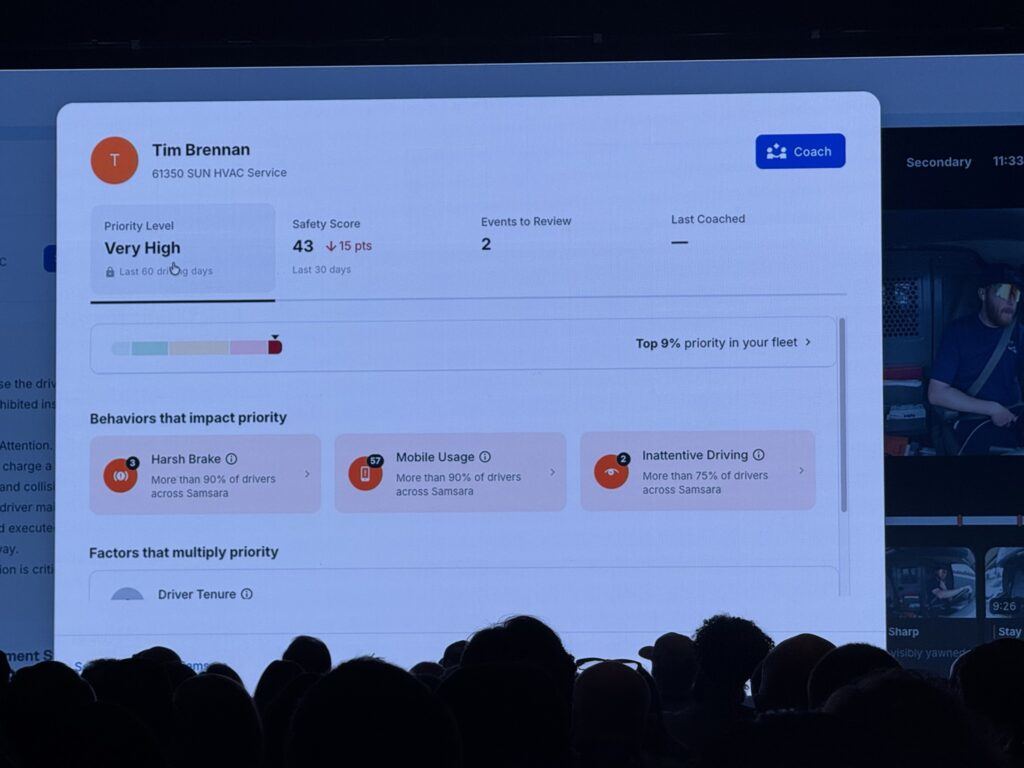
Insights generated by tools like AI Co-Pilot feed into the Coaching Prioritization tool. This feature analyzes the complete history of each fleet driver and determines coaching priority based on over 45 risk factors, including road conditions, weather, coaching history, and behavioral patterns. In a fleet with nearly 4,000 drivers, the system identified approximately 300 extremely high-risk drivers, allowing safety managers to focus on these individuals. Chief Product Officer Johan Land stated that the goal is to help fleets scale their coaching programs rather than applying the same approach to all drivers.
Land said in his keynote that the Bird's Eye View technology is designed for environments with limited visibility and frequent interaction with pedestrians, including urban delivery routes, school buses, and other commercial operations.
This article is compiled by Wedoany. All AI citations must indicate the source as "Wedoany". If there is any infringement or other issues, please notify us promptly, and we will modify or delete it accordingly. Email: news@wedoany.com