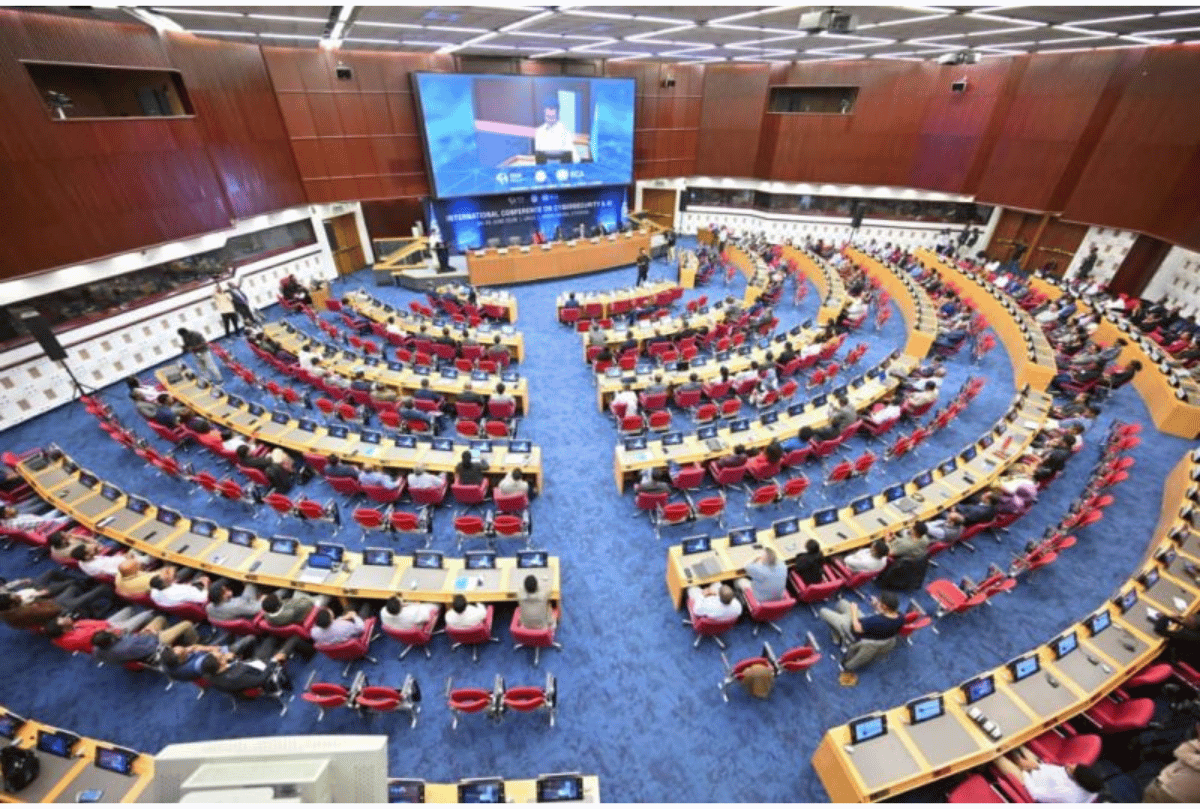
en.Wedoany.com Reported - Missouri Governor Mike Kehoe publicly expressed support for Google and Amazon's hyperscale data center projects in the state's rural areas during a recent artificial intelligence summit. Google plans to invest $15 billion, while Amazon's investment stands at $10 billion, bringing the total for the two projects to $25 billion. This has made Montgomery County, with a population of 11,460, a focal point for rural technology investment across the nation.

For an agricultural county, hosting $25 billion in capital commitments is unusual, sparking a complex mix of curiosity, anticipation, and concern among residents. A community lawsuit has already emerged, accusing Amazon and local officials of violating the Sunshine Law. Earlier, in Festus, the entire city council was recalled after approving a $6 billion data center project. These incidents reflect the broader challenge of integrating global-scale digital infrastructure into local communities. Kehoe attempted to steer public opinion through the summit, stating that the economic benefits would last for decades and that the companies have committed to covering the costs of power and infrastructure upgrades without shifting the burden to taxpayers.
Water consumption is a central point of contention. According to data from the Lawrence Berkeley National Laboratory, U.S. data centers directly consumed approximately 17 billion gallons of water in 2023, a figure projected to approach 33 billion gallons by 2028. An analysis by CDM Smith for the Missouri Department of Natural Resources indicates that the Cambrian-Ordovician aquifer, which supplies water to the project area, has a natural daily recharge rate of about 406 million gallons. Current daily extraction is approximately 71 million gallons, and even by 2060, projected water usage is expected to be only about 17% of the annual recharge volume.
Regarding cooling technology, Google plans to use fully air-cooled systems for its New Florence facility. Amazon will employ a hybrid approach, using air cooling 93% of the time and evaporative cooling only when necessary, with an estimated annual water consumption of 50 million gallons. Amazon's 2025 report shows its global data centers used 2.5 billion gallons of water, with a water efficiency of 0.03 gallons per kilowatt-hour, a 52% improvement since 2021. Analysts at the International Energy Agency note that while air cooling can reduce water stress, it may slightly increase electricity demand.
Energy reliability is another major challenge. Missouri has shifted from a net electricity exporter to an importer, leading to higher costs. A representative from the Division of Energy at the Missouri Department of Natural Resources stated that the government is working to make the state a net electricity exporter again. A single hyperscale data center can have a load exceeding 1,000 megawatts, roughly equivalent to the electricity demand of one million homes. While this strains the grid, it could also drive new investments in power generation and transmission. Regarding environmental standards, the state's Director of Natural Resources and a representative from an infrastructure provider noted that developers are increasingly aware of public expectations, and state agencies will regulate based on ASHRAE data center cooling guidelines and ISO 50001 energy management standards. Analysts from institutions like the National Renewable Energy Laboratory point out that compliance with these standards helps reduce facility waste.
Research from the Joint Center for Housing Studies at Harvard University indicates that large-scale digital infrastructure can help diversify income sources for predominantly agricultural regions. This explains why some residents view the New Florence project as a strategic opportunity. However, the pace of development far exceeds local conventional planning cycles, and this mismatch is a source of tension. The summit sent a clear signal: Missouri aims to become a leader in infrastructure for the AI era. The core challenge lies in convincing local communities that these facilities are compatible with priorities for water, energy, and quality of life. Whether the summit will quell opposition or merely open the next phase of negotiations remains unclear, but the state appears determined to keep the dialogue proactive rather than reactive.
This article is compiled by Wedoany. All AI citations must indicate the source as "Wedoany". If there is any infringement or other issues, please notify us promptly, and we will modify or delete it accordingly. Email: news@wedoany.com