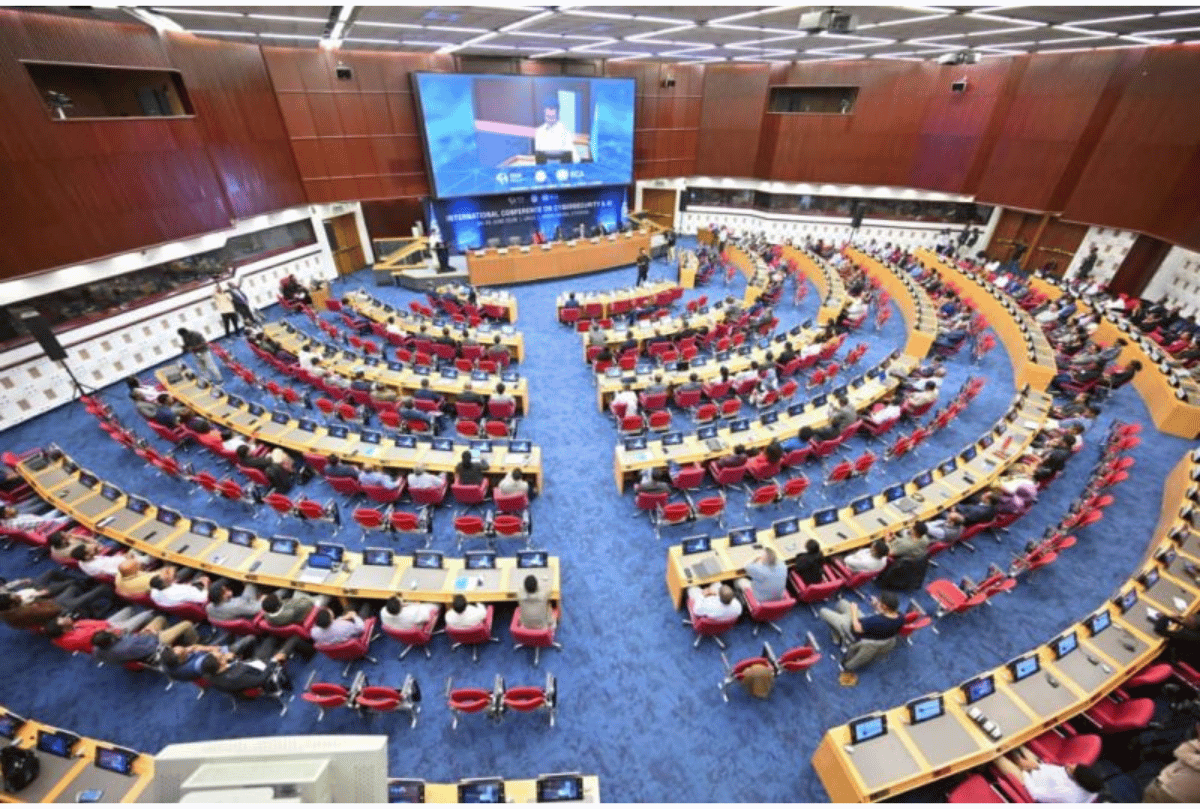
en.Wedoany.com Reported - Chinese cybersecurity company 360 Security Technology has developed two AI security tools named "Yitian Tulong," with "Tulong Feng," designed for automated software vulnerability discovery, being hailed by 360 founder Zhou Hongyi as China's answer to Anthropic's Mythos. He stated that the tool has already discovered 3,432 software vulnerabilities, 105 of which have been officially confirmed by Chinese authorities. Speaking at the ISC.AI 2026 Cybersecurity Conference, Zhou Hongyi emphasized that such capabilities, capable of reshaping the landscape of cyber offense and defense, cannot be monopolized by others.

Anthropic's Mythos, first unveiled in April, is a system for detecting software vulnerabilities, which cybersecurity experts have warned could exacerbate cyberattacks. Citing national security concerns, the United States this month demanded that Anthropic suspend exports of a weakened version of the program. 360's "Yitian Tulong" tools include "Tulong Feng" for automated vulnerability discovery and "Yitian Zhen" for automated network defense and incident response.
Zhou Hongyi described the vulnerability discovery AI as a national strategic asset, useful both for protecting critical infrastructure and for gaining offensive advantages. He warned that if U.S. entities can use Mythos-like models to scan software and critical systems while Chinese companies are deprived of similar capabilities, China would face the risk of "one-way transparency." 360 will not simply replicate the U.S. approach of relying on "the strongest models, the strongest computing power, and the strongest chips," but will instead adopt an "agent" approach, combining models with security expertise, vulnerability databases, and automated tools to equip Tulong Feng with capabilities comparable to Mythos. Zhou Hongyi added, "If Mythos is a high-end chip, what we are building is a complete machine that runs stably, operates 24/7, and makes fewer errors."
Since 2022, the U.S. has tightened restrictions on exports of cutting-edge chips to China, hindering domestic models from catching up with U.S. competitors, including Anthropic. Zhou Hongyi noted that domestic models still lag by 20% to 30% in basic capabilities, but China cannot afford to wait until its models fully catch up before starting vulnerability discovery.
This article is compiled by Wedoany. All AI citations must indicate the source as "Wedoany". If there is any infringement or other issues, please notify us promptly, and we will modify or delete it accordingly. Email: news@wedoany.com