China's Huawei Advances Green Network Index, AI Saves 40 Billion kWh Annually
en.Wedoany.com Reported - Huawei, in collaboration with the TM Forum and GSMA, hosted the fifth Green and Resilient Development Forum during the Digital Transformation World (DTW 26). Participants discussed trends and measures for the sustainable development of communication networks, focusing on topics such as the standardization of the Green Network Index 2.0, AI-driven energy efficiency, and resilient architecture practices.
Niu Jun, President of Network Consulting and System Integration Domain at Huawei Global Technical Services, stated that green networks have become an inevitable choice for the development of the communications industry. Network resilience is regarded as a foundational condition for building green networks, while AI technology serves as a key accelerator for achieving the 2030 zero-carbon vision. Huawei hopes to work with industry organizations and operators, using green and resilience as dual engines, to promote the widespread application of the Green Network Index standard and the Ivy architecture.
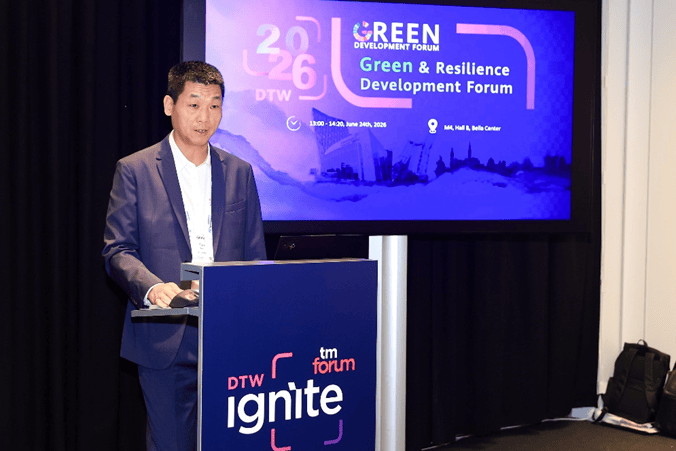
Peter Jarich, Chair of GSMA Intelligence, introduced the latest progress of the Green Network Index (GNI 2.0). The index has established a measurement system ranging from the overall network to individual site units, covering over 20 mobile and fixed network operator networks, and has launched a digital platform. In the future, more operators will be invited to participate in discussions on GNI 3.0. Marc Einstein, Research Director at Counterpoint Research, pointed out that AI-driven optimization can save 40 billion kilowatt-hours of electricity annually. Data from Telefónica shows that over the past decade, its network data traffic has grown by 1200%, total energy consumption has decreased by 12%, and energy density has dropped by 92% compared to 2015. Lloyd Chan, Vice President of Strategic Transformation at HKT, stated that through green practices, network resilience building, and AI applications, HKT is advancing infrastructure towards higher reliability. Network modernization and intelligent power supply system design have improved operational efficiency and reduced accident risks.
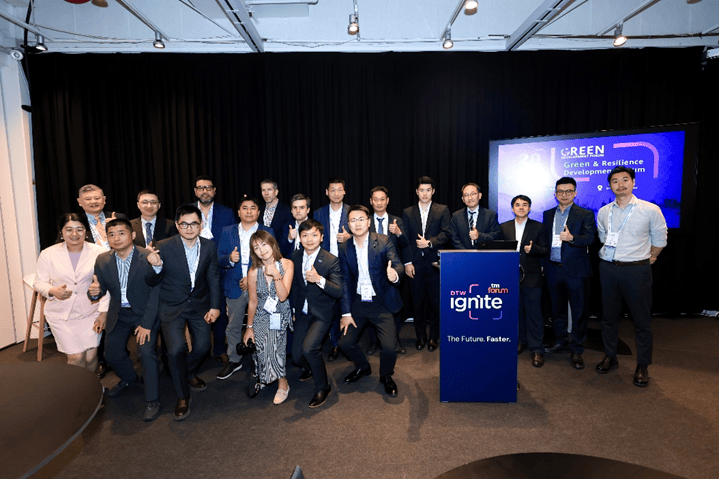
Yu Junwei, General Manager of Huawei's Green and Resilient Target Network Solution, pointed out that in response to issues such as climate warming, rising operational costs, and low-efficiency equipment, Huawei has collaborated with industry organizations to establish a green network and resilience indicator system. Through digital twins and AI data governance, the solution drives the transformation of traditional wireless base stations into green intelligent sites and traditional central offices into edge data centers, achieving an improvement of over 30% compared to the industry average. Participants agreed that the future industry will rely on the Green Network Index standard, the Ivy framework, and AI agent technology to drive the evolution of networks from passive energy saving to active restructuring, building low-carbon, efficient, and highly resilient digital infrastructure.
This article is compiled by Wedoany. All AI citations must indicate the source as "Wedoany". If there is any infringement or other issues, please notify us promptly, and we will modify or delete it accordingly. Email: news@wedoany.com
Related Products


20 Inch 1600*900 Full HD 60Hz TFT LED Monitor with VGA and DP Interfaces for Desktop Computers-Business Use
Guangzhou Zanying Optoelectronics Technology Co., Ltd.

Comprehensive Mining Automation Control System
Beijing Tianma Intelligent Control Technology Co., Ltd.

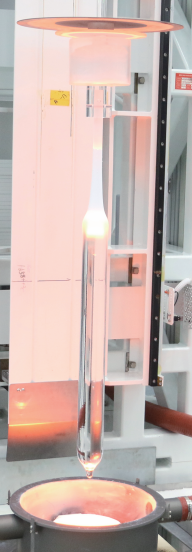
G.652.D Wavelength-extended Non-dispersion Shifted Single-mode Optical Fiber
HONGAN GROUP CO., LTD.



Industrial and Commercial Point-Type Gas Detector
Jinan Benan Technology Development Co., Ltd.